
How the Île-des-Chênes setting shapes an entrance assessment
Île-des-Chênes has French-Manitoban and Métis roots, and today an enquiry might concern a main entrance, a patio opening or a practical side door. That local identity should not become an excuse to assume a particular building age or construction style. The relevant details are the door material, the surrounding frame and what happens when someone tries to use it.
Along the Highway 59 corridor, an exposed entrance may behave differently from one behind a sheltered porch. Ask whether wind changes the closing action and whether grit collects at the threshold. For a household with several entrances, identify which opening is troublesome and whether it serves the living space, a garage or a separate building; each can require a different scope. The the Highway 59 corridor provides local context, not a diagnosis of the opening.
- Identify the affected entrance and whether it serves heated living space.
- Describe exposure, visible damage and changes between seasons.
Checking hinges and clearances before quoting in Île-des-Chênes
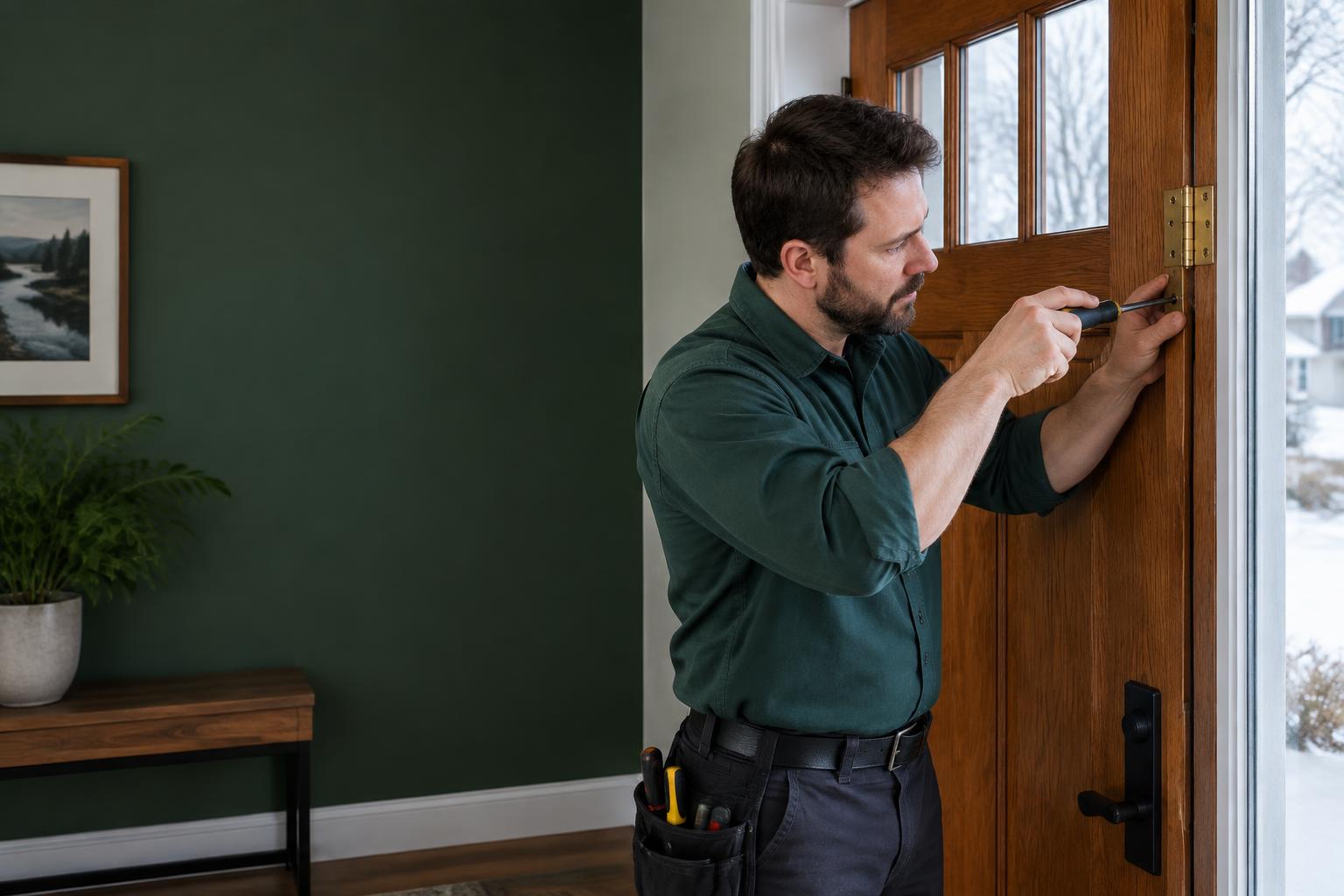
An assessment starts with operation, not a catalogue. The door is checked for rubbing, uneven clearances, loose hinges, damaged fastening points, weatherstrip contact and latch alignment. The threshold and visible frame are checked for movement, softness or separation. Photographs can help describe these conditions before a visit, but hidden damage may only become clear when accessible trim or hardware is removed with permission. A useful repair plan explains which observations support the proposed work and which uncertainties remain.
For door repair in Île-des-Chênes, describe whether the symptom is constant or seasonal and whether pushing, lifting or pulling changes it. Tell DoorMend about past adjustments if you know what was changed, without guessing at hidden causes. An enquiry is not a booking: access, timing and the proposed assessment need confirmation. Keep pets away from the working area and identify any entrance that must remain usable. If the opening is part of a shared building, establish who can authorise alterations before agreeing to work.
Cold-weather binding without guesswork in Île-des-Chênes
A sticking door in winter is not automatically a swollen slab. In Manitoba, humidity swings, cold weather and changing clearances can expose loose hinges or an opening that is already slightly out of square. At -30 C, a small sealing defect can be very noticeable, but cold alone does not identify the failed component. Note the rubbing point and whether the latch misses high or low. Avoid repeated slamming, which can loosen fasteners and damage a frame that might otherwise remain repairable.
Door adjustment may involve correcting hinge support, restoring clearances or aligning the strike after the leaf sits properly. Filing a strike or trimming an edge before checking the hinges can hide the cause and leave an oversized gap later. Spring thaws and summer humidity can change symptoms, so a seasonal pattern is useful evidence, not proof of structural failure. Read “Why Is My Door Sticking? A Winnipeg Winter Guide” for observations to gather. Widespread movement or persistent cracking may require a separate building investigation beyond a door repair.
Tracing air and water paths around Île-des-Chênes thresholds
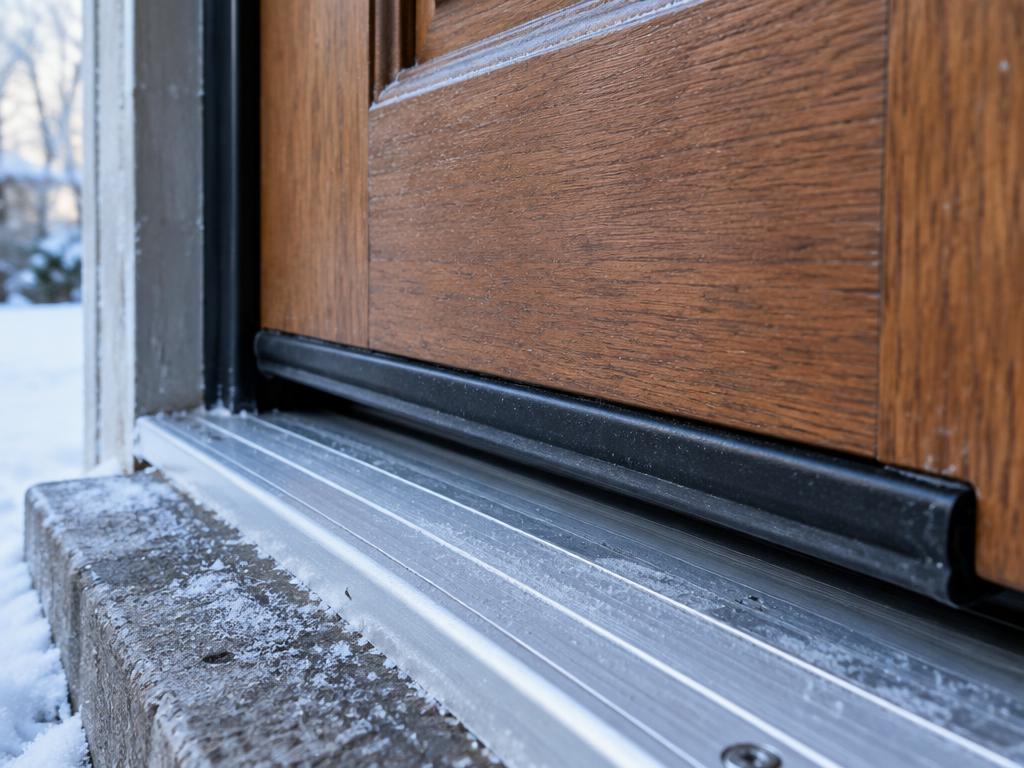
For drafty door weatherstripping, the first question is where contact is being lost. A flattened compression seal, split sweep, low threshold or dropped hinge can each leave a cold path. Adding thicker foam without checking alignment may stop the latch engaging. The assessment should consider the existing seal profile, how it fits the frame and whether the door can compress it without excessive force. A replacement seal is useful only when it suits the assembly and the underlying opening is sound enough to support it.
Spring meltwater, summer storms and wind-driven rain also make the sill important. Keep visible drainage paths clear of loose debris, but do not drill holes or seal over openings without understanding their purpose. Moisture marks beside a frame need investigation rather than a cosmetic bead of sealant alone. “Drafty Door? How Weatherstripping and Thresholds Fail” explains common contact problems. Condensation can have indoor humidity causes as well as cold surfaces, so new weatherstripping should not be presented as a cure for every wet patch or frost mark.
Protecting frame strength and latching in Île-des-Chênes
When asking about door frame repair Île-des-Chênes, describe the actual damage: stripped hinge holes, a split strike area, soft wood at the base or a jamb separating from the wall. Localised sound timber may allow a targeted repair, while extensive deterioration can make a larger replacement more sensible. Fresh trim cannot restore a weakened fastening point. If the door won’t latch or lock, compare operation with the leaf open and closed only when it is safe to do so; resistance against the frame suggests a different issue from a stiff mechanism on its own.
After forced entry, emergency door securing after a break-in begins with safety and confirming what help is available. Stay away from broken glass, splintered edges and an unstable leaf; contact emergency services if there is an immediate threat. Describe whether the frame, hinges or lock area is damaged, and do not assume a temporary measure restores normal security. DoorMend does not promise immediate attendance or round-the-clock availability. “Door Won’t Latch or Lock? Diagnosing Hinges, Strikes and Hardware” is useful for ordinary alignment symptoms, not a substitute for assessing impact damage.
Patio rollers and interior tracks in Île-des-Chênes homes
For a sliding patio door hard to open, track debris, roller wear and panel alignment should be distinguished before discussing a complete replacement. Loose grain dust, grit and bush debris can interfere with movement, particularly at openings facing a yard. Clear accessible loose material gently, but do not lift a heavy glazed panel yourself or force it over a damaged track. “Patio Door Hard to Slide? Rollers, Tracks and Fixes” explains the main components. Glass damage and sealed-unit problems need a separate capability check rather than an assumption that roller work will address them.
A closet bifold door off track may have a damaged pivot, loose bracket or worn guide rather than a failed panel. A pocket door can need access to concealed hardware, which changes both disruption and cost. Interior door replacement becomes worth considering when a leaf is badly damaged, warped or unsuitable for its intended use. Existing hinge positions, latch preparation, jamb condition and floor clearance still need checking. A different slab is not automatically a direct fit, even when its overall appearance seems similar to the original.
Screens, closers and specialist boundaries for Île-des-Chênes
A torn screen or storm door calls for separate checks of mesh, frame corners, hinges, latch and closer mounting. Sound screen frames can sometimes accept new mesh, while twisted frames may not hold tension properly. Prairie wind can stress a storm door that is left unsecured; inspect visible attachment points without dismantling a loaded mechanism. Door closer repair depends on whether the closer is adjustable and sound or leaking and worn. Increasing closing force is not a sensible substitute for fixing a dragging leaf or a loose bracket.
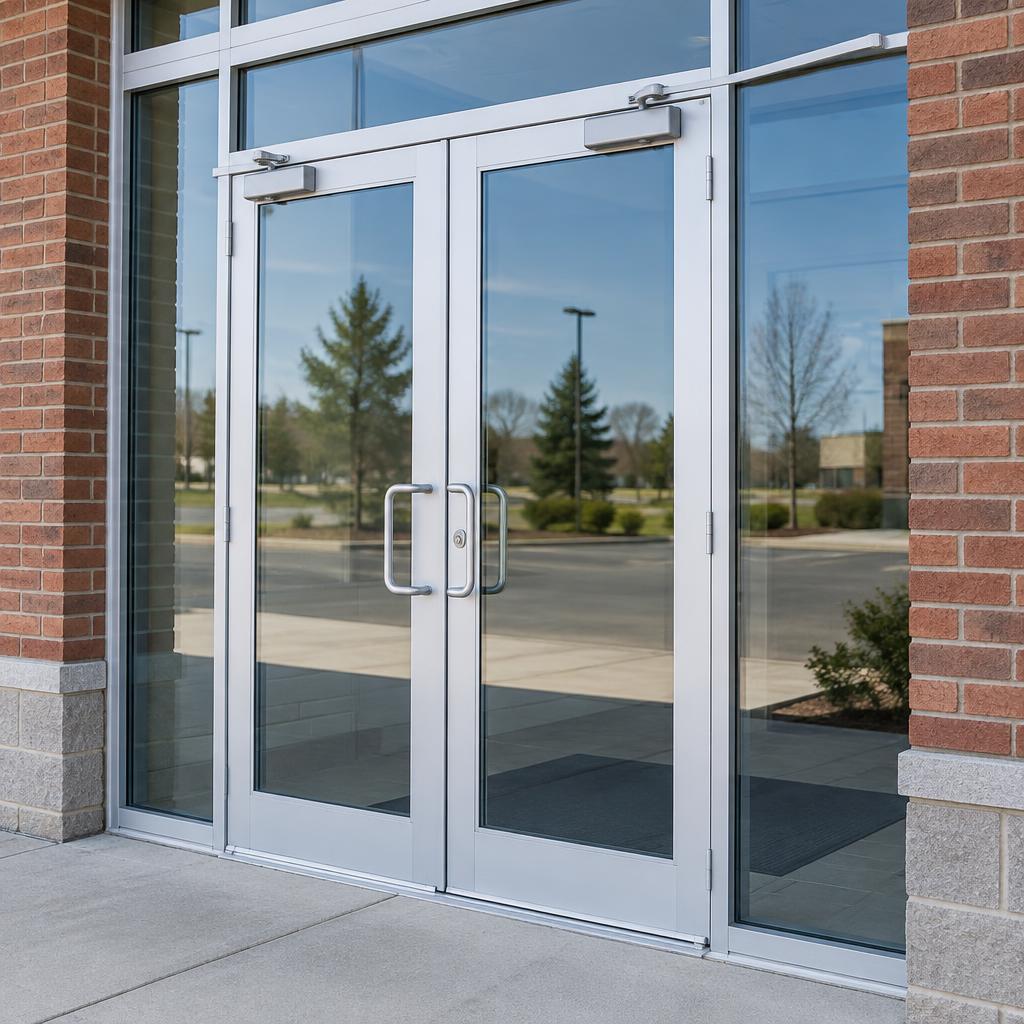
A storefront door not closing can involve closer settings, worn pivots, frame alignment or pressure differences. Exit hardware, powered operators and glass work require confirmation of capability and scope; do not disable safety features to make an entrance move more easily. Similarly, a garage door noisy or uneven needs a safety-first response, especially if it hangs crooked or has visible cable damage. Stop operating an unsafe assembly, keep people clear and leave spring or cable adjustments to an appropriate specialist. The commercial and garage-door guides explain symptoms but do not authorise hazardous adjustments.
Comparing repair scope with a new Île-des-Chênes assembly
Exterior door replacement is a stronger candidate when the leaf and frame are extensively deteriorated, essential parts are unavailable or a suitable repair would leave major defects unresolved. A pre-hung door installation replaces an assembly rather than simply hanging a different slab. It still requires checks of opening dimensions, squareness, sill support, flashing arrangements and fastening. Discuss swing direction, clearance, finish colour and intended hardware before ordering. Do not assume that a stock unit suits every existing opening or that decorative trim will correct a poor fit.
Price varies with materials, hardware, frame condition and accessibility, as well as the amount of removal, preparation and finishing agreed. Narrow working space, heavy components and concealed damage can change the labour involved. Any price range shown on the site is a typical market range, not a DoorMend quote. Ask what a proposed price includes, what remains uncertain and how additional work would be approved. An assessment decides whether adjustment, targeted repair or replacement is appropriate; sending a form does not reserve a visit or commit either party to a particular solution.
Before approving work, decide who is responsible for painting, stain matching, disposal and any nearby wall repairs. These finishing details can make two apparently similar proposals quite different. Ask whether the door will be left usable between stages and whether any temporary arrangement has limitations. For an outbuilding, explain what is stored inside and whether weather sealing or convenient access is the main objective. For a primary entrance, mention mobility needs and the space available to operate the leaf. Do not remove labels or alter a fire-rated assembly without an appropriate review. A clear written scope should separate confirmed repairs from optional improvements, with permission sought before moving beyond what was agreed.
Door services we can discuss in Île-des-Chênes
Pick the closest match, or describe the door and we'll point you at the right page.
- Residential Door Repair
- Commercial Door Repair
- Entry & Exterior Door Repair
- Interior, Closet & Pocket Doors
- Patio & Sliding Door Repair
- Screen & Storm Door Repair
- Door Frame & Hinge Repair
- Door Installation & Replacement
- Glass Door Repair & Replacement
- Storefront Door Repair
Repair first, replace when it pays
A door that sticks, drags or won't latch is often telling you about hinges, strike plates, a shifted frame or a worn seal — not that the door is finished. We look at the slab, the frame and the hardware together, then tell you which fixes are worth doing and when a new door is the better long-term spend.
The price ranges on this site are typical market ranges for Manitoba homes and businesses, not DoorMend quotes. Your own cost depends on what the assessment finds.
- Enquiries are not bookings; an assessment decides the options.
- Specialist work (glass, springs, powered doors, exit hardware) depends on capability.
How a Île-des-Chênes enquiry works
1. Tell us the problem
Send the door type, what it does wrong and your area. A photo helps, but it isn't required.
2. We arrange an assessment
We reply to find a time, then look at the door, frame, seals and hardware on site.
3. You approve the options
You get repair or replacement options with what each involves, before any work begins.
Sending a request is not a booking or emergency dispatch. We work daily from 7:00 AM to 10:00 PM and reply in the order requests arrive.
Île-des-Chênes door FAQs
Should I replace a door that only rubs in cold weather?
Not automatically. A repeatable seasonal symptom may come from changing clearances, but loose hinges or damaged fastening points can also become more noticeable in cold weather. Record the rubbing location and whether the lock works without pressure. Avoid cutting the edge until alignment and moisture conditions have been considered. A sound assembly may be repairable; a distorted or deteriorated one needs a different discussion.
What photos help before an assessment in Île-des-Chênes?
Send an overall view from each side, a view of the hinges and latch area, and a clear image of any visible damage or gap. Include a readable manufacturer label if one is accessible without dismantling anything. Explain whether this is a house, shared entrance or outbuilding. Photos help identify questions and possible parts, but cannot establish hidden frame condition or confirm a final repair scope.
Can existing locks and handles stay with a new door?
Sometimes, if they are sound, suitable for the intended use and compatible with the new preparation. Backset, thickness, handing and the shape of the existing openings matter. Multipoint systems require particular care with identification and parts. Keep the old hardware available for assessment rather than assuming it will transfer. Specialist locking or exit arrangements need capability confirmed before they are included in the work.
Does every draft mean the whole frame has failed?
No. Worn seals, an uneven threshold or poor alignment can create drafts around an otherwise sound frame. Softness, repeated wetting or movement at fastening points raises different concerns. Explain whether you feel moving air, see daylight or notice condensation, since those are not identical symptoms. The appropriate next step is to locate the problem, not to cover every edge with additional sealant or oversized foam.
How should I compare a repair proposal with replacement?
Compare the problem each option addresses, which components remain and what finishing is included. A cheaper adjustment may be sensible for sound hinges and framing, but cannot restore extensively decayed material. Replacement can involve removal, support repairs and trim work that a simple hardware repair does not. Ask how unknown damage will be handled and remember that website market ranges are information, not an individual quote.
Does an urgent enquiry confirm an appointment?
No. Explain the safety issue and whether the entrance can currently be secured, then wait for confirmation of availability and scope. Enquiries are not bookings. DoorMend does not promise round-the-clock attendance, and specialist parts or trades may affect what is possible. If there is an immediate danger, use the appropriate emergency service rather than waiting for a website response. Do not continue operating a visibly unstable door.
Helpful guides
- Why Is My Door Sticking in Winter?Doors that rub, stick or need a shoulder to close usually point to swelling, sagging hinges or frame movement. Here's how to tell which.
- Drafty Door? Causes, Weatherstripping and Threshold FixesCold air, frost on the inside edge and rising heating bills often trace back to worn seals, a low threshold or a door that's out of line.
- Patio Door Hard to Slide? Rollers, Tracks and FixesA sliding patio door that drags, jumps or grinds usually needs track cleaning, roller adjustment or new rollers — not a whole new door.
- Door Won't Latch or Lock? Common Causes and Repair OptionsIf you have to lift, push or slam a door to lock it, the latch and strike are probably misaligned. Here's what's usually happening.
- Commercial Storefront Door Not Closing Properly?Slamming, drifting open or failing to latch are common storefront door problems. Closers, pivots and hinges are usually involved.
- Closet, Bifold or Pocket Door Off Its Track?Interior doors that jump the track, hang crooked or won't stay closed usually need a pivot, guide or roller fixed.