What counts as broken door repair in Winnipeg?
Broken door repair covers the wide range of problems that stop a door from opening, closing, or locking the way it should: a cracked panel, a door that's come off its hinges, a frame split at the strike plate, a slab warped from moisture or cold, or hardware that's seized up and won't turn.
Because 'broken' can mean so many different things, an assessment is the starting point for almost every repair request. A door that won't latch might need a strike plate adjustment, a new hinge, or a full frame realignment, and those are very different jobs with different time and material needs.
Broken door repair in Winnipeg also tends to spike seasonally. Doors that worked fine all summer can suddenly bind, drag, or refuse to latch once the cold, dry winter air sets in, while spring thaw and humidity bring a different set of sticking and swelling complaints.
- Doors that won't open, close, or latch properly
- Cracked, split, or warped door slabs
- Damaged frames, hinges, or strike plates
- Doors knocked off-track or off their hinges
Common signs and causes of a broken door
The most common sign homeowners notice first is a door that sticks or drags against the frame, often along the top corner or bottom edge. This usually points to a hinge that has loosened, a frame that has shifted slightly, or a slab that has swollen or warped.
Visible damage is another obvious category: a cracked panel from an impact, a split near the lockset from a forced-entry attempt or a slammed door, or a frame that's splintered at the strike plate.
Less obvious causes include seasonal wood movement, worn weatherstripping that lets a door feel loose in the frame, sagging from a heavy slab on worn hinges over many years, and foundation or frame settling that very gradually throws a previously fine door out of alignment.
- Dragging or sticking against the frame at the top or bottom
- Door won't latch, lock, or stay closed on its own
- Visible cracks, splits, or dents in the slab or frame
- Loose, squeaky, or seized hinges
- Gaps that let in drafts, light, or noise
How does Winnipeg's climate break doors over time?
Winnipeg's freeze-thaw cycle is one of the biggest contributors to broken doors over the life of a house. As temperatures swing from well below -30 °C in deep winter to above freezing during a thaw, wood doors and frames expand and contract repeatedly, which loosens screws, shifts alignment, and eventually causes sticking or gapping.
Dry winter air is another factor specific to this climate. Indoor heating systems drop humidity levels significantly in winter, which pulls moisture out of wood doors and frames and can shrink them just enough to create gaps, loose joints, or a rattling feel even on a door that fit tightly all summer.
Frost heave affects exterior door frames set into or near concrete foundations, steps, and walkways. As the ground around a foundation freezes and thaws, slight shifts in the concrete can throw a door frame out of square over several winters, a slow process that often shows up first as a door that needs more effort to latch each year.
What happens during a broken door repair assessment?
An assessment starts with identifying exactly how the door is failing: where it sticks, whether it latches, whether hinges are loose or hardware is damaged, and whether the frame itself is still square.
Once the cause is identified, the technician can usually determine whether the fix is a simple adjustment, such as re-setting a hinge or strike plate, or something more involved, like replacing a damaged panel, rehanging the door in a corrected frame, or in more serious cases, replacing the slab or frame outright.
The repair itself depends entirely on what's broken. Hinge and hardware issues are often addressed the same visit once parts are on hand. Frame realignment can involve shimming, re-squaring, or in some cases rebuilding part of the jamb. Panel or slab damage ranges from a simple patch for cosmetic cracks to full slab replacement when the damage affects structural integrity or weatherproofing.
- Identify exactly how and where the door is failing
- Check frame squareness, weatherstripping, and for moisture or rot
- Determine whether the fix is adjustment, hardware replacement, or slab/frame repair
- Carry out the repair and confirm smooth operation across the full swing
Repair or replace: how to decide when a door is broken
Many broken doors can be repaired rather than replaced, especially when the damage is limited to hardware, a single hinge, a misaligned strike plate, or a small crack that hasn't compromised the slab's structural integrity.
Replacement becomes the more sensible option when a slab has extensive rot or rust, when a frame has shifted so far out of square that repeated adjustments keep failing, or when the cost and effort of patching repeatedly starts to outweigh the benefit of simply installing a new door.
There's also a judgment call around appearance and long-term value: a heavily patched exterior door on a home's main entry may function fine after repair but look visibly repaired, which some owners are comfortable with and others aren't.
- Repair often makes sense: loose hardware, minor misalignment, small cosmetic cracks
- Replacement often makes sense: extensive rot or rust, a frame beyond realignment, repeated failed patches
- Consider appearance and long-term value, not just immediate function
Door materials and how each one tends to break
Wood doors are prone to warping, swelling, and splitting, especially where finish has worn away and moisture gets into the grain. A broken wood door often shows up as sticking in humid weather, cracking along panel seams, or soft spots near the bottom where water has splashed up over time.
Steel doors are generally strong and resist warping, but their weak points are the finish and the frame. Once paint or coating chips, especially near the bottom edge or around a lockset, rust can set in and spread, particularly with winter road salt exposure.
Fibreglass doors, a composite material rather than glass, hold up well to Winnipeg's humidity swings and generally resist warping and rot better than wood, though a hard impact can crack the skin or core. Vinyl doors, often used for patio or garden door panels, can become brittle in extreme cold and are prone to cracking at stress points like corners and hardware cutouts. Aluminum doors and frames, common in some commercial storefronts, resist rust well but can dent or bend from impact and may need frame realignment after a forceful collision.
What affects the cost of broken door repair?
Cost depends first on what exactly is broken. A hinge adjustment or strike plate reset is a relatively small job, while replacing a damaged slab, rebuilding a split frame, or correcting significant settling involves more labour and materials.
Door material plays a role too: sourcing a replacement panel or slab for a wood, steel, fibreglass, or vinyl door varies in cost and availability, and matching an existing door's style or finish can add time if the original is older or less common.
Access and the extent of secondary damage also factor in. A door that's been forced open may have damage extending into the surrounding frame or trim, which adds scope beyond the door itself. Commercial doors with heavier-duty hardware, or exterior doors requiring new weatherstripping and sealing as part of the repair, add further variables.
- Nature and extent of the damage (hardware, slab, frame, or combination)
- Door material and availability of matching replacement parts
- Condition of existing hardware: hinges, locksets, closers
- Extent of secondary damage to surrounding frame or trim
- Whether weatherstripping or sealing needs renewing as part of the fix
What can you safely check yourself before calling a professional?
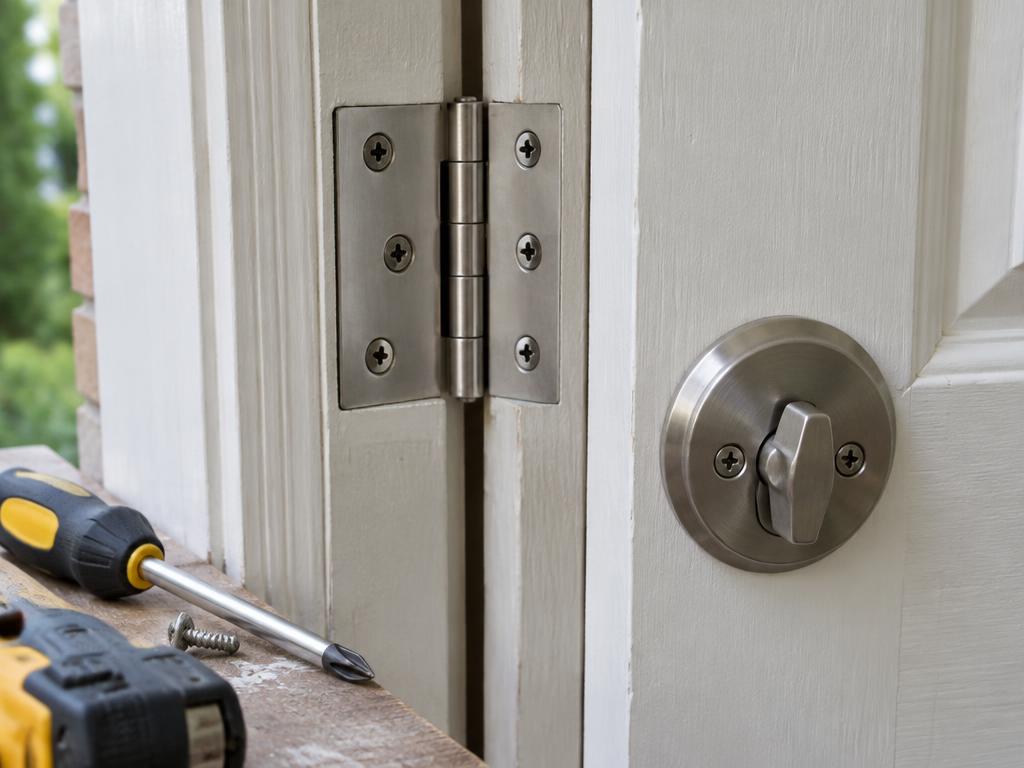
A few checks are safe and useful for most homeowners. Tightening visibly loose hinge screws with a screwdriver, checking whether the strike plate on the frame lines up with the latch, and clearing debris or old weatherstripping that might be causing a drag are all reasonable first steps.
Photographing the damage, the hinge area, and the frame from a few angles is genuinely helpful preparation for requesting a quote, since it lets a technician start forming an idea of scope before an in-person assessment.
Where you should stop and call a professional: any door that's come fully off its hinges and is heavy or awkward to manage alone, any frame damage near a deadbolt from a forced entry, any sign of structural rot that might affect more than the door itself, and anything involving glass, since broken or cracked glass, especially tempered glass, should be left to trained technicians rather than handled or removed by hand.
- Safe to check: loose hinge screws, strike plate alignment, debris or worn weatherstripping
- Useful to do: note when and how the problem occurs, take photos
- Stop and call a professional: doors off their hinges, forced-entry frame damage, broken glass, suspected structural rot
- Leave garage doors, powered operators, and access control systems to specialists
Preventing a door from breaking again after repair
Once a broken door has been repaired, a little ongoing maintenance helps avoid a repeat visit. Lubricating hinges once or twice a year keeps them turning smoothly and reduces the loosening that leads to misalignment.
Weatherstripping should be checked each fall, since Winnipeg's cold compresses and eventually cracks many weatherstrip materials, and a worn seal lets in drafts while also allowing a door to feel loose and bang around in the wind.
For exterior doors, clearing snow and ice from thresholds and nearby walkways reduces the chance of a door being forced or slammed against resistance, which is a surprisingly common cause of frame and hinge damage in winter.
- Lubricate hinges once or twice a year
- Check hinge and strike plate screws for snugness periodically
- Replace worn weatherstripping before winter sets in
- Clear snow and ice from thresholds to prevent forced closing
- Maintain paint or finish on wood doors to resist moisture swings
Broken doors in homes versus businesses and condos
A broken door in a home is often a comfort and security issue first: drafts, noise, or a door that won't lock properly at night.
In a small business or commercial space, a broken entry or interior door can affect daily operations, customer impressions, and in some cases insurance or liability considerations around a secure premises.
Condo and multi-unit buildings add another layer, since a broken unit entry door or a shared building entrance may involve both the unit owner and the condo corporation or property manager, depending on who is responsible for which part of the door assembly under the building's bylaws.
Common questions about broken door repair in Winnipeg
Why does my door only stick in winter? This is usually frame movement from freeze-thaw cycling or dry winter air shrinking wood components, which can loosen hinges and joints just enough to throw off alignment until spring.
Can a cracked door panel be repaired instead of replaced? Smaller cosmetic cracks in wood doors can sometimes be patched and refinished, but cracks affecting structural integrity, or cracks in fibreglass or steel skins, more often call for panel or slab replacement; an assessment can tell you which applies to your door.
My door won't lock at all, is that an emergency? A door that won't lock is a legitimate security concern and worth addressing promptly, though DoorMend does not offer guaranteed emergency or same-day dispatch; requesting an assessment as soon as you notice the problem is the best way to get it looked at quickly.
Is a broken door the same as a lockout? No.
Can you fix a door that's been broken into? Yes, in many cases the slab and frame can be assessed and repaired, though significant frame splitting near the deadbolt sometimes means replacement is the more durable choice; this is determined during the assessment.
What if the glass in my door is broken? Glass repair and replacement, particularly involving tempered glass, is treated as a specialized task; it's best to describe the situation when requesting a quote so the right approach can be discussed.
How to request a broken door repair quote from DoorMend
To request a quote, start by describing the problem as specifically as you can: what the door is doing (sticking, not latching, visibly cracked, off its hinges), how long it's been happening, and whether it's an interior or exterior door, residential or commercial.
Photos are especially helpful for broken door repair, since visible damage, hinge condition, and frame alignment issues are often easier to evaluate from clear pictures than from a description alone.
From there, an assessment, whether based on photos or an in-person visit, determines the realistic repair or replacement options for your specific door, along with the factors that will affect cost.
- Describe exactly what the door is doing and how long it's been happening
- Note interior or exterior, residential or commercial
- Send clear photos from multiple angles, including hinges and strike plate
- An assessment determines repair or replacement options and cost factors
- An enquiry is the first step; it is not a confirmed booking