Why a commercial entrance stops closing correctly
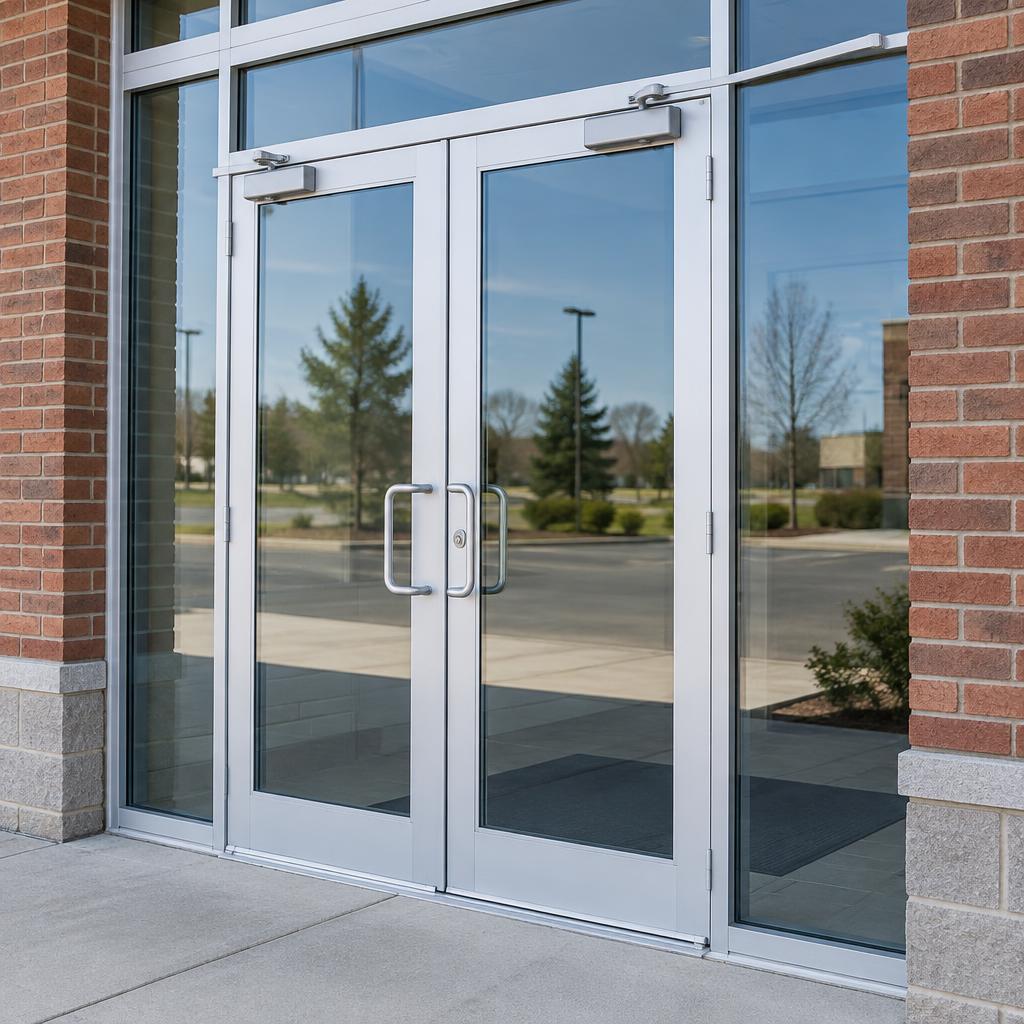
A storefront door that slams, drifts open or stops short of the latch can have several contributing faults. The closer, hinges or pivots, frame alignment, seals and latch all affect operation. Wind, pressure differences and an obstruction can also change what you observe. The useful first step is to describe the pattern rather than assume that every closing problem requires a new hydraulic closer.
A public entrance deserves careful attention because customers and staff use it throughout the day. If the panel is unstable, the glass is damaged or the door closes violently, keep people clear and arrange suitable qualified help. Do not keep testing an unsafe door in normal traffic. Where required access or exit is affected, involve the responsible property manager and appropriate qualified service promptly. This guide is not an emergency response plan, a compliance inspection or confirmation of specialist repair availability.
Closing sweep and final latching are different stages
Many hydraulic closers control the main closing movement and the final approach to the latch through different mechanisms or settings. A door that moves smoothly for most of its travel but fails in the last few centimetres has a different symptom from one that races through the whole swing. Describe where the problem begins and whether the latch catches at all.
There is no single adjustment setting or closing time appropriate for every storefront assembly. Product instructions, door size, hardware, site conditions and applicable requirements matter. Do not turn valves at random or copy a setting from an unrelated closer. Over-adjustment can cause damage or unsafe operation. A qualified assessment should consider the actual model and the whole assembly, rather than increasing closing force until a door overcomes a mechanical obstruction.
Slamming door, leaking closer and sudden changes
Visible oil around a hydraulic closer can indicate a fault requiring attention. A door that suddenly slams may also have other problems, so a leak is not the only thing to look for. Loose connections, damaged arms or changed operating conditions can affect movement. Observe from a safe distance and record when the change occurred.
Do not open a closer body or try to refill it. Keep people away from pinch points and avoid handling a visibly loose assembly. If the closer was recently adjusted or the door was forced by wind, include that information in the enquiry. Ask whether the closer is suitable for the door and whether surrounding hardware remains sound. Replacing a failed closer without checking an obstructed or sagging door may leave the new component working against the same underlying problem.
Storefront door drags on the threshold before it closes
A dragging door may have changed position because of worn pivots, hinge problems, support movement or damage to the panel or opening. Debris at the threshold can interfere too. Contact at the bottom edge is not something a closer should simply overpower. Increasing force without correcting the interference can make the door harder to use and place additional strain on components.
Note whether the drag occurs across the swing or only near the closed position. Visible scrape marks and uneven gaps can help direct an inspection. Do not lift a heavy glazed door or loosen pivot supports to investigate. Narrow-frame storefront assemblies can require specialised handling and matching parts. If recent flooring, mat placement or threshold work preceded the problem, say so. A clear sequence of events can be more useful than assuming ordinary wear caused everything.
Pivots, continuous hinges and the weight of glazed doors
Commercial entrances may use pivots, butt hinges or continuous hinges, depending on the system. Their condition affects how the slab sits relative to the frame. A worn or loose support can change latch alignment and threshold clearance. The closer controls movement, but it does not replace the need for sound door support.
Identify visible hardware without dismantling it. Existing product documentation or a visible label can help determine the assembly type. Do not assume that residential hinge parts can substitute for commercial components. Ask whether the proposed assessment includes the support hardware as well as the closer. Where damage, corrosion or poor mounting is found, the repair plan should explain how that issue will be addressed. A adjustment that briefly improves closing may not resolve deterioration in the parts carrying the door's weight.
Wind and pressure differences at a shop entrance
If the door behaves differently with another door open, during strong wind or when ventilation operates, site conditions may contribute to the symptom. That does not mean the door hardware is necessarily sound, or that extra closer force is the correct solution. Record the circumstances in which it fails to close so they can be considered during assessment.
Do not prop open required doors or defeat latching hardware as an experiment. The responsible property manager may need to coordinate investigation of ventilation or building conditions separately from door work. A door service enquiry should explain the observed relationship without claiming a building diagnosis. For example, “the entrance stops short of the latch when the rear door is open” is useful information. A comprehensive solution may involve more than adjusting one valve on the closer.
Latch and strike problems on commercial glass entries
A door can reach the frame but fail to secure because the latch and receiving hardware do not meet properly. Worn hardware, support movement and excessive seal resistance can contribute. If someone must pull or push the door into place before it locks, describe that clearly. Repeatedly forcing a latch can damage parts while leaving alignment unresolved.
Avoid filing strikes, bypassing locks or modifying exit hardware. Panic devices, access control and powered pedestrian doors require appropriate specialist knowledge and authorisation. Ordinary storefront maintenance should not be assumed to include every electrical, security or life-safety task. Ask which elements can be assessed and whether a specialist is needed. This guide offers symptom recognition and enquiry preparation, not a promise of code compliance or a method for defeating commercial security hardware.
Safe observations a business owner can make
From a safe position, note whether the door slams, drags, pauses or fails only at the final latch. Look for obvious loose mats or debris that can be removed without disturbing hardware or blocking access. A visible manufacturer label, oil stain or scrape mark may help explain the problem. Do not ask staff to keep cycling a hazardous door for a video.
Do not remove closer arms, adjust valves, lift panels or attempt glazing work. Keep hands clear of hinges and moving edges. Report loose mounting, cracked glass or an unstable panel to the responsible person promptly. If public access or required exit is compromised, arrange the appropriate qualified response rather than waiting for an online enquiry to be processed. Any temporary arrangements must be appropriate for the property and its requirements; this article cannot approve a particular way of keeping a business open.
What a storefront door assessment should establish
A useful assessment examines the relationship between panel movement, support, closing control and latching. It should identify whether the closer is faulty, mismatched or working against another problem. Threshold contact, frame condition, mounting support and seals may be relevant. Ask for an explanation that separates causes from symptoms rather than treating every fault as a speed adjustment.
The proposed scope should identify parts, labour, limitations and any specialist involvement. Establish permission if the entrance is managed by a landlord or shared building. If a powered system or exit device is involved, confirm suitable expertise before work is agreed. Submission of an enquiry is not a booking or a guarantee that every commercial assembly can be serviced. Actual timing and the feasibility of repairs depend on the findings, parts and approved scope, not a general description of storefront work.
Repair or replace a commercial closer or entire door?
A repairable alignment issue or available worn component may support a targeted repair when the surrounding assembly remains suitable. Significant frame damage, failed glazing, unavailable parts or multiple persistent faults may justify discussing wider replacement. A closer replacement and a complete entrance replacement are different options and should not be compared as equivalent scopes.
Ask what limitations will remain if only one component is changed. New closer hardware cannot restore damaged pivot support, and improved latching does not correct cracked glass. Conversely, an otherwise sound entrance does not automatically require replacement because its closer has failed. Consider normal traffic, intended use and property requirements with the qualified assessor. Do not rely on age alone, and avoid assuming that any new product will solve site conditions without an appropriate installation and assessment.
What affects storefront door repair prices in Winnipeg?
Price depends on the door system, fault, available components, mounting condition and access to the work. Closer replacement, pivot work, threshold correction and lock repairs are separate scopes. Proprietary hardware or glazing can change the options, and specialist work may require another qualified provider. Describe each entrance individually if several doors are affected.
The estimator supplies a typical market range in Canadian dollars, not DoorMend pricing or a guaranteed commercial quote. Multiple selections may overlap, so their combined range should not be treated as a final bill. An assessed quotation should clarify the proposed parts and labour, taxes, exclusions and any finishing or removal work. It should also distinguish ordinary pedestrian-door repairs from powered operators, exit hardware or security systems. The range does not establish scheduling, parts stock, certification or the capability to perform a particular specialist task.
Recurring closing problems after previous adjustments
If a storefront door works briefly after an adjustment and then returns to slamming or failing to latch, describe the history. Changing settings may have altered the symptom without addressing support wear, an obstruction or a site condition. Ask which findings explain the recurrence. Repeated adjustments without a clear reason can make it harder to understand the original fault and may leave the entrance unsuitable for normal use.
Existing service records and visible product information can help the qualified assessor. Do not infer that a particular component is faulty merely because it was adjusted before. The inspection should distinguish the condition of the closer from the door's movement and surrounding influences. A proposal can then identify whether targeted parts, support repair or another investigation is needed. Clear limitations are important, especially when a brief visit cannot reproduce the conditions under which the entrance behaves differently.
Recording a commercial closing fault without risky testing
A useful maintenance note records what staff already observed: the date, the affected entrance, the stage of closing and any visible damage. It should not require anyone to hold a swinging panel, stand in its path or repeat unsafe operation for a recording. If the door behaves differently in certain conditions, describe those circumstances without deliberately obstructing or disabling it. This information can help the qualified assessor plan the inspection while keeping the enquiry separate from emergency response. For shared properties, send the relevant observations to the responsible manager too, so authorisation and any immediate safety arrangements are handled by the appropriate people.
Preventing repeat faults and preparing an enquiry
Follow the care guidance for the actual door and hardware after approved work. Keep accessible threshold surfaces clear and report changes in closing or latching early. Do not use the closer as a door stop or repeatedly prop and force the panel. Record recurring symptoms and whether they relate to wind, ventilation or a specific time of day. That history can help an assessor identify a contributing condition that was not visible during one visit.
In your message, identify the entrance and describe the movement precisely: “the aluminum-framed shop door drags at the bottom and stops before the latch; there is no visible oil.” Mention recent work and any public safety concern. The form asks for name, phone number, email address, address and message; exclude access codes and security details. Suitability, authorisation and timing need confirmation. The related storefront and closer service pages explain possible scopes, while this guide helps you ask for a reasoned assessment rather than an adjustment made without understanding the cause.
Door repair price estimator
Pick one or more services — the estimate combines them.
Services needed (select all that apply)
Estimated typical range (CAD)
$250 – $1,200
Storefront Door Repair
Typical Canadian market range, compiled from published 2025–2026 price guides. Not a DoorMend quote — your price is confirmed after assessment. This estimator is a rough guide only; combining services may change the final price after assessment.
Frequently asked questions
Should staff increase closer force when the door drags?
No improvised setting should be used to overpower contact with the floor or frame. The obstruction and support condition need assessment. A product-specific adjustment may be part of qualified work, but increasing force can create additional usability and safety concerns without restoring alignment.
Does every storefront need the same closer?
No. Compatibility depends on the assembly, intended use, mounting and relevant requirements. A similar appearance is not enough to establish suitability. Ask how the proposed component is selected and whether the surrounding support and hardware have been checked before replacement.
Can this guide confirm an entrance meets accessibility rules?
No. It does not measure or certify compliance and cannot establish requirements for a particular property. Powered operators, exit hardware and specialised assemblies need appropriate expertise. Confirm qualified assessment and authorisation rather than relying on general closing advice as approval for changes.