What does steel and metal door repair in Winnipeg actually cover?
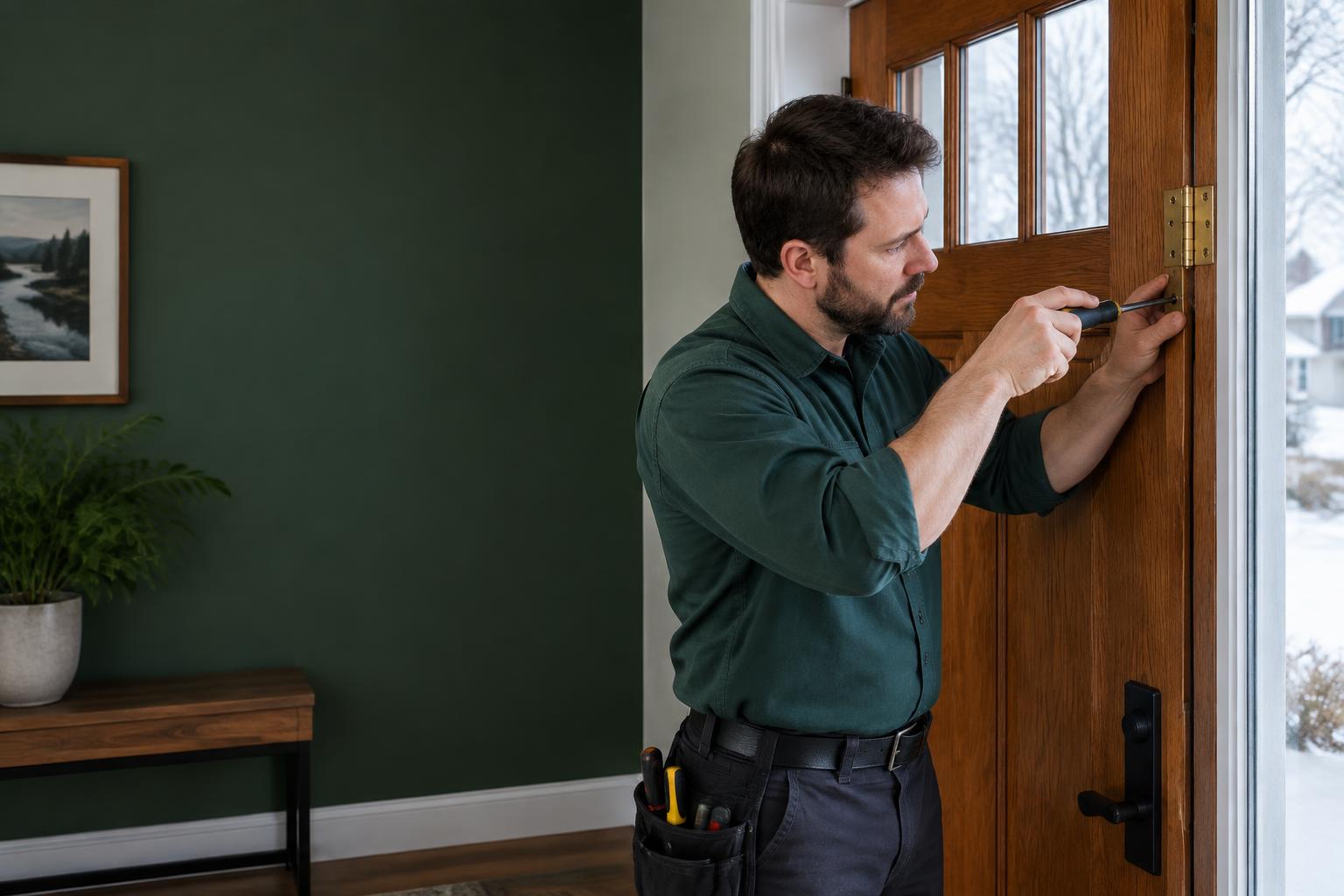
Steel and metal door repair covers the range of problems that show up on insulated steel entry doors, hollow metal commercial doors, and metal-clad exterior doors used across Winnipeg homes, condos, and businesses. This includes dents and dings in the steel skin, rust bubbling through paint along the bottom edge, doors that stick or drag in the frame, hardware that has loosened or seized, weatherstripping that has failed, and frames that have shifted out of square. Steel doors are popular in Winnipeg because they resist the city's wide temperature swings reasonably well, but the metal skin, the foam core underneath, and the surrounding frame all respond differently to cold, moisture, and road salt, which is why issues tend to cluster in predictable ways.
A steel door repair assessment usually looks at the whole assembly rather than a single symptom. A door that will not latch might actually be a frame problem, a hinge problem, or a strike plate problem, and a technician needs to see the door in person to tell the difference. This service applies to exterior entry doors, service doors on commercial buildings, and some interior hollow metal doors in condos and multi-unit buildings, though fully powered or automatic metal doors fall into a different category and availability for that specialist work depends on confirmed capacity.
Metal door repair in Winnipeg also includes cosmetic concerns, since many homeowners want a dented or rust-stained steel door restored rather than replaced outright. Whether that is realistic depends on how deep the damage goes and whether the insulating foam core has been compromised, which is something a visual and hands-on assessment can determine.
- Dents, dings, and surface scratches in the steel skin
- Rust spots or bubbling paint near the bottom edge or corners
- Doors that stick, drag, or bind when opening and closing
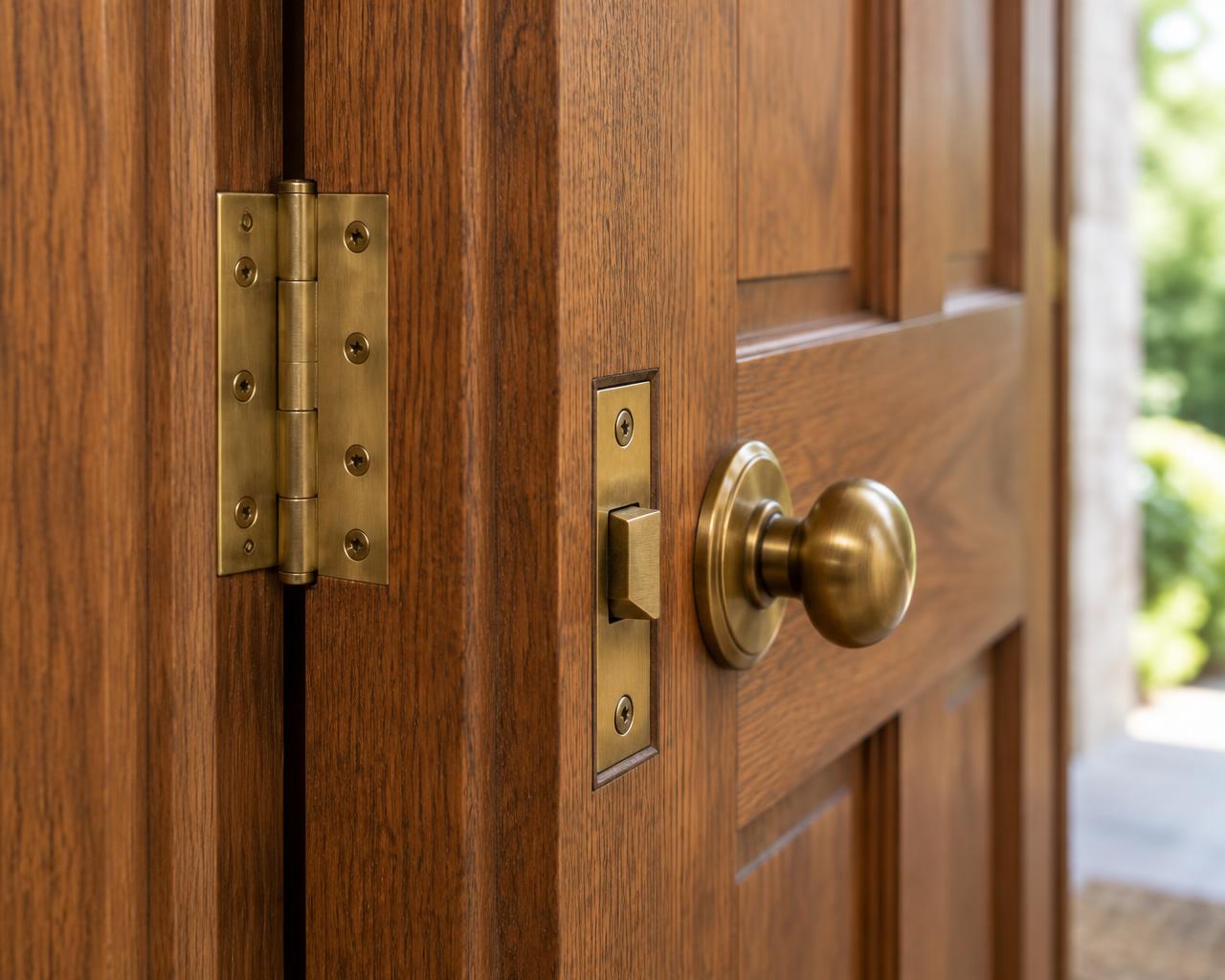
- Loose, worn, or seized hinges and hardware
- Failed or compressed weatherstripping and door sweeps
- Frames that have shifted, twisted, or pulled away from the wall
Common signs your steel door needs attention
Steel doors are durable, but the signs that something is wrong tend to be visible before the problem becomes serious. A door that used to swing freely and now drags across the threshold or catches on the frame is one of the most common complaints Winnipeg homeowners describe when they call about steel door repair. Another frequent sign is a deadbolt or latch that lines up poorly with the strike plate, requiring a shoulder bump or a lift of the handle to get it to close.
Visible rust is another early warning sign, especially along the bottom rail where snowmelt and road salt splash collects over winter. Left alone, surface rust can work its way through the steel skin and eventually reach the foam core, which is harder and more expensive to repair than catching it early. Homeowners also notice drafts around the door edges in winter, a sign that weatherstripping has compressed, cracked, or pulled loose from the frame.
Cosmetic dents from a dropped bike, a wind-blown object, or an accidental knock are common too. Some dents are purely surface level and can be addressed without replacing the door, while others distort the panel enough that filling and refinishing will not give a clean result. A technician assessing the door can tell you which category your dent falls into.
On commercial and condo buildings, signs tend to include doors that no longer close and latch on their own, closers that slam or fail to engage, and hinges that have become loose from heavy daily traffic. Because these doors see far more open-and-close cycles than a residential entry door, wear shows up faster and is often first noticed by staff or building managers rather than individual tenants.
- Door drags, binds, or scrapes against the frame or threshold
- Deadbolt or latch no longer lines up with the strike plate
- Rust spots along the bottom edge, corners, or around hardware
- Visible dents or warping in the steel panel
- Cold drafts or daylight visible around the door edges
- Door fails to close and latch on its own (commercial doors)
How does Winnipeg's climate affect steel and metal doors?
Winnipeg's climate is genuinely tough on steel doors, and understanding why helps explain why certain repairs come up again and again. Steel conducts heat and cold far more readily than wood or fibreglass, so an exterior steel door experiences a large temperature difference between its outside face and inside face during a typical -30 °C January day. That temperature difference causes the metal skin to expand and contract at a different rate than the foam core and the internal frame, and over many freeze-thaw cycles this can lead to subtle warping, seam separation, or a door that no longer sits perfectly flush in its frame.
Moisture is the other major factor. Melting snow and ice dragged in on boots, combined with road salt spray in parking areas and driveways, creates a corrosive environment right at the bottom of the door and the threshold, which is exactly where most rust starts. Once the protective paint or coating is scratched or chipped, bare steel underneath is exposed to that moisture and salt, and rust can begin forming within a single winter season.
Dry winter air inside Winnipeg homes, often a result of forced-air heating running for months at a stretch, can also cause weatherstripping and door sweeps to dry out, shrink, and crack, which lets cold drafts through even when the door itself is in good shape. In spring and summer, humidity swings the other way, and wood-core components around a steel door's frame can swell slightly, changing how the door fits.
Frost heave is another regional factor specific to Winnipeg's clay-heavy soil. As the ground freezes and thaws unevenly around a home's foundation, door frames anchored nearby can shift slightly out of square over several years, even when the door itself has no defects. This is a common reason a steel door that used to close perfectly now needs a shoulder bump or no longer latches cleanly, and it is something an assessment can distinguish from a problem with the door panel itself.
- Repeated freeze-thaw cycles stress seams and welds in the steel skin
- Road salt and meltwater accelerate rust at the bottom rail and threshold
- Dry winter indoor air shrinks and cracks weatherstripping
- Frost heave can shift frames out of square over time
- Large temperature swings between inside and outside faces stress the door assembly
What happens during a steel door repair assessment?
A typical assessment starts with a visual inspection of the door from both sides, checking the steel skin for dents, rust, and paint failure, and checking the frame for square, level, and plumb. The technician will open and close the door several times to feel for dragging, binding, or resistance, and will check how the latch and deadbolt align with the strike plate when the door is closed.
Next comes a hands-on check of the hardware: hinges are tested for play and tightness, screws are checked to see if they are stripped or backing out of a worn-out wood jamb, and any closers or automatic hardware are assessed separately since that category depends on confirmed specialist capacity. Weatherstripping and sweeps are inspected for compression, cracking, or gaps, often by running a hand along the seal with the door closed to feel for drafts.
If rust is present, the technician will assess how deep it goes. Surface rust that has not penetrated the steel skin can often be treated, while rust that has created pitting or holes through the metal usually means that section of the door is structurally compromised. For dents, the assessment considers the size, depth, and location of the damage, and whether the foam core behind the dent has been crushed or separated from the steel skin, which affects whether a clean cosmetic repair is realistic.
At the end of the assessment, the technician explains what they found and the options available, whether that is hardware adjustment, frame correction, rust treatment, panel repair, weatherstripping replacement, or, in some cases, a recommendation that replacement makes more sense than repair. This is also the point where cost factors are discussed, since steel door repair pricing depends heavily on what the assessment finds rather than a flat rate.
- Visual inspection of the steel skin, frame, and hardware
- Open-and-close test to check for dragging, binding, or misalignment
- Hinge and screw inspection, including the condition of the jamb
- Weatherstripping and sweep check for drafts and compression
- Rust depth assessment to determine if treatment or panel repair is needed
- Dent assessment to check whether the foam core is affected
Repair or replace a damaged steel door?
Deciding between repairing and replacing a steel door comes down to how much of the door assembly is actually affected. A door with a loose hinge, a misaligned strike plate, worn weatherstripping, or minor surface rust is usually a strong repair candidate, since these are contained issues that do not affect the structural integrity of the panel. Many of the steel door calls Winnipeg homeowners make fall into this category.
Replacement becomes the more sensible option when rust has penetrated through the steel skin in multiple spots, when the foam core has absorbed moisture and lost its insulating value, when the door has been struck hard enough to visibly bow or twist the panel, or when the frame itself has deteriorated beyond what shimming and reinforcement can fix. A door that has been rusting from the inside out for several winters, for example, may look repairable on the surface while actually being too far gone underneath.
Another consideration is energy performance. A steel door with a compromised foam core will not insulate the way it did when new, and in a Winnipeg winter that can mean a noticeably colder entryway and higher heating costs. If an assessment finds that the insulating value has dropped significantly, replacement may make more long-term sense even if the door is still technically functional.
For commercial and condo buildings, the calculation often includes how much daily traffic the door sees and how disruptive a full replacement would be versus a repair that buys several more years of service. A hollow metal door on a busy commercial entrance may be worth reinforcing and repairing multiple times before replacement makes sense, simply because downtime and disruption carry their own cost.
An honest assessment should walk you through both options rather than defaulting to the more expensive one. If a technician tells you repair will not hold up, ask what specifically they found that leads to that conclusion, whether it is rust depth, frame condition, or foam core damage.
- Repair is usually realistic for hardware, alignment, weatherstripping, and minor rust
- Replacement is often the better call for through-rust, bowed panels, or failed foam cores
- Energy performance loss from a damaged core is a long-term cost to weigh
- Commercial doors may be worth repeated repairs given replacement downtime
What affects the cost of steel door repair in Winnipeg?
Steel door repair cost depends on several factors rather than a single flat rate, which is why an assessment comes before any pricing discussion. The extent of the damage is the biggest factor: adjusting a hinge or strike plate is a much smaller job than treating rust across a full panel or correcting a frame that has shifted out of square.
The type of door matters too. A standard residential insulated steel entry door is generally more straightforward to work on than a heavier-gauge commercial hollow metal door, and specialty doors with decorative glass inserts or unusual hardware can add complexity. Access also plays a role; a door on a ground-level home entrance is simpler to work on than a service door at the back of a commercial building with limited clearance.
Materials needed are another factor. Replacing a full weatherstripping kit, a door sweep, hinges, or a strike plate adds material cost on top of labour, and if a section of the steel skin needs to be filled, primed, and refinished, that adds paint-matching time as well. The condition of the surrounding frame is a factor too, since a frame that needs reinforcing or re-squaring takes longer than one that is sound.
Finally, whether the work is residential or commercial can affect scheduling and complexity, since commercial doors sometimes need to be worked on around business hours or tenant access requirements. None of these factors produce a set price without an assessment, which is why DoorMend reviews the specific door and damage before discussing options rather than quoting a number sight unseen.
- Extent and type of damage (hardware, rust, dents, frame)
- Door type: residential insulated steel vs commercial hollow metal
- Accessibility of the door's location
- Materials required: weatherstripping, hinges, strike plates, paint matching
- Condition of the surrounding frame
- Residential vs commercial scheduling considerations
Can I fix a sticking or rusted steel door myself?
Some steel door issues are safe for an owner to look at before calling anyone. Tightening a visibly loose hinge screw, cleaning debris out of a strike plate, or wiping down and inspecting weatherstripping for obvious cracking are all reasonable things to check yourself. If a door drags only in humid summer weather and returns to normal in winter, that can simply be noted and mentioned when booking an assessment, since it helps narrow down the cause.
Surface rust spots that are small and have not penetrated the steel can sometimes be lightly cleaned by a homeowner, though matching paint and primer correctly is harder than it looks and a poor patch job can trap moisture underneath and make the rust worse. This is a case where it is reasonable to try something small, but worth stopping if the result does not look right.
Where you should stop and call a trained technician is anywhere the door's structural function or safety hardware is involved. If a door will not close and latch securely, that is a security issue, not just a cosmetic one, and should not be left unresolved. Frame problems, especially anything involving a door that has shifted enough to bind badly or that shows signs of forced entry damage, should be assessed professionally rather than adjusted by trial and error. Doors with any kind of powered opener, automatic closer, or access control hardware should not be opened up or adjusted by an owner, since that work depends on specialist capacity and involves electrical components that are outside safe DIY territory.
Rekeying a lock, resolving a lockout, or anything involving the building's broader security or alarm system falls outside steel door repair entirely and outside what DoorMend handles, so those situations call for a different kind of professional.
- Safe to check: loose hinge screws, strike plate debris, weatherstripping condition
- Safe to try carefully: cleaning very minor, shallow surface rust spots
- Stop and call a professional: a door that won't latch or close securely
- Stop and call a professional: frame damage or suspected forced-entry damage
- Never DIY: powered openers, automatic closers, or access control hardware
- Not a DoorMend service: lockouts, rekeying, and security/alarm systems
How to prevent steel door problems from coming back
Preventing repeat issues on a steel door mostly comes down to keeping moisture off the metal and keeping hardware adjusted before small misalignments turn into bigger ones. Wiping down the bottom rail and threshold area after winter storms, especially where salt spray tends to collect, helps slow down rust before it starts. A light inspection each fall, checking weatherstripping and sweeps before the coldest months arrive, catches drafts while they are still an easy fix.
Touching up small paint chips as soon as they appear keeps bare steel from being exposed to moisture in the first place, since rust almost always starts at a scratch or chip rather than on an intact painted surface. Lubricating hinges once or twice a year helps prevent the kind of wear that eventually causes sagging or binding, and periodically checking that screws are snug in the jamb catches loosening before the door starts to drag.
For condo and commercial buildings with heavy daily traffic, a more frequent hardware check makes sense given how many open-and-close cycles the door goes through compared with a single-family home entrance. Building managers who schedule a seasonal look at exterior steel doors, particularly before and after winter, tend to catch frost heave and frame shift issues earlier, when they are simpler to correct.
None of this maintenance requires special tools or training, and doing it consistently is one of the more effective ways to extend the useful life of a steel door in Winnipeg's climate.
- Wipe down the bottom rail and threshold after salty, slushy weather
- Check weatherstripping and sweeps each fall before winter sets in
- Touch up paint chips promptly to prevent rust from starting
- Lubricate hinges once or twice a year
- Check that hardware screws remain snug in the jamb
- Commercial and condo doors benefit from more frequent seasonal checks
Homes, condos, and businesses: does steel door repair differ?
Residential steel entry doors typically see a handful of open-and-close cycles a day and are usually a single panel with a lock, deadbolt, and sometimes a decorative glass insert. Repairs on these doors tend to focus on weatherstripping, hinge adjustment, rust at the bottom rail, and occasional dent repair, and the assessment can usually happen quickly since there is one door and one household to work around.
Condo buildings often have a mix of unit entry doors, which may be steel or metal-clad, and common-area doors that see much heavier traffic. Scheduling can be more involved since access sometimes needs to be coordinated with a property manager or condo board, and any shared door that affects building security needs to be addressed promptly since multiple residents rely on it.
Commercial buildings frequently use heavier-gauge hollow metal doors designed for high traffic, and these doors often have closers, panic hardware, or other commercial-grade components. Availability for repair or adjustment of panic hardware and powered components depends on confirmed specialist capacity, since this hardware has specific safety requirements. Business owners also tend to care more about minimizing downtime, since an exterior door that will not close securely is both a security concern and, in winter, an energy and comfort problem for the whole building.
In all three settings, the core assessment process is similar: look at the door, the frame, and the hardware, determine what is actually causing the problem, and lay out the realistic options before any work begins.
- Residential: usually single-panel doors, simpler scheduling
- Condo: may involve coordinating with a property manager or board
- Commercial: heavier-gauge doors, possible panic hardware or closers
- Specialist hardware availability depends on confirmed capacity in all settings
Frequently asked questions about steel door repair in Winnipeg
Can a dented steel door be fixed without full replacement? Often yes, if the dent is shallow and the foam core underneath has not been crushed or separated from the steel skin. An assessment can determine whether a cosmetic repair will hold up or whether the damage goes deeper than the surface.
Why does my steel door only stick in summer? Humidity and heat can cause surrounding wood components in the frame or jamb to swell slightly, which changes how the door fits even though the steel panel itself has not changed. This is different from a winter dragging issue caused by frost heave or a frame that has shifted, and describing when the problem happens helps during an assessment.
Is rust on a steel door always a sign I need a new door? Not necessarily. Surface rust that has not eaten through the steel skin can often be treated and refinished. Rust that has created pitting or holes through the metal, especially near the bottom rail, usually means that section needs more than a surface fix, which an assessment can confirm.
Does DoorMend repair garage doors or automatic doors too? Garage doors, automatic openers, and access control systems are specialist categories, and availability for that work depends on confirmed specialist capacity. Steel entry doors and hollow metal doors without powered components are the core of this service.
What if my steel door won't lock properly? That can come down to a misaligned strike plate, a frame that has shifted, or worn hardware, and it should not be left unresolved since it affects how securely your entrance closes. An assessment can usually identify the cause quickly.
Will DoorMend give me a price over the phone without seeing the door? Pricing depends on what an assessment finds, since the same symptom can have very different causes and repair scopes. An enquiry describing the problem and photos helps start the conversation, but it is not the same as a firm quote or a booking.
How to request a quote for steel door repair
Requesting a quote for steel door or metal door repair in Winnipeg starts with describing the problem as specifically as you can: is the door dragging, is there visible rust, does it fail to latch, or is there a dent you want addressed? Mentioning when the problem started and whether it changes with the weather, such as worse in deep winter cold or only noticeable in summer humidity, gives useful context before anyone sees the door in person.
Sending a few clear photos helps a lot. Photos of the hinge side, the latch and strike plate area, any visible rust or dents, and a wider shot showing how the door sits in the frame all help with an initial read on the situation, whether the door is on a home near downtown Winnipeg, in a suburban neighbourhood, or at a commercial entrance.
From there, an assessment is what actually determines the realistic repair options and what affects the cost for your specific door. An enquiry is the starting point for that conversation, not a booking or a confirmed appointment, and not a substitute for someone seeing the door and frame in person. This approach exists because steel door problems that look similar on the surface, whether it's a stuck door, a rusted panel, or a door that won't close right, often have different underlying causes and different realistic fixes once examined directly.
- Describe the specific problem: dragging, rust, latch failure, dents, drafts
- Note when it started and whether weather or season affects it
- Send photos of the hinge side, latch area, and any visible damage
- An assessment determines the realistic repair options and cost factors
- An enquiry starts the conversation; it is not a confirmed booking