What does French door repair cover in Winnipeg?
French door repair addresses the specific challenges that come with a pair of hinged doors meeting in the middle, rather than the single-slab setup of a standard entry door. That includes the active door that carries the main lock, the inactive or fixed panel that is secured by flush bolts at the top and bottom, and the astragal, which is the vertical strip where the two doors meet and seal against each other.
Because French doors rely on two panels aligning precisely, even small amounts of movement in one door or its frame can throw off how the whole pair closes, locks, and seals. Repair work often involves rehanging a sagging panel, adjusting flush bolts so the inactive door seats correctly, replacing worn astragal weatherstripping, and fixing multipoint lock mechanisms that have become stiff or misaligned.
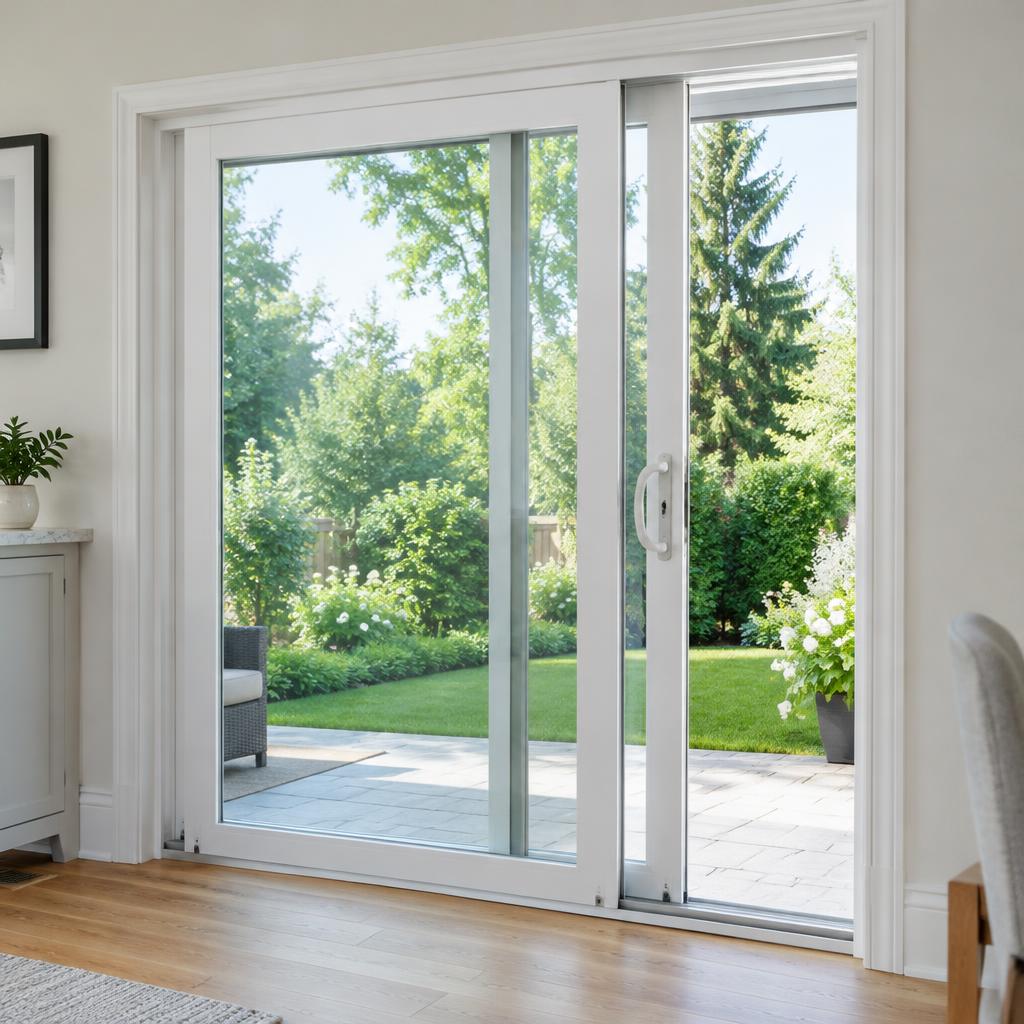
French doors in Winnipeg homes are often installed as patio or garden doors, so repair also commonly covers glass panel seals, sightline alignment, and hardware that has to work reliably through big seasonal temperature swings.
- Rehanging and aligning the active and inactive door panels
- Flush bolt adjustment for the fixed panel
- Astragal and weatherstripping replacement at the meeting point
- Multipoint lock and handle mechanism repair
- Glass panel seal and frame inspection
Signs your French doors need adjustment or repair
The clearest sign of trouble is a gap along the astragal where the two doors meet, letting in light, drafts, or noise even when both panels appear closed. This usually means one panel has dropped slightly or the frame has shifted, pulling the meeting point out of alignment.
Difficulty locking is another common complaint, particularly with multipoint locking systems that engage at several points along the door's height. If the handle is hard to lift into the locked position, or the lock catches partway, the panels are likely not aligned well enough for the bolts to reach their strike points cleanly.
Homeowners also report one panel dragging on the floor or threshold while the other swings freely, condensation forming between glass panes, or a general looseness where the doors rattle in the frame during windy weather. Any of these point to hardware or alignment issues rather than a need to replace the entire unit.
Some homeowners also notice that French doors become noisy, creaking at the hinges or clicking at the lock, well before any visible gap appears, which is often an early sign worth addressing before the issue grows into a full misalignment.
- Visible gap or draft along the centre astragal
- Multipoint lock handle is stiff or will not fully engage
- One panel drags while the other swings freely
- Rattling doors or a loose feel when closed
- Condensation between glass panes in a sealed unit
How Winnipeg's climate affects French patio doors
French doors, especially those used as patio or garden entries, face some of the toughest exposure in a Winnipeg home. Deep cold down to minus thirty degrees makes frame materials contract, which can widen the gap at the astragal just enough to let in a steady draft, even on doors that sealed well in warmer months.
Freeze-thaw cycling through the shoulder seasons causes repeated expansion and contraction in wood frames and door components, gradually loosening hinge screws and flush bolt strike plates. Because French doors depend on precise alignment between two panels, this kind of movement shows up faster here than it does on a single door.
Dry winter indoor air can shrink wood panels and frames, while Winnipeg's humid summers cause the same materials to swell, and that seasonal swing is a major reason French doors often need re-adjustment at least once a year in this climate. Glass units in French doors can also show seal failure from this cycling, appearing as fog or condensation trapped between panes.
Frost heave around a patio door's foundation can tilt the frame slightly, and salt carried in on footwear during winter can accelerate corrosion on hinges, flush bolts, and threshold tracks over time.
What happens during a French door assessment and repair?
An assessment starts by operating both panels together, checking where the astragal gap is widest, and testing how smoothly the multipoint lock engages across its full travel. Technicians also check whether the frame is still square, since French doors are especially sensitive to even minor frame distortion given how two panels need to meet precisely.
Depending on findings, the repair may involve re-hanging one or both panels, adjusting hinge positions, resetting flush bolts so the inactive panel locks solidly top and bottom, or replacing worn astragal weatherstripping to close up drafts. Multipoint lock mechanisms that have become gritty or misaligned may need cleaning, lubrication, or component replacement.
When glass panels show fogging between panes, that typically indicates a failed seal in the glass unit itself, which is assessed separately from the door hardware and frame since it involves the sealed glass assembly rather than the swinging mechanism. The assessment will outline whether hardware adjustment alone resolves the issue or whether frame or panel-level repairs are also needed.
Repair or replace French doors?
Most French door problems, including misalignment, worn weatherstripping, and stiff hardware, are solved through repair and adjustment rather than full replacement. These issues are mechanical and do not usually indicate a failure of the door panels themselves.
Replacement becomes worth considering when the frame has warped significantly, when wood panels have extensive rot, or when a glass unit's seal has failed and fogging cannot be resolved without replacing the insulated glass. In older French door installations, hardware may also be discontinued or difficult to match, which can tip the decision toward replacing a panel rather than chasing parts.
A useful way to think about it: if the problem is how the doors meet, lock, or seal, repair is usually realistic. If the problem is the structural condition of the panel or frame material itself, replacement of that component is more likely to be the lasting fix. An assessment looks at both the hardware and the material condition before recommending a direction.
What affects the cost of French door repair in Winnipeg?
Cost depends heavily on how many points of the system need attention. Adjusting hinges and flush bolts on a single panel is a smaller job than addressing misalignment across both panels plus a worn astragal and a stiff multipoint lock.
Material matters as well, since wood French doors often require more hands-on fitting and finishing work, while vinyl or aluminum-clad units may involve more component replacement. Glass unit issues, such as failed seals causing condensation between panes, add a separate layer of cost since they involve replacing a sealed glass assembly rather than adjusting hardware.
Hardware availability can also affect cost. Multipoint lock systems and flush bolts vary by manufacturer, and sourcing a matching replacement for an older French door set can take more time than a straightforward adjustment. An assessment is the only reliable way to understand likely cost for a specific pair of doors.
Seasonal timing can also influence cost slightly, since diagnosing a draft or alignment issue is often easier when the temperature difference between inside and outside makes the problem more obvious, though this is a matter of convenience rather than a strict requirement.
- Number of panels and hardware points needing adjustment
- Door material: wood, vinyl, or aluminum-clad
- Whether glass unit seal failure is involved
- Availability of matching multipoint lock or flush bolt hardware
- Condition of the surrounding frame
What a homeowner can check before calling for French door repair
Homeowners can safely check whether the gap at the astragal is even along its full height or wider at the top or bottom, which helps describe the problem accurately. Looking at whether the flush bolts on the inactive panel are fully extending into their strike holes at the top and bottom of the frame is also something that can be observed without tools.
It is fine to gently test whether both panels swing freely or whether one drags, and to note whether the multipoint lock handle feels stiff throughout its motion or only catches at one point. These observations are useful details for an assessment.
What should be avoided is forcing a stuck multipoint lock with extra pressure, attempting to remove panels from their hinges, or trying to realign a frame by prying at it, since French door hardware is more complex than a standard single door and forcing it can damage the mechanism or the glass. Any sign of a cracked or failing glass unit, or significant frame movement, should be left to a trained technician to evaluate.
Maintenance tips for French doors in a prairie climate
Lubricating hinges, flush bolts, and multipoint lock components once or twice a year helps them handle Winnipeg's temperature swings without binding or seizing. Doing this before the onset of winter cold is particularly useful since lock mechanisms are more prone to stiffening in low temperatures.
Checking astragal weatherstripping each fall for wear and replacing it when it has flattened or torn is one of the most effective ways to prevent drafts between the two panels. For wood French doors, periodically inspecting the finish on both the interior and exterior faces and resealing exposed areas helps manage the swelling and shrinking cycle driven by Winnipeg's humidity swings.
It also helps to periodically check that both panels still swing freely and close flush with each other, since catching small misalignments early is far easier to correct than waiting until the doors no longer lock properly at all.
French doors in homes versus condos and businesses
In single-family homes, French doors are most often used as patio or garden entries and see moderate daily use, so repair needs usually develop gradually from weather exposure and normal wear over several seasons.
In condo buildings, French doors leading to balconies or shared outdoor spaces can be subject to condo board rules about what finishes or hardware are permitted, and any exterior-facing work may need coordination with building management, particularly for units above ground level.
Businesses using French doors as a feature entry, such as in a reception area or meeting space, tend to see different wear patterns from frequent opening and closing by many different people throughout the day, which can accelerate hardware wear compared to a residential setting.
Regardless of setting, keeping track of when a French door was last adjusted and what was done can help speed up future assessments, since repeat issues at the same point in the frame often point to an underlying cause worth addressing directly.
Frequently asked questions about French door repair
Why do my French doors only leak air in winter? Cold-weather frame contraction and stiffened weatherstripping are the most common causes, since the same gap that is barely noticeable in summer becomes a clear draft once temperatures drop.
Can the multipoint lock on a French door be repaired instead of replaced? In many cases yes, since issues often come down to alignment, lubrication, or a single worn component rather than failure of the entire mechanism.
What causes fog between the glass panes in a French door? That typically indicates the sealed glass unit's seal has failed, allowing moisture to enter between the panes, which is a glass unit issue rather than a hardware problem.
Do both panels of a French door need to be replaced if only one is damaged? Not necessarily, since panels can sometimes be repaired or replaced individually depending on the extent of the damage and how the hardware is configured.
How often should French door hardware be serviced in Winnipeg? Checking and lubricating hardware at least once a year, ideally before winter, helps the doors handle the seasonal swings this region sees.
Requesting a French door repair quote from DoorMend
When requesting a quote, describe which panel is causing trouble, what the astragal gap looks like, and whether the multipoint lock engages fully or catches partway. Noting whether the issue is worse in cold weather also helps frame the likely cause before an assessment.
Photos are especially useful for French doors because the hardware and alignment issues are easier to see than to describe. Photos of the astragal gap from inside and outside, the flush bolts at the top and bottom of the inactive panel, and the multipoint lock mechanism give a clearer starting point.
An assessment is what determines the realistic repair options for a specific pair of French doors, and submitting an enquiry through DoorMend is a request for that assessment rather than a confirmed booking. Scheduling and scope are worked out after the details and photos have been reviewed.