What does door closer and hardware repair cover in Winnipeg?
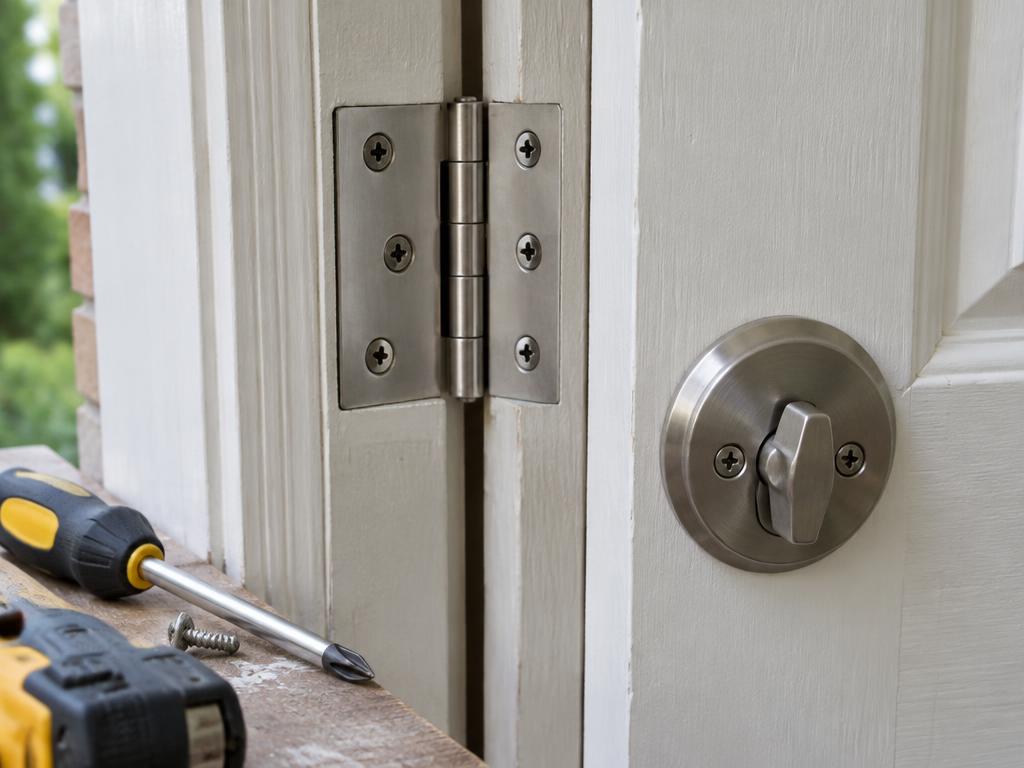
Door closer and hardware repair in Winnipeg covers the mechanical parts that make a door open, close, latch, and stay secure day after day. This includes surface-mounted door closers, concealed overhead closers, hinges, pivots, strike plates, latches, deadbolt mechanisms, panic hardware housings, door handles and levers, and the small but essential fasteners and plates that hold everything together. When any one of these pieces wears out, loosens, or fails, a door that used to swing smoothly can start slamming, sagging, sticking, or refusing to latch at all.
This service is different from a full door replacement. Most of the time, a door slab itself is perfectly sound and only the hardware attached to it has reached the end of its working life or has been knocked out of adjustment. Fixing or swapping hardware is usually a far more targeted repair than replacing an entire door unit, and it is a very common problem for both Winnipeg homeowners and commercial property managers.
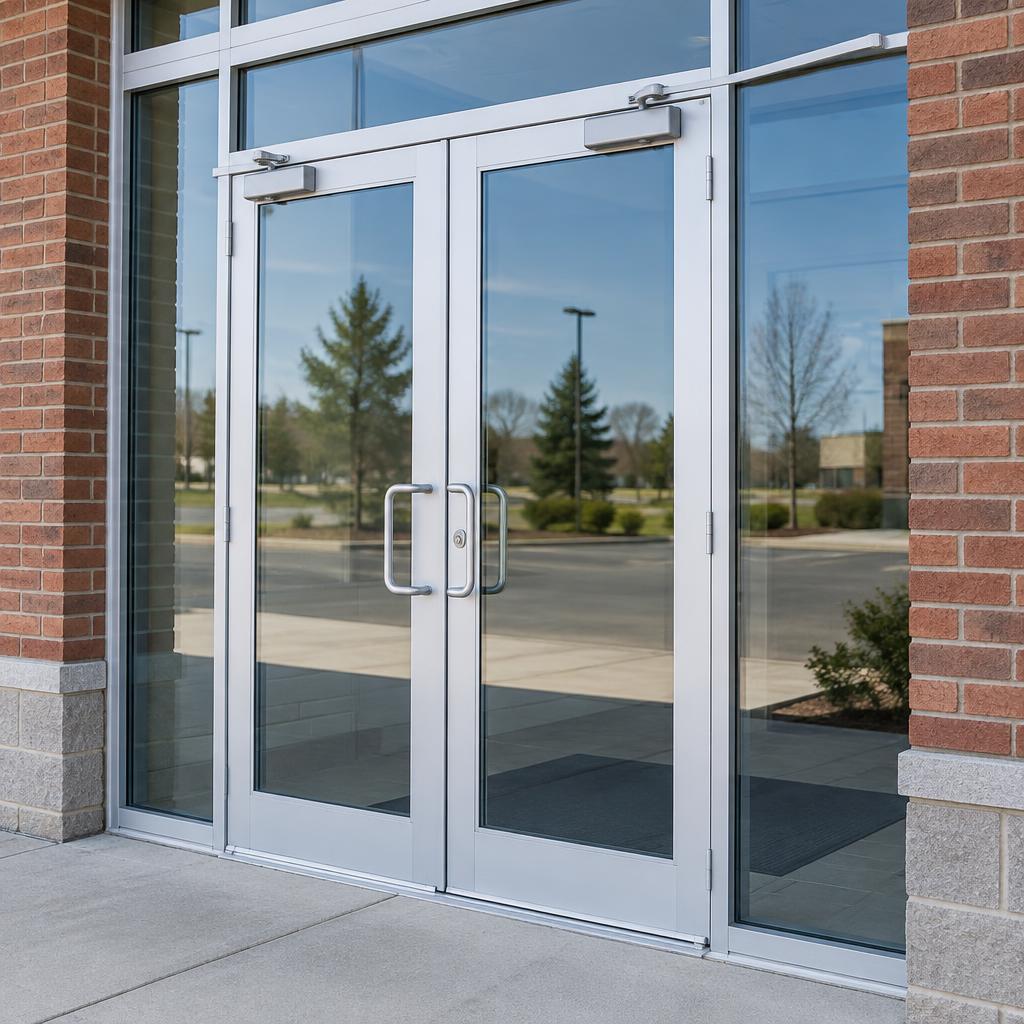
Hardware repair applies across door types: wood entry doors, steel doors, fibreglass doors, vinyl patio doors, aluminum storefront doors, and interior doors of every material. Each door type pairs with hardware rated for its weight and use, so an assessment also looks at whether the existing hardware was ever correctly matched to the door in the first place.
- Surface-mounted and concealed door closers
- Hinges, pivots, and continuous (piano) hinges
- Strike plates, latches, and deadbolt mechanisms
- Handles, levers, and push/pull hardware
- Door stops, holders, and coordinators on pairs of doors
Why is my door closer leaking fluid or closing too fast?
A door closer is a hydraulic cylinder: fluid inside the body controls how quickly the door swings shut after someone lets go of it. Over years of use, seals inside that cylinder wear down, and fluid can begin to seep out around the arm or the adjustment screws. Once enough fluid has escaped, the closer loses its ability to control speed, and the door starts slamming shut under spring tension alone instead of closing gently.
Other closers fail in the opposite direction: they barely move the door at all, leaving it to hang open or drift shut so slowly that it never fully latches. This usually points to a worn-out spring, a closer that was never adjusted for the door's weight and width, or internal components that have simply given out after many seasons of temperature swings.
- Fluid stains or drips near the closer body
- Door slamming shut with a loud bang
- Door stopping short and never reaching the latch
- Grinding, squealing, or hissing noise during the swing
- Visibly bent or loose closer arm
How does Winnipeg's winter affect door closers and hinges?
Winnipeg's climate is hard on door hardware in ways that milder cities rarely experience. When temperatures drop toward -30 °C, hydraulic fluid inside a door closer thickens, making the closing action noticeably slower and sometimes jerky. As the fluid warms back up indoors, the same closer can suddenly feel too fast, swinging and slamming in a way it never did a few months earlier. This freeze-to-thaw cycle, repeated every winter, accelerates the wear on internal seals and gaskets.
Frost heave and the repeated expansion and contraction of a building's foundation and framing can also shift a door frame by a few millimetres over a winter. That is often enough to throw hinges and strike plates out of alignment, so a door that latched perfectly in October may bind, drag, or fail to catch by January. Dry winter air shrinks wood components slightly, which can loosen screws in hinge leaves, while humid Winnipeg summers swell them again, creating an ongoing cycle of loosening and tightening that fatigues the wood around screw holes.
Road salt and winter grit tracked in on footwear can also work into exposed hinge pins and closer mechanisms near entryways, adding grit that accelerates wear on moving parts. Exterior hardware exposed to freeze-thaw moisture is especially prone to this kind of gradual, hidden damage, which is why hardware that looked fine in the fall sometimes fails abruptly once the deep cold sets in.
- Hydraulic fluid thickens in extreme cold, slowing or sticking the closing action
- Frame movement from frost heave throws hinges and strikes out of alignment
- Dry air shrinks wood, loosening screws in hinge leaves
- Humidity swings swell wood and fatigue screw holes over time
- Salt and grit accelerate wear on exposed hinge pins and mechanisms
What happens during a door hardware assessment?
An assessment typically starts with a visual check of the whole door assembly rather than just the one part that seems to be failing, because hardware problems often have a connected cause. A technician looks at how the door hangs in its frame, checks for sag at the top corner opposite the hinges, and tests how smoothly it swings through its full arc. The closer, if there is one, is checked for leaks, adjustment settings, and whether the arm geometry still matches how the door is mounted.
Hinges are inspected for loose screws, worn pins, elongated screw holes, and corrosion. On exterior doors, strike plates and latch mechanisms are checked for proper alignment, since even a millimetre of misalignment can prevent a deadbolt from throwing cleanly or a latch from catching. Interior doors get a similar look, with particular attention to pocket door tracks, bi-fold pivots, or French door astragals where more moving parts are involved.
Based on what is found, the technician outlines the available options, which might include adjusting existing hardware, replacing a single worn component such as a closer or a hinge, or in some cases recommending a fuller repair if the frame or door slab itself has been affected. Every assessment is specific to the door in front of the technician; the same symptom can have different underlying causes on different doors.
Step by step: how is a door closer or hinge actually repaired?
Once the cause of the problem is identified, the repair generally follows a predictable sequence. For a closer, this usually means removing the old unit, checking the mounting plate and screws for damage, and installing a replacement or rebuilt closer sized correctly for the door's weight, width, and the amount of traffic it gets. The arm is then adjusted through its sweep, latch, and backcheck settings so the door closes at a controlled, consistent speed without banging.
For hinge repairs, the process often involves removing the door from the frame, inspecting the hinge mortises for wear, filling or shimming elongated screw holes so new screws can grip solid wood or metal, and reinstalling hinges that are properly sized and squared to the frame. If a door has begun to sag, this is also the stage where a technician checks whether the frame itself has shifted and needs correction before new hardware is installed, since new hinges on a crooked frame will not solve a sagging door.
Strike plates and latch repairs typically involve adjusting or relocating the plate slightly so it lines up with the latch bolt, filling and re-drilling the frame where needed, and testing the door through many open-close cycles to confirm it latches consistently in different temperatures and humidity levels, as much as that can be tested in a single visit.
Throughout the process, technicians use fasteners and components matched to the existing hardware set wherever possible, so that handle, lock, and closer finishes stay consistent and the repaired parts blend in with the rest of the doorway.
Repair or replace: when is new hardware worth it versus a full fix?
Deciding between repairing existing hardware and replacing it outright depends on several practical factors rather than a one-size-fits-all rule. Age is one consideration: a closer or hinge set installed decades ago may simply be at the end of its useful service life, and replacement parts for very old models can be difficult or impossible to source. In these cases, swapping to a current, equivalent unit is often more practical than trying to repair something no longer supported by manufacturers.
The extent of damage matters too. A single loose hinge screw is a simple fix. A door with three worn hinges, a leaking closer, and a misaligned strike plate all at once may point to a frame or installation issue that is better addressed by replacing the full hardware set so everything works together rather than patching each symptom separately.
Usage patterns also play a role. Commercial doors and condo common-area doors that open hundreds of times a day wear out hardware faster than a quiet interior bedroom door, so a closer that would last many years on a home office door might need replacement sooner on a busy building entrance. Matching hardware grade to actual traffic levels is part of getting a durable result rather than a repeat callback.
What affects the cost of door closer or hardware repair in Winnipeg?
The cost of hardware repair work varies based on several factors rather than a flat rate, and DoorMend does not quote pricing without first understanding the specific door and problem. The type of hardware involved is one factor: a basic residential hinge is a different scope of work than a commercial-grade door closer or panic hardware assembly.
The number of components needing attention also affects cost, since repairing one hinge is a smaller job than addressing hinges, closer, and strike plate together on the same door. Accessibility matters as well: hardware on a ground-floor entry door is generally more straightforward to access than hardware on an upper-level unit in a condo building or a door with limited clearance around it.
Whether parts need to be sourced also plays into timing and cost. Standard hinges and closers are often readily available, but hardware for older or imported door models may need to be special-ordered, which can add time to the job. Finally, whether the underlying frame is sound or needs correction alongside the hardware itself will change the scope of the work, since frame issues typically require more labour than a straightforward hardware swap.
- Type and grade of hardware (residential versus commercial-duty)
- Number of components needing repair or replacement
- Accessibility of the door, including condo or upper-floor units
- Availability of matching parts for the existing door and hardware
- Whether the frame also needs correction
What can I check myself before calling for door hardware repair?
There are a few simple, safe checks a homeowner or property manager can do before requesting an assessment. Visually inspect hinges for obviously loose or missing screws, and check whether the screws are stripped and spinning freely in their holes. Look at the closer body and arm for any visible fluid leaks, bent components, or loose mounting screws. Check whether the door latches fully when closed gently by hand, and note whether it only fails to latch when slammed or also fails when closed slowly.
It is also useful to note when the problem happens, since a closer that only misbehaves in extreme cold points toward a different cause than one that has been loose and noisy all year. Taking a few clear photos of the hardware, the hinge area, and how the door sits in the frame when open and closed gives a technician useful information before a visit.
That said, there are limits to safe self-diagnosis. Do not attempt to disassemble a door closer's hydraulic cylinder, as these are sealed pressurized units and opening one can cause fluid to spray or the internal spring to release unexpectedly. Do not attempt repairs on panic hardware, access-controlled doors, or any powered or automatic door operator; these involve either life-safety hardware or electrical components and should be left entirely to trained technicians. If a door is heavy, has come off its hinges, or a hinge pin appears ready to fall out, avoid forcing the door further and arrange an assessment instead of continuing to use it.
- Check for loose, stripped, or missing hinge screws
- Look for fluid leaks or bent arms on the closer
- Test whether the door latches when closed gently by hand
- Note whether the issue changes with temperature or time of day
- Never open a closer's hydraulic cylinder or attempt repairs on panic or powered hardware yourself
How can I prevent door closer and hardware problems from coming back?
Routine attention goes a long way toward extending the life of door hardware in Winnipeg's climate. Periodically checking that hinge screws are snug, especially after the dry stretch of winter when wood tends to shrink, can catch loosening before it turns into sag. On exterior doors, a light wipe-down to remove salt residue and grit near hinges and closers during winter months helps reduce the gritty buildup that accelerates wear.
Avoiding the temptation to prop doors open with excessive force, or to let a door slam shut repeatedly instead of adjusting the closer's speed, reduces strain on both the closer and the frame. On commercial and condo doors with heavy daily traffic, scheduling a periodic hardware check before problems become disruptive is generally more cost-effective than waiting for a full failure during business hours.
If a door has previously needed frame correction alongside hardware repair, keep an eye on it through the following winter, since newly repaired frames can still be influenced by the same freeze-thaw and frost heave conditions that caused the original problem. Catching a small return of misalignment early is far simpler to address than letting it progress.
Door hardware repair for homes versus businesses and condos
Residential hardware repair usually involves a smaller number of doors with lighter daily use, which means standard-duty hinges and closers are often appropriate, and issues tend to develop gradually over several seasons. Homeowners are typically the ones deciding on repair versus replacement directly, and scheduling can usually work around normal household routines.
Commercial and condo settings add other considerations. Common-area doors, lobby entrances, and amenity-room doors see far more open-close cycles per day, so hardware wears faster and often needs commercial-grade components rated for that traffic. Building managers also need to think about how a door functions as part of a larger system, such as whether it is paired with other doors on a coordinator, whether it is part of an accessible entrance, or whether access control or panic hardware is involved.
For any door associated with access control systems, electronic locks, or panic hardware, availability for that specialist work depends on confirmed specialist capacity, since these components involve additional expertise beyond standard mechanical hardware. A straightforward closer or hinge repair on a commercial door, by contrast, follows much the same assessment and repair process as a residential one, scaled to the hardware grade involved.
Common questions about door closer and hardware repair in Winnipeg
Can a sagging door be fixed without replacing the whole door? In many cases, yes. Sagging is frequently caused by worn hinges, elongated screw holes, or a frame that has shifted slightly, and these can often be corrected without replacing the door slab itself. An assessment will confirm whether the door itself has also warped or been damaged, which would change the recommendation.
Why does my door only stick in winter? Temperature-related sticking is usually linked to a frame that has shifted slightly due to frost heave or a closer whose hydraulic fluid has thickened in the cold, rather than the door itself changing size dramatically. This is a very common and specific seasonal pattern reported by Winnipeg homeowners.
Is it normal for a door closer to need replacing after many years? Hydraulic closers are mechanical components with a finite service life, and it is normal for one to eventually leak or lose its adjustment range after years of seasonal temperature swings and regular use, at which point replacement is usually more practical than repeated adjustment.
Can I replace just one hinge instead of all three? Sometimes, if only one hinge is worn and the others are sound and properly aligned. An assessment will check whether mismatched hinge wear is creating uneven load on the door, which could mean the other hinges are close to needing attention too.
Do you repair hardware on garage doors or automatic entrances? Garage door hardware and automatic or powered entrance systems involve different mechanisms and, in the case of powered operators, electrical components; availability for this kind of specialist work depends on confirmed specialist capacity rather than being handled as routine hardware repair.
What about rekeying or lockouts? Rekeying, lockout service, and broader security or alarm system work are separate from DoorMend's door and hardware repair services and are not offered as part of this service.
How to request a door closer and hardware repair quote from DoorMend
Requesting an assessment starts with describing the problem as specifically as possible: which door is affected, what it is doing (slamming, sticking, not latching, leaking fluid, sagging), and when the issue started or whether it changes with the weather. This kind of detail helps frame what the technician should expect to find before they arrive.
Sending a few clear photos is one of the most useful things a homeowner or property manager in Winnipeg can do when reaching out. Photos of the hinge area, the closer body and arm, the strike plate, and the door as a whole, both open and closed, give a much clearer starting picture than a description alone, and can help identify whether the issue is likely isolated to one component or involves the frame more broadly.
From there, an assessment is what determines the actual options and scope of work, since hardware problems that look similar from the outside often have different root causes once examined in person. Submitting an enquiry through DoorMend is a request for that assessment, not a booking confirmation, and specific next steps, including scope and scheduling, are worked out after the problem has been reviewed.