What does condo and apartment door repair in Winnipeg cover?
Condo and apartment door repair covers the doors that residents, property managers, and condo boards rely on every day: suite entry doors, in-suite closet and bedroom doors, balcony doors, and the common-area doors that connect hallways, stairwells, and parkades. In a multi-unit building, a single sticking suite door or a hallway door that won't latch properly can affect dozens of households, so this work often needs to be scheduled around building access rules, concierge hours, and other residents' schedules.
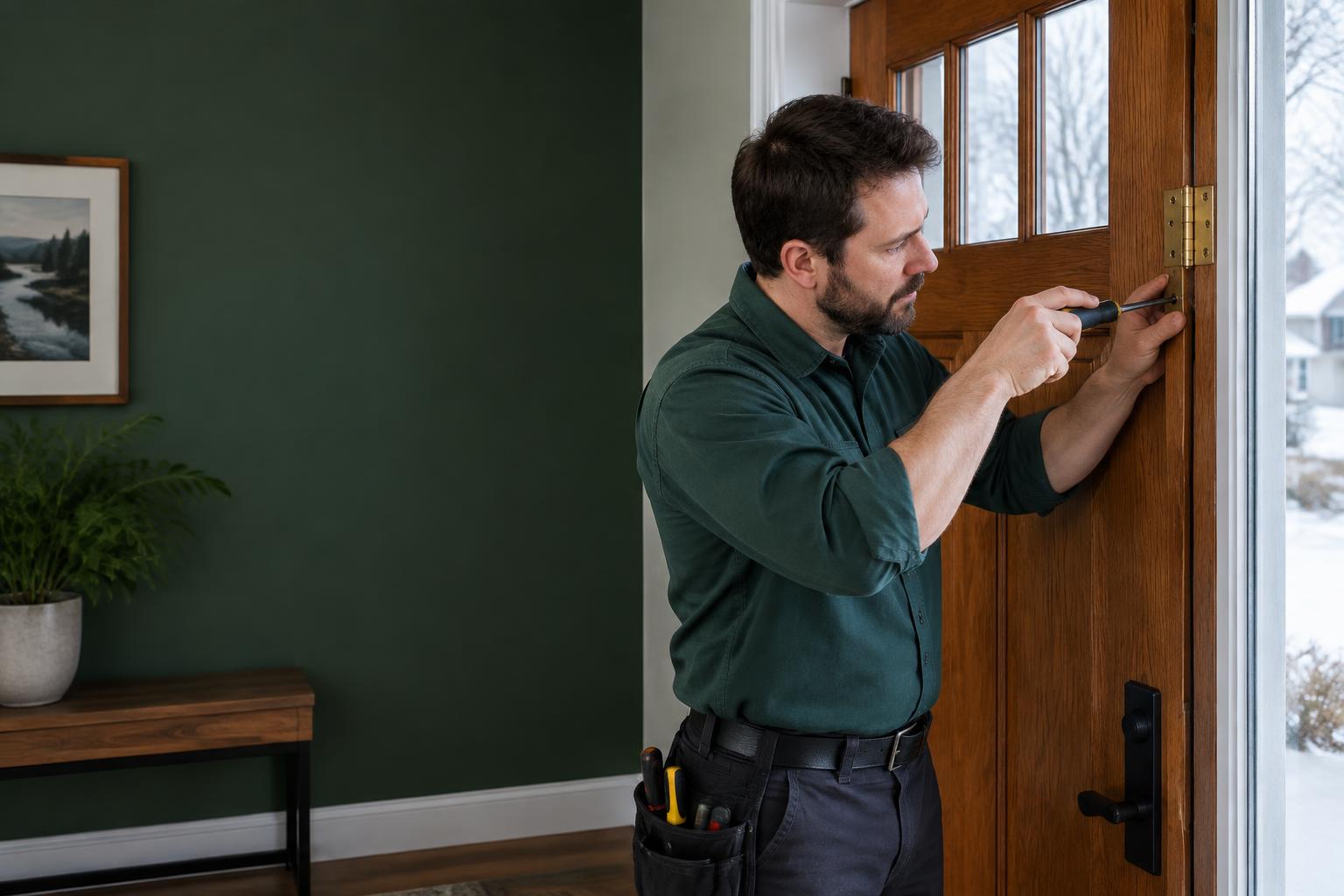
Typical requests include realigning a suite entry door that has started to drag on the frame, repairing or replacing worn weatherstripping around a balcony door, fixing hinges that have loosened after years of daily use, adjusting doors that no longer close or latch correctly, and addressing doors damaged by movers, pets, or simple wear and tear. Condo corporations also ask about common-area doors such as stairwell doors and parkade pedestrian doors, where closers, hinges, and hardware see heavier traffic than a typical single-family home door.
Because many Winnipeg condo and apartment buildings mix original 1970s and 1980s construction with newer high-rises, the range of door types in a single building can be wide: hollow-core wood suite doors, solid-core fire-rated doors required for corridor separation, steel-clad entry doors, and sliding or swinging balcony doors in wood, vinyl, or aluminum frames. An assessment typically starts with identifying exactly which door type and hardware configuration is installed before any repair work is planned.
- Suite entry doors and frames
- In-suite interior doors (bedroom, closet, bathroom)
- Balcony and patio doors
- Common-area doors such as stairwell and parkade doors
- Door hardware: hinges, closers, latches, and weatherstripping
Why is my apartment door sticking or hard to close?
A sticking apartment door is one of the most common complaints in Winnipeg multi-unit buildings, and it usually comes down to a handful of causes. Over time, hinge screws loosen in the jamb, letting the door sag slightly so the bottom corner drags on the frame or flooring. In older buildings, the building itself can settle unevenly, which shifts the door frame out of square even though the door panel itself is in good shape.
Humidity swings play a large role too. Apartment and condo units can run warm and relatively humid in winter because of in-suite heating and reduced ventilation, which causes wood doors to swell slightly at the top or along one edge. When the heat is off or windows are opened in summer, the same door can shrink back, so a door that stuck in January might close easily again by July.
Paint buildup from repeated repainting of hallway and suite doors over the years is another frequent cause, especially in rental buildings where doors are repainted between tenants. Each additional coat of paint at the door edge and strike area narrows the clearance until the door starts catching. A proper repair sands back the problem area and corrects the underlying fit rather than just forcing the door shut.
How does Winnipeg's climate affect condo and apartment doors?
Winnipeg's extreme seasonal swings put real stress on condo and apartment doors, even though suites are indoors and somewhat sheltered compared to a house exposed on all sides. Balcony doors and any door leading to an unheated stairwell or parkade feel the cold most directly.
Indoors, Winnipeg's dry winter air pulls moisture out of wood doors and frames, causing shrinkage that can leave gaps or make a previously snug door rattle in its frame. Come summer, humidity returns and the same wood swells again, which is why many residents notice their balcony slider or suite door behaves differently depending on the time of year.
Buildings with exterior corridors, exposed stairwells, or parkade entries also deal with freeze-thaw cycling at thresholds and door sweeps, where meltwater refreezes and can distort hardware or create ice buildup that interferes with the door swing. Road salt tracked in on residents' boots accelerates corrosion on exposed metal hardware near building entrances, which is a factor property managers often ask about when common-area door hardware starts to seize or discolour.
What does a condo door assessment and repair typically involve?
An assessment for condo or apartment door repair usually starts with a conversation about the specific problem: is the door sticking, failing to latch, letting in drafts, damaged, or making noise? From there, a technician examines the door panel, the frame, and the hardware together, since a problem that looks like it's in the door itself is often actually caused by a shifted hinge, a loose strike plate, or a frame that has moved slightly out of square.
For a sticking or misaligned door, the assessment typically checks hinge tightness and alignment, the gap between the door and frame on all sides, and whether the latch lines up with the strike plate. Depending on what is found, the repair might involve re-securing or shimming hinges, planing or sanding a high spot on the door edge, adjusting the strike plate position, or in some cases replacing a warped section of frame.
For balcony and patio doors, the assessment also looks at the rollers or hinges that support the door's weight, the track or sill condition, and the weatherstripping along all contact points. Because balcony doors see more direct weather exposure than interior suite doors, this is often where Winnipeg condo residents see the most noticeable seasonal problems, from doors that are hard to slide in winter to drafts that show up as higher heating costs.
In buildings with fire-rated corridor doors, any repair work needs to respect the door's existing configuration, since these doors are built to specific requirements for the gaps, hardware, and closer function. DoorMend does not certify fire or building code compliance, but technicians are mindful of these doors' role in the building and will flag anything that looks like it may need review by the building's own code consultant.
Repair or replace: when does a condo door need a full replacement?
Many of the condo and apartment door issues Winnipeg residents deal with can be resolved with repair rather than full replacement, particularly hinge adjustments, weatherstripping renewal, latch and strike plate corrections, and minor frame repairs. A door that sticks because of humidity swings or a slightly loose hinge rarely needs to be replaced outright.
Replacement becomes the more sensible option when the door panel itself has significant warping, water damage, or structural failure that repair can't correct, or when the frame has deteriorated to the point that hardware no longer holds securely no matter how it's adjusted. For balcony doors specifically, badly corroded tracks, failed seals that have let moisture into the surrounding wall assembly, or glass units that have lost their seal are signs that point toward replacement.
Condo boards and property managers often weigh a third factor that homeowners don't face as directly: building-wide consistency. In a condo corporation, replacing one suite door may trigger questions about matching the building's approved door style, fire rating, or appearance standards, so many boards prefer to repair where possible and reserve replacement for doors that are genuinely beyond repair.
An assessment is the most reliable way to know which category a particular door falls into, since the visible symptom, whether that's a stuck door or a drafty balcony slider, doesn't always point to an obvious answer without a closer look at the frame and hardware condition.
What affects the cost of apartment and condo door repair?
The cost of repairing a condo or apartment door depends on several factors rather than a flat rate, since every unit and building is different. The type of door matters: a simple hinge adjustment on an interior hollow-core door is a smaller job than diagnosing and correcting a balcony slider with worn rollers and a damaged track.
Access and building logistics also factor in. Buildings with concierge sign-in requirements, limited visitor parking, elevator booking windows, or restricted hours for in-suite work can affect scheduling and the overall time a job takes.
The extent of the damage or misalignment plays a role too. A door that simply needs a hinge tightened and a strike plate adjusted is a quicker repair than one where the frame has shifted, the door has swollen unevenly, or hardware needs to be sourced to match an older or less common door model.
- Door type: interior suite door, entry door, or balcony/patio door
- Whether hardware needs replacing versus adjusting
- Building access logistics: concierge rules, elevator access, parking
- Extent of warping, water damage, or frame misalignment
- Whether the door is a standard size or an older, non-standard model
What can residents check themselves before calling a professional?
Some condo and apartment door issues are simple enough for a resident to check safely. Loose hinge screws can sometimes be tightened with a screwdriver, and worn weatherstripping is often visibly cracked, flattened, or peeling and can be a straightforward do-it-yourself swap if the replacement strip is readily available in a matching size.
It's also worth checking whether a sticking door is seasonal. If a balcony door or suite entry door only sticks during the most humid weeks of summer or only drafts heavily during the coldest snaps of winter, that pattern is useful information to share, since it points toward humidity-driven swelling or cold-weather gap widening rather than a mechanical hardware failure.
Residents should stop and call a professional for anything involving a door that has come off its hinges or track, a balcony door with a damaged glass unit, hardware on common-area doors that affects building security, or any situation where forcing the door could cause further damage to the frame, wall, or glass. Common-area doors tied to fire separation or building access control should also be left to a technician rather than adjusted by a resident, since these doors often have specific configuration requirements tied to the building's safety systems.
How can condo residents prevent the same door problem from coming back?
Routine maintenance goes a long way toward keeping condo and apartment doors working smoothly through Winnipeg's seasonal swings. Lightly lubricating hinges once or twice a year, checking that screws are snug, and inspecting weatherstripping for cracking or compression before the cold weather sets in can catch small issues before they turn into a stuck or drafty door.
For balcony and patio doors, keeping the track clear of dirt, grit, and ice buildup helps rollers move smoothly and reduces wear. In winter, clearing snow or ice that accumulates on balcony thresholds prevents it from being tracked into the track mechanism and refreezing, which can bind the door or damage the rollers over time.
Because wood doors naturally expand and contract with Winnipeg's humidity swings, it can help to avoid forcing a slightly swollen door shut, since repeated forcing can deepen the misalignment and widen the area that eventually needs sanding or planing. If a door's behaviour changes noticeably with the seasons year after year, that's a sign worth mentioning during an assessment, as a longer-term adjustment may reduce the recurring symptom.
Common-area and condo corporation doors: what property managers should know
Condo corporations and apartment property managers often have different priorities than individual unit owners when it comes to door repair. Common-area doors, such as stairwell doors, parkade pedestrian doors, and lobby entries, see far more daily traffic than a single suite door, so hinges, closers, and latch hardware wear out faster and may need more frequent attention.
Many of these doors are also tied into the building's fire separation and access arrangements, meaning any adjustment needs to respect the door's existing closing force, gap tolerances, and hardware setup. DoorMend does not provide code compliance certification, so property managers working through a building-wide door maintenance plan should coordinate with their own code consultants or engineers for anything that requires formal sign-off, while using an assessment to understand the physical condition and repair options for the doors themselves.
Scheduling is another consideration unique to multi-unit buildings. Repairs to suite doors usually require resident availability and consent to access the unit, while common-area repairs may need to be timed around resident traffic patterns or building events.
Why won't my balcony door latch or lock properly?
A balcony door that won't latch or lock is a common complaint in high-rise and low-rise condo units alike, and it typically comes down to misalignment between the latch and the strike, often caused by the same seasonal expansion and contraction that affects hinge-mounted doors. Sliding balcony doors can also fail to latch when the rollers wear down unevenly, which drops the door slightly out of position relative to the frame it needs to lock into.
On older sliding doors, the latch hardware itself can wear out after years of use, developing play that prevents it from fully engaging even when the door is properly aligned. In these cases, the hardware may need adjustment or replacement rather than the door panel itself.
If a balcony door won't lock securely, it's worth noting this clearly when requesting a quote, since security and weatherproofing are both involved. A door that won't latch not only raises a security consideration but also typically won't seal properly against drafts and moisture, which can lead to the kind of winter heat loss or summer humidity intrusion Winnipeg condo residents are often trying to avoid.
More questions about condo and apartment door repair in Winnipeg
Does DoorMend need building management's permission to do suite door repairs? Many condo buildings and apartment complexes have their own access and contractor policies, so residents and property managers should check their building's requirements. DoorMend can work with whatever access arrangement the building and resident coordinate.
Can a damaged fire-rated corridor door be repaired instead of replaced? Often yes, depending on the extent of the damage, but any work on these doors needs to be done carefully to avoid altering their configuration, and formal compliance confirmation is outside what DoorMend provides.
Is window repair included in condo door service? No. Window repair is a separate specialty and is not part of DoorMend's door repair offerings, even when a balcony door includes a glass panel.
What if the door issue turns out to be a lockout or a key that no longer works? Lockouts and rekeying are handled by separate specialists rather than DoorMend's door repair service, so these situations should be directed elsewhere.
Do you repair doors with built-in access control card readers? Access control systems are specialized equipment, and availability for work involving these doors depends on confirmed specialist capacity at the time of enquiry.
How do I get a quote for a condo or apartment door repair in Winnipeg? Start by describing the problem as specifically as possible: which door, what the door is doing or not doing, and how long it's been happening. Sending a few clear photos of the door, the frame, and any visible damage helps with an initial assessment. From there, an assessment determines the realistic repair options for that specific door, and keep in mind that submitting an enquiry starts that conversation but is not itself a booking.