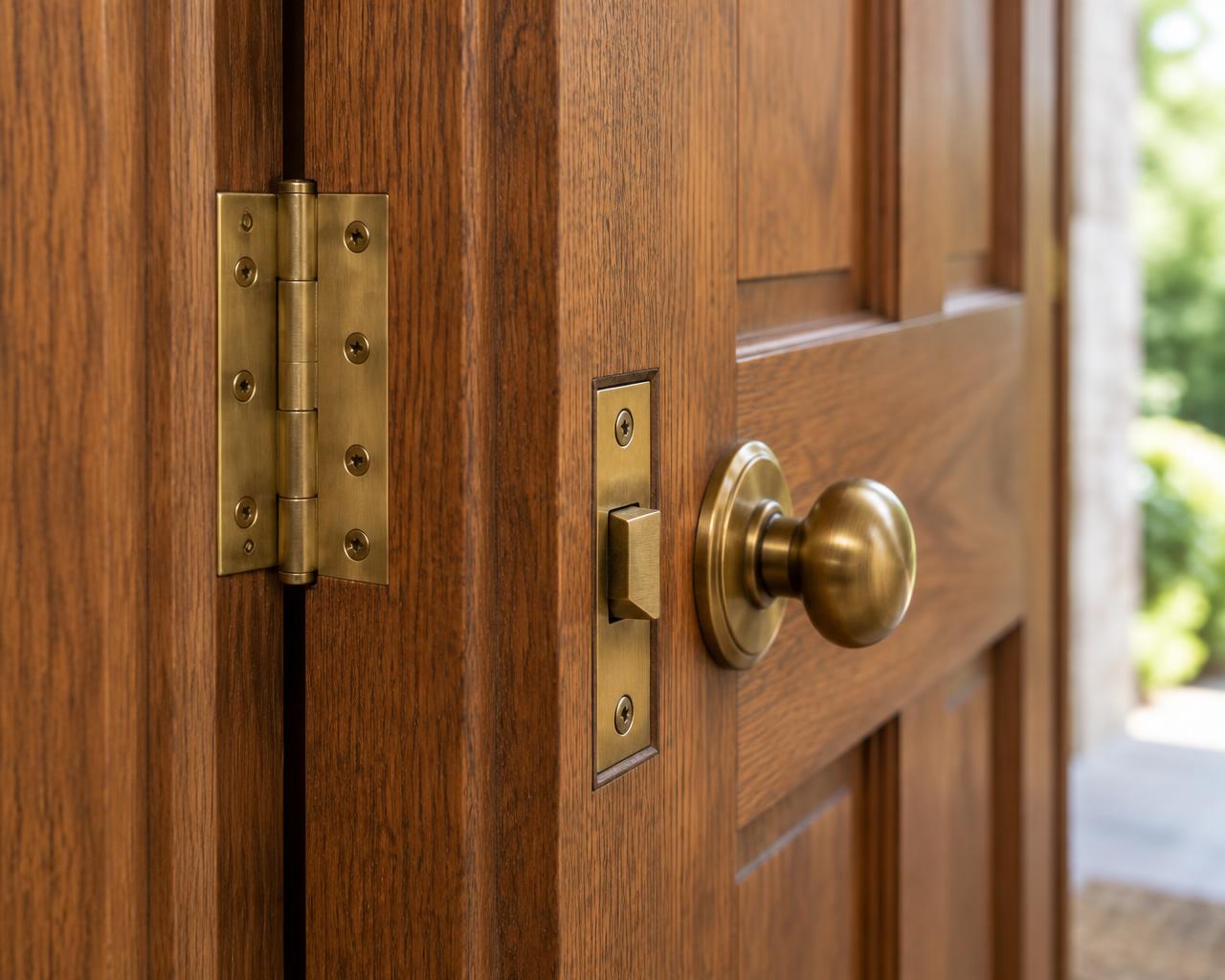
What does wood door repair in Winnipeg include?
Wood door repair covers fixing the structural and cosmetic problems that develop in solid wood and wood-panel doors over time, including swelling, splitting, warping, rot, loose joints, damaged panels, and hardware that no longer seats properly because the door itself has shifted. This applies to front entry doors, interior doors, French doors, and older wood storm or screen doors found throughout Winnipeg homes.
An assessment looks at the whole door, the wood itself, the joints where panels and rails meet, the finish, and how the door sits in its frame, rather than just the single symptom you noticed, such as a door that sticks in summer or will not latch in winter.
Wood door repair is a different service from full door replacement. Many wood doors, especially solid or well-built older doors, can be restored rather than replaced, and the assessment is where that decision gets made based on the actual condition of the wood.
- Solid wood and panelled entry doors
- Interior wood doors and French doors
- Older wood storm and screen doors
- Wood door frames and jambs
- Finish, weatherstripping, and hardware tied to the door
Common signs a wood door needs repair
A wood door that sticks or drags against the frame, especially in humid weather, is one of the most common complaints, along with a door that will not latch because the deadbolt or latch no longer lines up with the strike plate. Visible cracking or splitting along a panel, especially near the bottom where moisture collects, is another frequent issue.
Peeling or bubbling paint and finish, soft or spongy wood when pressed near the bottom corners or threshold, and gaps appearing at the joints between stiles, rails, and panels are all signs of moisture damage working its way into the wood. A door that has visibly warped, bowed, or twisted so it no longer sits flush in its frame is a more advanced sign that repair should not wait much longer.
Drafts around the edges of a closed wood door, daylight visible around the frame, and hardware that keeps loosening even after tightening often point back to the door or frame moving out of shape rather than a hardware problem on its own.
- Sticking, dragging, or hard-to-close door
- Cracked or split panels, especially near the bottom
- Peeling paint, bubbling finish, or soft wood
- Gaps opening at joints between stiles and rails
- Visible warping, bowing, or twisting
- Persistent drafts or daylight around the closed door
How Winnipeg's climate affects wood doors
Wood is a natural material that absorbs and releases moisture constantly, and Winnipeg's climate puts it through a demanding yearly cycle. Humid summer air causes wood fibres to swell, which can make a door that fit well in winter suddenly stick or drag against the frame. As temperatures drop and indoor heating dries the air through fall and winter, the same door shrinks back, sometimes unevenly, leaving gaps or a door that rattles instead of sitting snugly.
The freeze-thaw cycle that Winnipeg experiences repeatedly through fall and spring is particularly hard on exterior wood doors, since repeated expansion and contraction stresses the joints between panels, rails, and stiles, gradually loosening glue and fasteners that hold the door together. At -30 °C, wood becomes more brittle, and any existing crack or weak joint is more likely to worsen in extreme cold.
Road salt and melting snow splashed onto a front door's lower panels during winter, combined with sun exposure and humidity in summer, accelerate finish breakdown and create entry points for moisture to reach bare wood underneath. Frost heave affecting the foundation and door frame can shift an exterior wood door's opening slightly from season to season, which explains why a door that worked fine last spring might bind or gap differently this year even without new damage to the door itself.
What happens during a wood door repair assessment?
An assessment starts with examining the door's overall condition, checking for soft or rotted wood by gently pressing at vulnerable spots like the bottom rail and corners, looking at how square the door sits in its frame, and checking the condition of hinges, joints, and the finish or paint layer.
The technician also checks whether the problem is isolated to the door itself or involves the frame and jamb as well, since a door can be structurally sound while the frame around it has shifted or rotted, and fixing only the door would not solve the underlying issue. Moisture readings or visual inspection help determine how deep any water damage goes and whether it is limited to the surface or has reached the core of the wood.
From there, the assessment identifies realistic repair options, which might range from refinishing and resealing to patching or replacing a damaged panel, re-gluing and reinforcing loose joints, planing a swollen edge, or addressing frame issues that are affecting how the door sits.
- Checking for soft, rotted, or water-damaged wood
- Assessing how square the door sits in its frame
- Inspecting hinges, joints, and finish condition
- Determining whether frame or jamb repair is also needed
- Identifying realistic repair options for the door's condition
Step by step: what wood door repair typically involves
The repair process depends heavily on what the assessment finds, but a few patterns are common. For a sticking or dragging door, the fix often involves carefully planing or sanding the high points where the door contacts the frame, then resealing the exposed wood so it does not absorb moisture unevenly afterward. For minor surface cracking, filling and refinishing may be enough to stop the damage from spreading.
For loose joints between rails, stiles, and panels, the repair generally involves disassembling the affected joint as needed, cleaning out old glue, re-gluing, clamping, and reinforcing with fasteners where appropriate, then allowing proper cure time before the door is rehung. Rotted sections, such as a soft bottom rail or corner, may need the damaged wood cut out and replaced with sound material matched to the original, followed by sealing and refinishing to protect the repair.
Once structural repairs are complete, the door is rehung and checked for square, smooth operation, and proper contact with weatherstripping. A fresh coat of appropriate finish or paint is often part of the final step, since an unprotected repair is vulnerable to the same moisture problems returning quickly in Winnipeg's climate.
- Plane or sand sticking points and reseal exposed wood
- Fill and refinish minor surface cracks
- Disassemble, re-glue, and clamp loose joints
- Cut out and replace rotted sections with matched wood
- Rehang the door and check for square, smooth operation
- Apply finish or paint to protect completed repairs
Repair or replace a damaged wood door?
Many wood doors are worth repairing rather than replacing, especially solid wood doors with good overall structure where the damage is limited to a section of wood, a joint, or the finish. Older Winnipeg homes often have wood doors with craftsmanship or dimensions that are difficult or costly to match with a new door, which is an added reason repair is often the more practical first option.
Replacement becomes the more sensible route when rot or water damage has spread through a large portion of the door, when the door has warped so severely that it cannot be brought back to square, when repeated repairs have not resolved a recurring problem, or when the door has been damaged beyond what patching and reinforcement can reasonably fix.
The decision is not always obvious from the outside, since a door with a small visible crack might have deeper internal damage, while a door that looks rough with peeling paint might be structurally solid underneath. This is exactly why an in-person or photo-based assessment is the starting point rather than guessing from the symptom alone.
Cost of wood door repair in Winnipeg
Wood door repair costs vary based on several factors rather than a fixed rate. The extent of the damage is the biggest factor, a simple sticking door that needs planing and resealing is a much smaller job than a door with rot in multiple spots or joints that have failed throughout the frame.
The type and age of the door matters too, since antique or custom wood doors sometimes need wood matched carefully to the original species, grain, and thickness, which can take more time than working with a modern standard door. Whether the frame and jamb also need repair alongside the door itself adds to the scope, as does whether refinishing or repainting the entire door is needed to blend repairs invisibly versus a smaller touch-up.
Access and location also play a role, an interior door is usually simpler to work on than an exterior entry door exposed to the elements. Because these variables differ so much from one door to the next, DoorMend provides pricing after assessing your specific door rather than quoting a flat cost upfront.
- Extent and depth of damage or rot
- Door age, species, and whether wood needs matching
- Whether the frame or jamb also needs repair
- Scope of refinishing or repainting required
- Accessibility and exposure of the door's location
What can I check myself, and when should I call a professional?
You can safely check your wood door for a few early signs yourself. Press gently on the bottom rail and corners to feel for soft or spongy spots, look closely at joints between panels and rails for visible gaps or separation, and check the finish for peeling, bubbling, or bare wood exposed to moisture. Noting whether sticking happens mainly in summer, winter, or year-round also helps an assessment move faster.
You can also do light maintenance yourself, such as wiping down the door and reapplying a thin coat of appropriate finish or paint to small worn areas, provided the underlying wood is sound and dry. Keeping an eye on how the door operates through a full seasonal cycle, rather than reacting to a single sticky day, gives a more accurate picture of what is really going on.
Where to stop and call a professional includes any structural work like replacing rotted sections, disassembling and re-gluing joints, rehanging a door that has come off true, or planing significant amounts of material from the edges, since removing too much can weaken the door or ruin the fit permanently. If you see extensive rot, structural softness across a large area, or the door frame itself appears compromised, that is also a point to get an assessment rather than attempting a repair.
- Safe to check: soft spots at the bottom rail and corners
- Safe to check: joint gaps and finish condition
- Safe to do: light cleaning and small touch-up finish
- Call a professional: replacing rotted wood sections
- Call a professional: disassembling or re-gluing structural joints
- Call a professional: rehanging a door or planing significant material
Maintenance tips to protect wood doors through Winnipeg's seasons
Regular maintenance goes a long way toward preventing the swelling, cracking, and rot that Winnipeg's climate tends to cause in wood doors. Reapplying finish or paint every few years, before it visibly peels or wears through, keeps moisture from reaching bare wood, which is the root cause of most rot and warping problems.
Checking weatherstripping and the threshold seasonally helps keep melting snow and rain from pooling at the base of an exterior wood door, where moisture damage most often starts. Keeping gutters and downspouts directing water away from entryways also reduces how much moisture an exterior door is exposed to over time.
Inspecting joints and panels once or twice a year, especially after the spring thaw and before winter, lets small issues like a hairline crack or a slightly loose joint get addressed while they are still minor repairs rather than developing into rot or structural failure.
- Reapply finish or paint before it visibly wears through
- Check and maintain weatherstripping and thresholds seasonally
- Direct gutters and downspouts away from entry doors
- Inspect joints and panels after spring thaw and before winter
- Address hairline cracks or small gaps before they widen
Homes, character properties, and commercial wood doors
Homeowners most often bring in wood door repair for front entry doors that have started sticking, cracking, or losing their finish, as well as interior doors with loose joints or damaged panels from years of everyday use. Many Winnipeg character homes and older properties have original wood doors with details that are worth preserving through repair rather than replacing with a modern alternative.
Commercial properties and older mixed-use buildings around Winnipeg sometimes have wood doors with heritage or architectural value, where matching materials and finish carefully during repair matters more than in a typical modern replacement scenario. In multi-unit residential buildings, condo boards may also have requirements about matching the finish or style of entry doors facing common areas, which is worth checking before repair work is scheduled.
Whatever the setting, the same approach applies: the condition of the actual wood, joints, and frame determines what repair options are realistic, and that is established through an assessment rather than assumptions based on the door's age or appearance alone.
Frequently asked questions about wood door repair
Can a warped wood door be straightened? Some warping can be corrected, particularly if caught early, through controlled moisture adjustment, planing, and reinforcement, but severe or long-standing warping may be beyond what repair can fully reverse, which the assessment will clarify.
Is it normal for a wood door to need different adjustments in summer versus winter? Yes, this is common in Winnipeg given the humidity swings between seasons, though if the seasonal change is dramatic or getting worse year over year, it is worth having the door and frame assessed.
Can a damaged wood panel be replaced without replacing the whole door? In many cases yes, especially on panelled doors where an individual section can be removed and replaced with matched wood, though this depends on the door's construction and the extent of damage.
Does painting over a wood door's problems fix anything? No, paint and finish protect sound wood but do not repair rot, loose joints, or structural warping underneath, so addressing the underlying wood condition should come before refinishing.
How do I know if my door needs repair or if it is actually the frame? A sticking or misaligned door can be caused by either the door or the frame, which is exactly what an assessment is meant to determine before any repair work begins.
How to request a wood door repair quote from DoorMend
If your wood door is sticking, cracking, letting in drafts, or showing signs of rot, start by describing what you are noticing, including when the problem occurs, which part of the door is affected, and how long it has been happening.
Sending photos makes a real difference for wood door issues specifically, since cracks, soft spots, finish damage, and gaps at joints are often visible in clear photos taken from a few angles, including close-ups of any damaged areas and a wider shot showing how the door sits in its frame.
An assessment then determines the realistic repair options for your specific door, whether that is a straightforward refinish and adjustment, a joint repair, a panel replacement, or a more involved restoration. Submitting an enquiry is the start of that conversation, not a booking, and next steps are worked out once the assessment details are confirmed.