What does storefront door repair in Winnipeg cover?
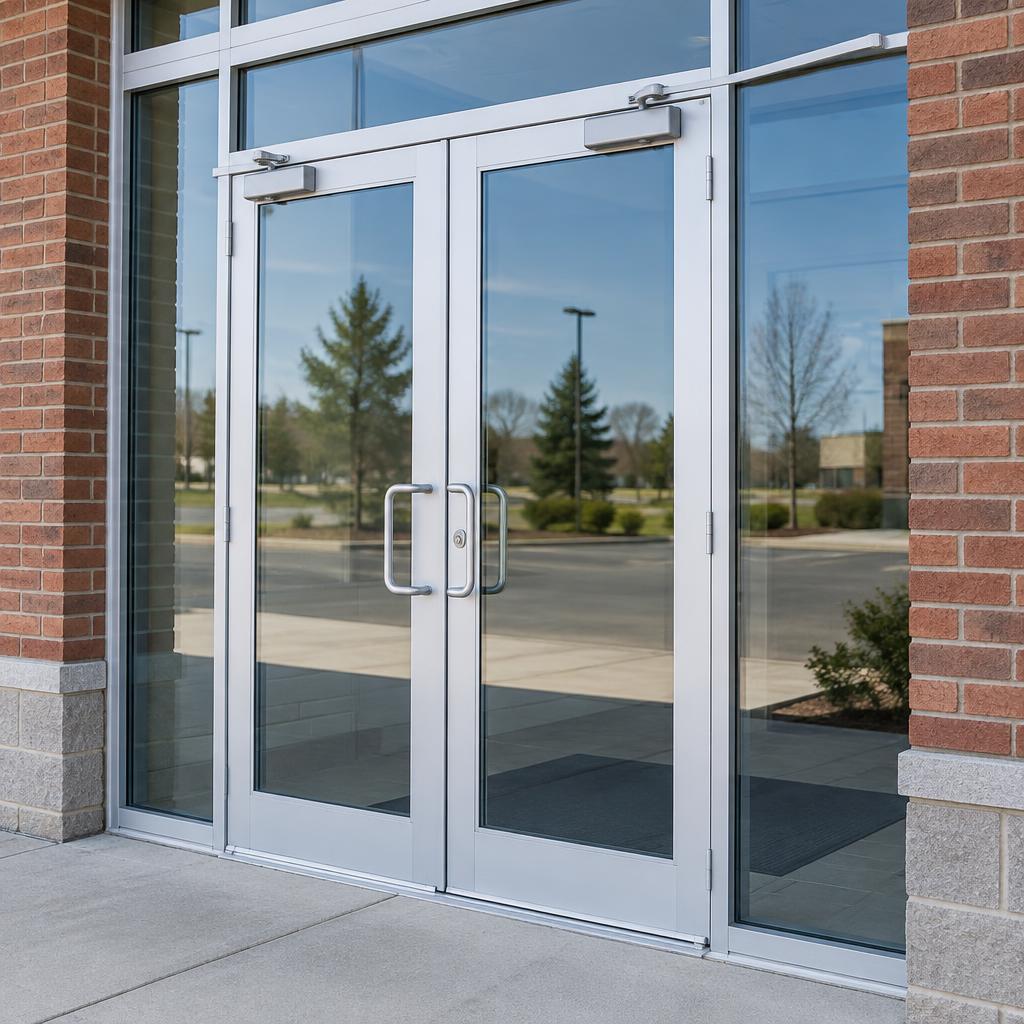
Storefront door repair covers the commercial-grade entry doors found on retail shops, restaurants, offices, and street-level businesses across Winnipeg, from a narrow-frame glass door on a Portage Avenue storefront to a heavier aluminum entry system on a strip mall near the perimeter highway. These doors are built differently from a typical residential front door, with narrow aluminum or steel framing, often large glass panels, heavy-duty closers, and hardware designed for dozens or hundreds of open-and-close cycles a day.
This service covers diagnosing and fixing the issues that stop a storefront door from closing properly, locking securely, or standing up to daily traffic, including worn or failing door closers, misaligned frames, damaged thresholds, worn weatherstripping, loose or broken push/pull hardware, and glass panel issues within the door itself. Where hardware or glass needs replacing rather than adjusting, the service also covers coordinating that replacement.
Storefront doors see a different kind of wear than a home's front door simply because of volume: a busy downtown Winnipeg café door might open and close many more times in a single day than a house door does in a week, and that constant cycling, combined with Winnipeg's weather, is what drives most of the repair calls business owners make.
- Aluminum-framed glass storefront entry doors
- Commercial steel entry doors on retail and office buildings
- Automatic or power-assisted entry systems (where specialist capacity allows)
- Door closers, hinges, and heavy-duty hardware
- Thresholds, weatherstripping, and sweep seals on high-traffic entries
Common signs a storefront door needs repair
Business owners usually notice storefront door problems gradually before they become urgent. A door closer that used to ease the door shut but now lets it slam, or one that's so slow the door barely latches, is one of the most common complaints, and it's often one of the first components to wear out given how many cycles it handles.
Other frequent signs include a door that drags along the threshold or floor, a lock or latch that no longer catches reliably, visible gaps around the frame that let in drafts or noise from the street, a push bar or pull handle that wobbles, and a door that doesn't sit flush when closed, leaving a visible gap at the top or side. Customers or staff having to pull or push harder than they should need to is often the first real tip-off that something in the hardware or frame has shifted.
- Door closer slams, doesn't latch, or closes too slowly
- Door drags on the threshold or doesn't sit flush when shut
- Lock or latch fails to catch consistently
- Visible gaps or drafts around the frame
- Loose or wobbly push bars, pulls, or handles
- Fogging, chips, or cracks in storefront glass panels
How does Winnipeg's weather affect storefront doors?
Storefront doors in Winnipeg face a tough combination of heavy daily use and an extreme climate, and the two compound each other. In deep winter cold, down toward -30 °C, metal door frames contract, which can tighten up clearances that were previously fine and make a door noticeably harder to close, or conversely create new gaps that let in cold air right at foot-traffic level, which customers and staff both notice immediately.
Freeze-thaw cycling is especially hard on thresholds and the concrete or pavement just outside a storefront entry. As moisture gets into small cracks and then freezes, it can shift a threshold slightly out of level over a season or two, which throws off how well the door seals at the bottom. Frost heave can do something similar to the building's foundation near the entry, gradually nudging the door frame out of square in ways that aren't obvious until the door starts sticking or no longer latches cleanly.
What happens during a storefront door assessment and repair?
A storefront door assessment typically starts with understanding how the door is used day to day: how many people pass through, whether it's propped open at times, what specific problem has been noticed, and how long it's been going on. From there, a technician examines the door as a full system, since a door that won't latch might be a worn closer, a shifted frame, a damaged strike plate, or some combination, and treating only the obvious symptom can leave the underlying cause untouched.
The frame is checked for square and for any movement relative to the surrounding wall or glazing. Hinges or pivots are checked for wear and proper alignment. The door closer, if the door has one, is inspected for leaks, worn seals, or a spring that's lost tension, since closers are mechanical components that wear out over years of constant use. Thresholds and weatherstripping are checked for level and for gaps, and locks or latch hardware are tested for consistent engagement.
Once the cause is clear, repair work might involve adjusting or replacing a closer, re-squaring and shimming a frame, replacing worn weatherstripping or a threshold, tightening or replacing hinges and pivots, or adjusting strike plates and latch hardware. If the door includes a glass panel, any glass-related repair follows the same careful, trained-technician-only approach used for other glass doors, since cutting, handling, and installing glass units carries real injury risk if done incorrectly.
Repair or replace a worn storefront door?
Whether to repair or replace a storefront door usually comes down to how much of the door system is affected and how old the existing unit is. If the frame is still square and the glass (if present) is sound, and the issue is limited to a worn closer, a damaged threshold, or loose hardware, targeted repair is often the more practical and economical route, since these are individually replaceable components.
Replacement becomes more worth considering when multiple systems are failing at once, such as a frame that's shifted out of square along with worn-out hardware and a threshold that's no longer level, or when the door has been repeatedly repaired for different issues over a short time. A storefront entry that sees very heavy daily traffic also simply wears out its components faster, so a door that's been in service for many years under high-traffic conditions may be due for a full update even if no single part has fully failed yet.
- Isolated hardware or threshold issue with a sound frame: repair usually sufficient
- Multiple systems failing together: replacement often more practical
- Very high daily traffic over many years: may justify replacement even without total failure
- Wanting a different look or better energy performance: valid reason to consider replacement
What affects the cost of storefront door repair in Winnipeg?
The cost of storefront door repair in Winnipeg depends on several factors that vary a lot from one building to the next. The type of door and frame material matters, since aluminum-framed glass storefront systems, heavier steel commercial doors, and automatic entry systems each involve different hardware and different sourcing requirements. The specific components needing attention also drive cost: a closer adjustment is a smaller job than replacing a closer outright, and a threshold or weatherstripping fix is generally more contained than a frame re-squaring.
The condition and age of the existing hardware plays a role too, since older commercial hardware can sometimes be harder to source exact replacement parts for, which can affect both cost and the scope of work. Whether glass is involved, and whether it's standard or specialty glazing, also factors in. Access and building layout matter as well; a street-level entry is usually simpler to work on than one in a tight interior mall corridor or with limited after-hours access for the business.
- Door and frame material (aluminum, steel, glass-paneled)
- Specific components needing repair or replacement
- Age and availability of matching commercial hardware
- Whether specialty glazing or automatic hardware is involved
- Ease of access to the entry and scheduling around business hours
What can a business owner check before calling a technician?
There are a few low-risk checks a Winnipeg business owner or manager can do before requesting a repair. Visually inspecting the door closer for visible fluid leakage, checking whether the door closes fully and latches on its own, and noting whether it slams or drifts shut too slowly are all useful, simple observations. Checking the threshold for visible gaps, debris, or ice buildup in winter, and confirming the lock turns smoothly without needing to force it, are also reasonable things to look at and report.
It's also fine to gently check that screws on visible hardware like push bars, pulls, and kickplates aren't obviously loose, and to note any drafts felt around the frame on a cold day, since that detail helps a technician pinpoint where a seal might be failing. Taking a few photos of the door in its current state, including any visible gaps, damaged hardware, or glass issues, is genuinely one of the most useful things you can do before reaching out.
Where you should stop and bring in a trained technician includes anything involving the door closer's internal mechanism (these are sealed, pressurized components and shouldn't be opened or adjusted beyond the basic external speed screws, if present), any cracked or damaged glass panel, any electrical or powered entry components, and any attempt to re-square or re-hang a heavy commercial door frame, which requires the right tools and technique to avoid injury or further damage. Automatic doors, access control hardware, and panic hardware should also be left entirely to professionals, since improper handling can create both safety and security risks.
- Safe to check: visible leaks on the door closer housing
- Safe to check: whether the door latches on its own and at what speed
- Safe to check: threshold gaps, debris, or ice buildup
- Safe to check: obvious screw looseness on visible hardware
- Stop and call a professional: closer internals, cracked glass, frame re-squaring
- Stop and call a professional: automatic doors, access control, or panic hardware
Maintaining a storefront door between repairs
Because storefront doors handle so much daily traffic in a demanding climate, a bit of regular attention goes a long way toward preventing the same problem from coming back. Keeping the threshold clear of ice, salt buildup, and debris through the winter helps protect both the seal and the hardware underneath. Periodically wiping down and visually checking hardware for corrosion, especially after a winter of heavy salt exposure, can catch early wear before it becomes a failure.
Businesses that notice a door starting to swing, close, or latch slightly differently than usual are often catching the very early stages of a frame or hardware shift, and addressing it at that point tends to be simpler than waiting until the door won't close at all. For businesses with heavy foot traffic, it's also worth paying attention to whether a door is being propped open in ways it wasn't designed for, since that can put extra strain on hinges and closers over time.
Storefronts, condos, and multi-tenant entries: what's different?
A single-business storefront, like an independent shop with one owner, usually has a straightforward path to arranging a repair: the owner or manager identifies the issue and requests an assessment. Multi-tenant buildings and strip malls near downtown Winnipeg or along major commercial corridors can be more complex, since a shared entry door might be the responsibility of a building management company or landlord rather than an individual tenant, and it's worth confirming who's authorized to request work before moving forward.
Condo and mixed-use buildings with a ground-floor commercial entry sometimes have building rules or a condo board that needs to approve certain changes to shared entry doors, particularly if the work affects the building's exterior appearance or involves a common area. Checking these requirements ahead of time can save back-and-forth once an assessment has already identified the needed repair.
Frequently asked questions about storefront door repair
How often do storefront door closers need attention in Winnipeg? There's no fixed schedule, since it depends heavily on daily traffic volume and the specific hardware installed, but high-traffic doors generally need closer adjustment or replacement more often than a typical residential door due to the sheer number of open-close cycles.
Can a storefront door be repaired without closing the business? In many cases repair work can be scheduled around business hours, though this depends on the scope of the job; it's worth mentioning your preferred timing when requesting an assessment so it can be taken into account.
Why does my storefront door only stick in winter? Cold causes metal frames to contract, which can tighten clearances that were fine in warmer months, and any existing wear in hinges or a closer tends to become more noticeable under that added strain.
Do you handle automatic storefront doors? Automatic and power-assisted entry systems are more specialized, and availability for that kind of work depends on confirmed specialist capacity.
Is a drafty storefront door just a seasonal nuisance or a real cost issue? Persistent drafts around a storefront entry can genuinely add to a building's heating costs over a Winnipeg winter, which is one reason many business owners choose to address a failing seal or misaligned frame sooner rather than later.
What if my storefront door issue affects both the door and the surrounding glass storefront system? An assessment can look at the door and immediately surrounding glazing together, since issues in one often affect the other, particularly in aluminum-framed systems where the door is set into a larger glass wall.
How to request a storefront door repair quote in Winnipeg
If your business is dealing with a storefront door that won't close properly, a closer that's slamming or drifting, a misaligned frame, or hardware that's come loose anywhere in Winnipeg, from a downtown retail strip to a neighbourhood plaza, the most useful starting point is describing exactly what's happening: when the problem started, how the door is behaving, and roughly how much daily traffic it sees.
Sending photos of the door, the closer, the threshold, and any visibly damaged hardware or glass helps a technician understand the situation before ever stepping on site, and often speeds up getting to an accurate picture of what's involved. From there, an assessment is used to confirm what's actually causing the problem and to lay out the realistic repair or replacement options for your specific door and building.
Keep in mind that submitting an enquiry or quote request is the first step in that process, not a booking in itself; it simply starts the conversation so your storefront door situation in Winnipeg can be properly understood before any work is scheduled. Whether you run a single shopfront or manage entries across a multi-tenant building, the same approach applies: describe the problem clearly, show it with photos, and use the assessment to decide on next steps.