What does French door installation in Winnipeg involve?
French door installation covers the full replacement of an existing opening, or the creation of a new opening, with a pair of hinged doors featuring glass panels from top to bottom or divided into lites. In Winnipeg homes, French doors are most often installed as a back or side entry leading to a deck, patio, or sunroom, though some homeowners choose them as an interior feature between a dining room and a living room. Installation is more involved than swapping a single slab door because two door panels, two sets of hinges, an astragal or shared strike system, and careful frame alignment all have to work together so the doors meet cleanly in the middle, seal tightly, and operate without binding.
A typical French door installation project includes removing the old door and frame down to the rough opening, checking that the opening is square and structurally sound, installing a new frame with proper flashing and insulation, hanging both door panels, and fitting the hardware, weatherstripping, and any sidelites or transom windows that come with the unit. For exterior French doors, the sill, threshold, and flashing details matter enormously in our climate, since this is where water, snow melt, and cold air are most likely to find their way in if the work is not done carefully.
Whether you are replacing a single patio slider with French doors, swapping out an aging pair that no longer closes properly, or adding French doors to a renovation project, the installation should always be treated as a full frame-to-frame job rather than a quick panel swap, especially on exterior walls where energy performance and weather sealing are on the line.
Signs your French doors need replacing instead of repairing
Not every issue with a French door means the whole unit needs to come out. But certain signs point toward replacement rather than a simple adjustment or repair, especially once a door has gone through several Winnipeg winters.
Visible gaps around the frame, doors that no longer line up with each other in the middle, or a noticeable draft along the meeting edge even after the weatherstripping has been replaced often indicate the frame itself has shifted or the doors have warped beyond what hardware adjustments can fix. Fogging or a visible film between the glass panes in an insulated glass unit means the seal has failed, and while the glass unit itself can sometimes be replaced within the existing frame, a frame that has failed in multiple places at once is usually a sign the whole installation has reached the end of its useful life.
- Doors that drag on the floor or stick in the frame despite seasonal adjustment
- Soft or discoloured wood around the sill or jamb, suggesting water intrusion
- A sharp temperature difference felt near the closed doors on a cold day
- Hardware that no longer aligns, leaving gaps at the top or bottom when latched
- Visible daylight around the frame from outside at night
How Winnipeg winters affect French doors
Winnipeg's climate is hard on any exterior door, and French doors have more moving parts and more glass area than a standard single door, which gives the weather more opportunities to cause trouble. Temperature swings from summer humidity to -30°C cold cause wood, vinyl, fibreglass, and aluminum components to expand and contract at different rates, and over repeated freeze-thaw cycles this movement can loosen hinge screws, shift strike plates, and open small gaps in weatherstripping that were tight the previous season.
Frost heave is another factor specific to our region. As the ground around a foundation freezes and thaws, even slight movement in the slab or threshold area beneath a French door installation can throw off the alignment of both panels, since they depend on meeting precisely in the centre to seal and lock properly. A door that latched easily in October can bind or gap by January simply because the opening shifted slightly under the frame.
Dry winter indoor air combined with extreme outdoor cold also puts stress on wood components, sometimes causing shrinkage that shows up as new drafts or a looser fit in panels that were snug all summer. Road salt and winter moisture tracked in near patio doors can accelerate corrosion on hinges, hardware, and lower frame components if they are not wiped down periodically. All of this means French doors in Winnipeg benefit from an installation that accounts for seasonal movement from the start, with properly shimmed frames, quality weatherstripping, and hardware rated for temperature extremes.
What happens during a French door assessment
Before any installation or repair work begins, a technician assesses the existing opening and the condition of the doors, if they are still in place. This generally starts with a visual inspection of the frame, sill, and surrounding wall for signs of water damage, rot, or structural movement, since installing a brand new French door set into a compromised opening will only lead to the same problems reappearing.
The assessment also looks at how the current doors operate, if applicable: whether they bind, drag, or fail to latch, whether the glass units have failed, and whether existing hardware can be reused or needs replacing. Measurements are taken carefully, since French door units come in a range of standard and custom sizes, and an opening that has shifted over the years in an older Winnipeg home may no longer match standard dimensions exactly.
From there, the technician discusses material options, swing direction, hardware style, and any specific features such as multi-point locking or sidelites, so that the homeowner has a clear picture of what the installation will involve before any work starts. For a repair-only situation, the assessment focuses on isolating exactly which components have failed, whether that is a single hinge, a damaged glass unit, a worn weatherstrip, or a shifted frame.
French door installation: step by step
A full French door installation generally follows a consistent sequence, though the details vary with the type of door and the condition of the opening.
The old unit is carefully removed, taking care not to damage the surrounding wall finish, siding, or drywall. The rough opening is inspected and prepared, which may include minor framing repairs, new flashing, or sill pan installation to direct water away from the structure. The new frame is set into the opening, leveled, plumbed, and squared using shims, then secured according to the manufacturer's specifications. Insulation is placed around the frame to eliminate air gaps, and exterior flashing and trim are installed to shed water properly.
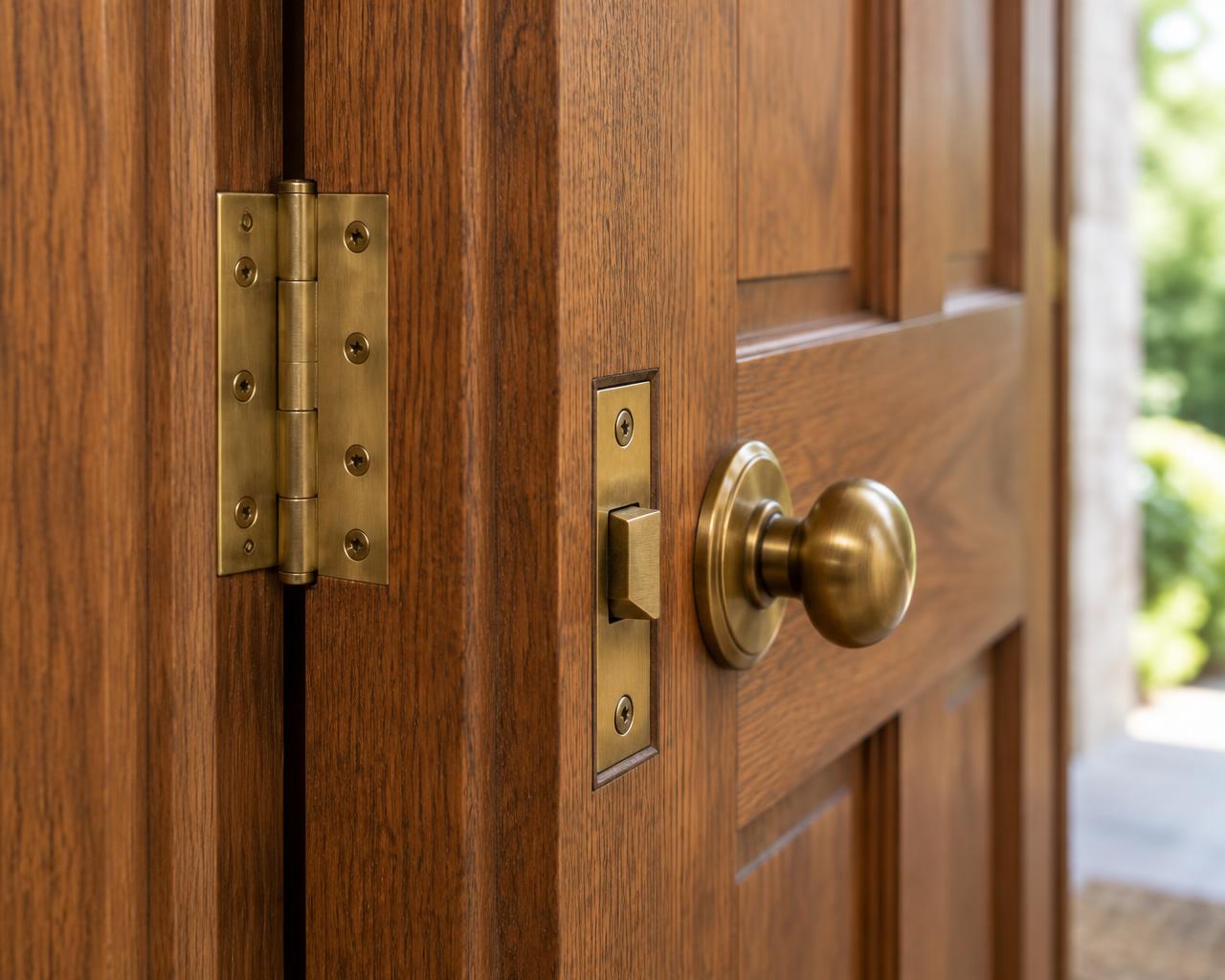
Both door panels are then hung, hinges are adjusted so the doors swing freely and meet evenly in the centre, and hardware including handles, locks, and any astragal or flush bolts is installed and tested. Weatherstripping is fitted along all contact points, and the doors are tested through a full open-and-close cycle to confirm smooth operation, a tight seal, and secure latching before the work is considered complete. Interior and exterior trim or casing is finished last, along with any touch-up caulking needed for a weathertight result.
Material options for French doors: wood, steel, fibreglass, and vinyl
French doors are available in several material types, each with different strengths for a Winnipeg climate. Wood French doors offer a classic, warm appearance and can be stained or painted to match interior finishes, but they require more maintenance and are more sensitive to humidity and temperature swings than other options, which can lead to seasonal swelling or shrinking if not properly sealed and maintained.
Steel French doors are durable and resistant to warping, and they generally hold up well to our temperature extremes, though the frame and edge seals need to be well designed to avoid condensation issues in winter. Fibreglass is a composite material, not glass, and is popular for exterior French doors because it resists warping, denting, and the expansion and contraction problems that come with freeze-thaw cycles, while still being available in wood-grain finishes. Vinyl-framed French doors are also used, particularly for the sash portions holding the glass, and they tend to perform well against moisture, though overall panel rigidity varies by product line.
Aluminum is less common for full French door panels in our climate because it conducts cold efficiently, but it sometimes appears in sliding French door or folding door track systems. Whatever the frame material, the glass itself is almost always an insulated, multi-pane unit, and the quality of that glass package has a major impact on how well the doors resist condensation and heat loss through a Winnipeg winter.
Repair or replace: a decision guide for French doors
Deciding whether to repair or fully replace French doors comes down to how much of the unit is still sound. If the problem is isolated, such as a single failed glass unit, worn weatherstripping, a misaligned strike plate, or a hinge that has loosened, repair is often the more practical option and can usually be completed without disturbing the surrounding wall or trim.
Replacement becomes the more sensible route when the frame itself has shifted out of square, when water damage has compromised the sill or jamb, when both panels show warping that affects the seal along their full length, or when the doors are old enough that hardware, weatherstripping, and glass units are all reaching the end of their service life at once. In these cases, patching individual issues tends to be a short-term fix, since the underlying frame problem will keep causing new symptoms.
It is also worth considering that a repaired set of older French doors will usually not match the energy performance of a newer installation, so homeowners weighing comfort and the recurring nature of draft or condensation complaints sometimes choose replacement even when a repair is technically possible. An assessment is the most reliable way to know which category a particular set of doors falls into.
What affects the cost of French door installation in Winnipeg?
Several factors influence the overall cost of a French door installation, and DoorMend does not quote pricing without an assessment, since every opening and every door package is different. That said, homeowners researching French door installation cost in Winnipeg should understand the main variables that drive the final number.
The size and configuration of the opening matters, since a standard pre-hung replacement into an existing opening of the correct size is generally less involved than creating a new opening or widening an existing one. The material chosen, whether wood, steel, fibreglass, or vinyl, affects both the unit cost and the complexity of installation, and features like multi-point locking hardware, sidelites, transoms, or custom glass patterns add to the scope of the job.
The condition of the existing rough opening plays a large role too. If there is rot, structural damage, or the frame is out of square, additional carpentry work is needed before the new doors can go in properly. Access to the work site, the need to remove and rebuild surrounding trim or siding, and whether the installation is on an exterior wall exposed to the elements or an interior opening also factor into the scope and time required.
What homeowners can check themselves vs when to call a professional
There are a few things homeowners can safely check on their own before deciding whether a French door issue needs professional attention. Checking whether screws in hinges and strike plates are loose, cleaning built-up dirt or debris from door tracks and weatherstripping, and confirming that nothing is obstructing the door swing, such as a rug or furniture, are all reasonable first steps.
Beyond that, it is best to stop and call a trained technician. Adjusting hinge alignment, re-squaring a frame, replacing a failed insulated glass unit, or correcting a door that no longer latches due to frame movement all require specific tools and experience to avoid making the problem worse or causing further damage to the frame or wall. If there are signs of water intrusion, visible rot, or structural movement around the opening, a professional assessment is the safer route rather than attempting repairs on a compromised frame.
Maintaining French doors through Winnipeg's seasons
Routine maintenance goes a long way toward preventing the kind of issues that lead to costly French door repairs. Cleaning tracks and weatherstripping regularly, especially after winter months when salt and grit accumulate near exterior doors, helps hardware and seals last longer.
Checking hinge and strike plate screws once or twice a year, lubricating hinges lightly, and inspecting weatherstripping for compression or cracking before the cold season sets in can catch small problems before they turn into drafts or operational issues. Homeowners should also keep an eye on caulking around the exterior frame, since gaps that open up from seasonal movement can let moisture behind the trim if left unaddressed.
For wood French doors specifically, periodic refinishing or resealing helps the material handle Winnipeg's humidity swings between summer and winter. For all material types, confirming that the doors still close and latch smoothly as the seasons change is a simple way to catch frame movement early, before it becomes a bigger repair.
French doors for homes versus businesses and condos
French door installation needs vary depending on the type of property. In single-family homes, French doors are most commonly used for patio access or as an interior feature, and the main considerations are weather sealing, energy performance, and matching the home's existing style.
In condos and multi-unit buildings, there may be building-specific requirements around exterior appearance, approved materials, or coordination with property management before any exterior door is replaced, so it is worth checking those requirements before scheduling work. Businesses considering French doors for an entrance or interior feature often have additional concerns around traffic volume and durability of hardware under frequent use, and in commercial settings access control or specialized hardware needs are addressed separately, with availability depending on confirmed specialist capacity for those add-on systems.
Common questions about French door installation
How long does French door installation take? The time required depends on whether the doors are going into an existing opening of the right size or whether framing changes are needed, and whether additional work like sill repair or trim replacement is involved; an assessment gives the clearest picture for a specific project.
Can my existing French door frame be reused? Sometimes, if the frame is square, free of rot, and in good structural condition, only the door panels and hardware need replacing. This is determined during the assessment rather than assumed in advance.
Do French doors let in more cold air than a single door? Not necessarily, since modern insulated glass and quality weatherstripping can perform well, but the larger glass area and the meeting point between two panels are spots where quality of installation makes a real difference to performance in winter.
Will my French doors need adjusting every season? Some seasonal movement is normal in Winnipeg's climate, and minor hinge or strike adjustments are a normal part of ownership rather than a sign something is wrong, unless the issue keeps recurring or worsening.
Can DoorMend repair just the glass in a French door rather than replacing the whole unit? In many cases, yes, if the frame and panel are otherwise in good condition and the glass unit itself can be sourced to match; this is confirmed during assessment.
Is interior French door installation different from exterior? Interior installations do not need to deal with weather sealing or insulation in the same way, which generally simplifies the project, though matching trim and wall finishes is still part of the work.
How to request a French door installation quote from DoorMend
Requesting a quote starts with describing the problem or project as clearly as possible, whether that is a draft around existing French doors, a glass unit that has fogged, doors that no longer latch, or an interest in installing French doors as part of a renovation in Winnipeg. Photos of the doors, the frame, and any visible damage or gaps help give a fuller picture before anyone visits the property.
From there, an assessment is used to determine the available options, whether that means a targeted repair, a full replacement, or further investigation into the condition of the surrounding wall or opening. Submitting an enquiry through DoorMend is the first step in that process, not a booking confirmation, and specific pricing, scheduling, and scope are worked out once the details of the project are understood. This approach helps avoid guesswork and ensures the plan for your French doors actually matches the condition of your home.