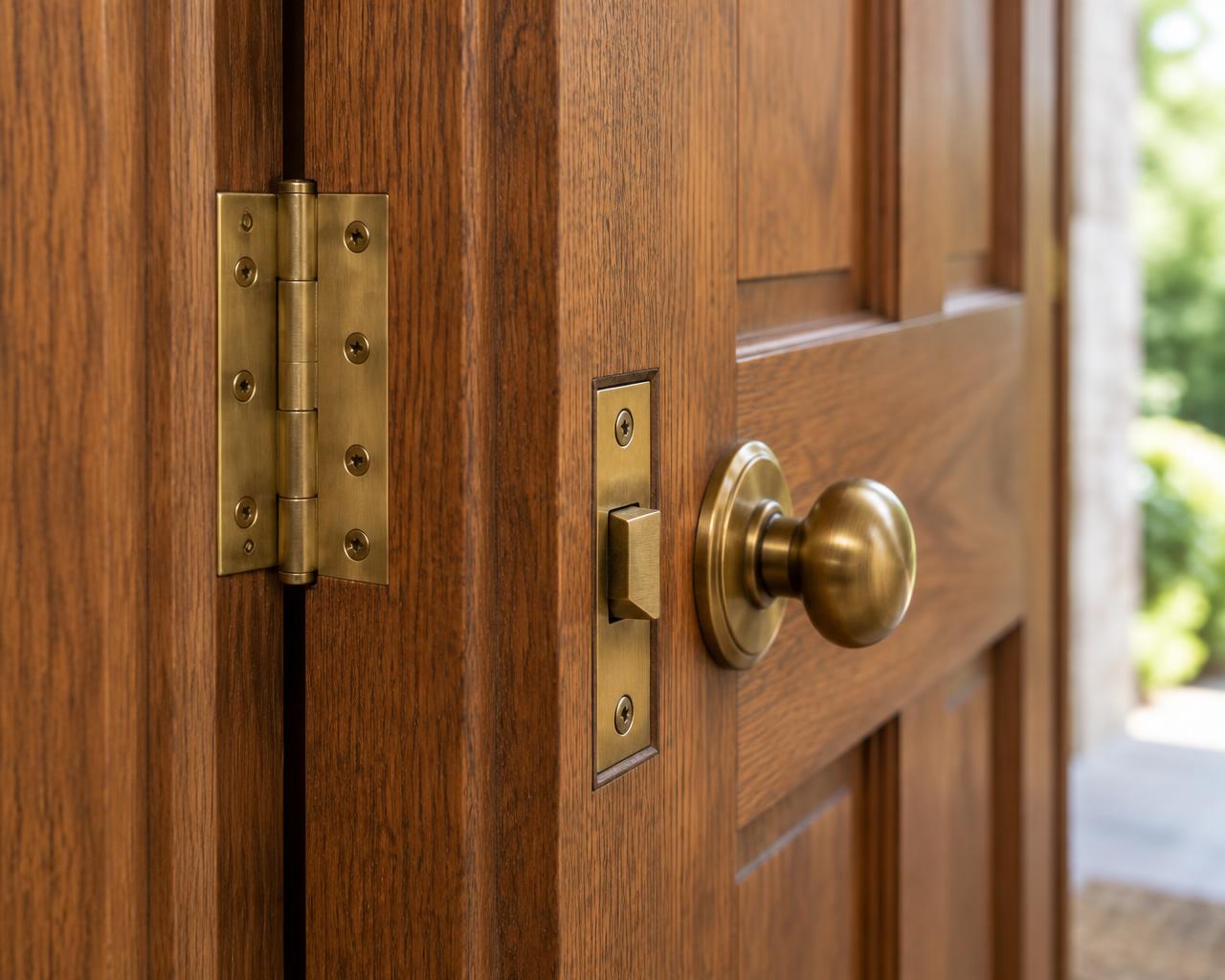
What counts as interior, closet, and pocket door repair?
Interior door repair covers the doors inside a Winnipeg home or business that are not exposed to outdoor weather directly, including bedroom doors, bathroom doors, hallway doors, French doors between rooms, closet doors, and pocket doors that slide into a wall cavity. While these doors are not exposed to rain or snow the way an exterior door is, they still respond to the indoor climate created by Winnipeg's seasonal extremes.
Closet doors come in several styles that each wear differently: hinged swing doors, bifold doors that fold in the middle on a track, and sliding bypass doors that run on an upper and sometimes lower track. Pocket doors are a distinct category, sliding on an overhead track into a hollow cavity built inside the wall, which means the hardware is mostly hidden and the door and track are harder to access than a standard swinging door.
Repair requests for this group of doors typically involve doors that stick, sag, come off their track, won't latch, rattle, or have damaged hardware such as broken rollers, worn hinges, or a misaligned guide. Pocket door problems can also involve hardware hidden behind the drywall, which makes an accurate assessment especially important.
Why does my bedroom or closet door stick or rub against the frame?
A sticking interior door is one of the most common complaints in Winnipeg homes, usually tied to small shifts in the door, frame, or house rather than any single failure. Wood doors absorb and release moisture from indoor air, so a door that swings freely in winter can start rubbing in summer, and the reverse shows up just as often.
Loose or worn hinges are another frequent cause, since a hinge that has dropped even slightly lets the door edge drift out of its original position, catching the frame on one side. In older homes, the house itself may have settled unevenly over the years, which can rack an interior door frame out of square even though the door and frame were installed correctly to begin with.
On bifold and bypass closet doors, sticking is often less about the door panel swelling and more about the track being out of level, bent, or clogged with built-up dust and debris, which prevents the rollers or pivot pins from moving smoothly. A quick way to tell the difference is to watch exactly where the rubbing happens: a stick along the latch edge often points to the door or frame, while a stick near the top track usually points to the hardware.
- Door drags along the floor or catches on the frame
- Door swings closed or open on its own due to being out of square
- Latch no longer lines up with the strike plate
- Bifold or bypass panels catch or jump on the track
Why do pocket doors jam, fall off track, or rattle in the wall?
Pocket doors have hardware built into the design that makes them prone to a specific set of issues not seen on standard swinging doors. Because the door hangs from rollers that run along an overhead track inside the wall cavity, any roller wear, track misalignment, or buildup of dust and debris can cause the door to jam partway open, drag along the floor guide, or feel like it is about to come off the track entirely.
A pocket door that rattles when closed is often a sign that the floor guide or the door's edge has worn down, allowing the bottom of the door to swing slightly rather than staying firmly tracked. If a pocket door has come off its rollers altogether, the door typically needs to be carefully removed from the wall pocket to reset or replace the roller hardware, which is more involved than adjusting a standard hinged door.
Because the track and much of the hardware sit hidden inside the wall, diagnosing a pocket door issue usually requires looking at both the visible door edge and, where needed, opening an access point to the hardware itself. This hidden construction is exactly why pocket door issues are often harder to self-diagnose than other interior door problems.
How does Winnipeg's dry winter air and humid summer affect indoor doors?
Even though interior and closet doors are shielded from outdoor weather, they are not shielded from Winnipeg's indoor climate swings, which follow the outdoor seasons closely in homes without whole-house humidity control. Furnace-heated winter air in Winnipeg tends to be very dry, and that dryness pulls moisture out of wood door slabs and frames, which can shrink a door just enough to loosen its fit in the frame or change how smoothly bifold panels glide.
Summer brings the opposite pattern, with higher indoor humidity causing wood to swell slightly, which is when many homeowners first notice a closet or bedroom door rubbing against a jamb it cleared easily all winter. Solid wood doors show this movement more than hollow-core doors, but even hollow-core doors with wood frames can be affected indirectly.
Pocket doors and bifold tracks mounted near exterior walls or above unheated spaces can also be affected by temperature differences within the house, since wood and metal track components expand and contract at slightly different rates. This is one reason a pocket door or bifold closet door that worked fine for years can start acting up seasonally rather than suddenly, tracking the same freeze-thaw and humidity rhythm that affects exterior doors, just in a milder, indoor form.
What happens during an interior or closet door assessment?
An assessment of an interior, closet, or pocket door starts with understanding exactly how the door is behaving: where it sticks, whether it has come off a track, whether hardware is visibly broken, and whether the problem is constant or changes with the seasons. For hinged doors, a technician checks the hinges, the frame for square, and the fit of the door within its opening.
For bifold and bypass closet doors, the assessment includes checking the upper track for level and damage, inspecting the pivot pins, rollers, and guides, and looking at whether the panels themselves have warped or separated at any joints. For pocket doors, the assessment focuses on how the door moves along its visible path, whether rollers can be seen or felt catching, and whether an access point to the hidden track hardware will be needed to complete a full diagnosis.
From there, repair work might involve re-hanging or replacing hinges, adjusting or replacing a track, cleaning and lubricating rollers and guides, replacing a floor guide, straightening or shimming a frame, or in the case of pocket doors, removing the door from the wall cavity to service or replace the roller hardware. The exact steps depend entirely on what the specific door and track reveal during the assessment.
Repair or replace, and what materials are involved in interior doors?
Most interior, closet, and pocket door problems are repairable, since the issues tend to involve hardware, tracks, or minor frame movement rather than deep structural failure. A hollow-core door with a small dent or a hinge-side issue is almost always worth repairing rather than replacing, and the same is usually true for bifold and bypass doors with worn rollers or a bent track.
Replacement becomes a more reasonable option when a door panel itself has delaminated, warped significantly, or suffered water damage from a nearby bathroom or laundry leak, since repairing a panel that has lost its structural integrity rarely lasts. For pocket doors, if the wall cavity or track system itself has significant damage beyond the door and rollers, the scope of work can grow to include wall or track repair rather than a simple hardware fix.
Interior doors are most commonly solid wood, engineered wood, or hollow-core construction. Solid wood doors show the most seasonal movement but hold up well to repeated hardware repairs. Hollow-core doors move less with humidity but are more vulnerable to dents and edge damage, since there is only a thin skin over an air cavity. French doors or doors with glass panels need the glazing and seals checked separately from the hardware, though full glass replacement falls outside standard door repair.
An assessment helps separate a door that looks worn but is structurally fine from one where repeated repairs would just mask a deeper problem, and it helps identify exactly which closet door style and hardware configuration is involved before narrowing down a cause.
What affects the cost of pocket door or closet door repair in Winnipeg?
The cost of interior, closet, or pocket door repair depends on the type of door, the extent of the problem, and how accessible the hardware is. An assessment is needed before any specific pricing can be discussed.
Door material and age affect cost too, since older solid wood doors or discontinued track hardware can take more effort to source matching parts for than common modern hollow-core doors with standard track systems. Whether the frame or wall cavity is affected, not just the door and hardware, also changes the scope, particularly for pocket doors where access to the hidden track sometimes requires opening a section of wall.
The number of doors involved matters as well, since a condo or rental property with several identical closet doors showing the same wear pattern may be assessed together, while a single custom or older interior door is assessed on its own. An assessment turns these general factors into an actual scope of work for the doors in question.
- Type of door and hardware involved, including pocket, bifold, or bypass systems
- Extent of track, roller, or frame damage found during assessment
- Whether wall access is needed to reach hidden pocket door hardware
- Door material, age, and availability of matching parts
- Number of doors needing attention in a home, rental, or condo unit
What can owners safely check before calling a professional?
A few checks are generally safe for a homeowner or property manager to do before deciding whether an interior or closet door needs a professional. Checking whether hinge screws are visibly loose and gently tightening accessible ones is usually safe for a standard swinging interior door. Looking at a bifold or bypass track for obvious dust buildup and wiping it clean can sometimes restore smooth movement on its own.
Watching exactly where a door sticks or rubs, and whether the issue changes between winter and summer, is useful information to note even if the repair itself is left to a technician. For pocket doors, visually checking whether the door still sits evenly in its track from the visible edge, without forcing it, is reasonable, but attempting to open the wall cavity, remove the door from the pocket, or pry at jammed rollers is best left to a trained technician.
Any sign that a door is about to come off its track entirely, that a frame has cracked, or that a pocket door panel is binding hard against something inside the wall is a point to stop and call a professional rather than continuing to force the door, since forcing a jammed pocket door can damage the track, the drywall, or the door panel itself.
Keeping closet, bifold, and pocket doors working smoothly over time
Regular light maintenance helps interior, closet, and pocket doors keep working smoothly between repairs. Vacuuming or wiping dust out of bifold and bypass tracks every so often prevents the buildup that commonly causes sticking and catching, since these tracks are exposed to the same household dust as any other surface.
Keeping hinge screws snug on swinging interior doors, and periodically checking that the door still closes evenly without needing extra force on one side, helps catch early signs of sag before they become a bigger issue. For pocket doors, avoiding slamming the door shut and keeping the floor guide area clear of debris reduces wear on the rollers and track over time.
In homes with noticeable indoor humidity swings between winter and summer, being aware that doors may need very minor seasonal adjustment is normal, and noting which doors change behaviour with the seasons can help a technician address the root cause rather than just the symptom during a future assessment.
- Clean dust and debris from bifold and bypass tracks periodically
- Keep hinge screws snug on swinging interior doors
- Avoid slamming pocket doors shut to reduce wear on rollers
- Keep pocket door floor guides clear of debris
- Note seasonal changes in how a door closes for future reference
Common questions about interior, closet, and pocket door repair
Can a pocket door be repaired without opening the wall? Sometimes. If the issue is visible from the door edge or accessible without removing drywall, repair can proceed without opening the wall, but more involved roller or track issues inside the pocket often require some access to the hidden hardware.
Why does my closet door only stick in winter? This is commonly tied to indoor humidity changes affecting wood doors and frames, or to track components contracting slightly in colder conditions, both of which are common in Winnipeg homes during the heating season.
Is a rattling pocket door a sign of a bigger problem? Not necessarily, since rattling is often caused by a worn floor guide or slightly loose door edge, which is a straightforward repair, but an assessment can confirm there is nothing more significant going on with the rollers or track.
Do bifold doors and bypass doors get repaired the same way? They share some similarities, such as track and roller issues, but bifold doors have pivot and guide pins at the top and bottom that bypass doors do not, so the specific repair steps differ between the two styles.
Does DoorMend handle window repair or rekeying interior locks? No, window repair, lockouts, rekeying, and security or alarm system work are separate from DoorMend's interior door repair services and are not offered.
Are rental and condo closet doors assessed differently than house doors? Rental and condo units often have multiple identical closet or bedroom doors, and an assessment can look at wear patterns across several doors in the same unit, alongside the same material and seasonal factors that apply to a single-family home.
Requesting a quote for interior, closet, or pocket door repair
Getting a quote for interior, closet, or pocket door repair starts with describing the specific problem: whether the door sticks, has come off its track, won't latch, or rattles, and whether the issue changes with the seasons. Noting the door type, such as a solid wood swinging door, a bifold closet door, a bypass closet door, or a pocket door, helps frame the assessment from the start.
Sending photos of the door and visible hardware, including the track, hinges, or rollers where they can be seen, gives a clearer starting point than a description alone. For pocket doors, a photo of the door's edge and how it sits in the opening is useful even though the main track is hidden inside the wall.
An assessment is what determines the actual repair needed, whether that is a simple hardware adjustment, a track replacement, or more involved pocket door servicing that requires accessing the wall cavity. Submitting an enquiry through DoorMend starts that process, but it is not the same as booking a repair, since the specific scope and options are confirmed only once the door has been properly assessed for homes, condos, and businesses across Winnipeg, including properties near downtown Winnipeg with a mix of older closet hardware and newer pocket door installations.