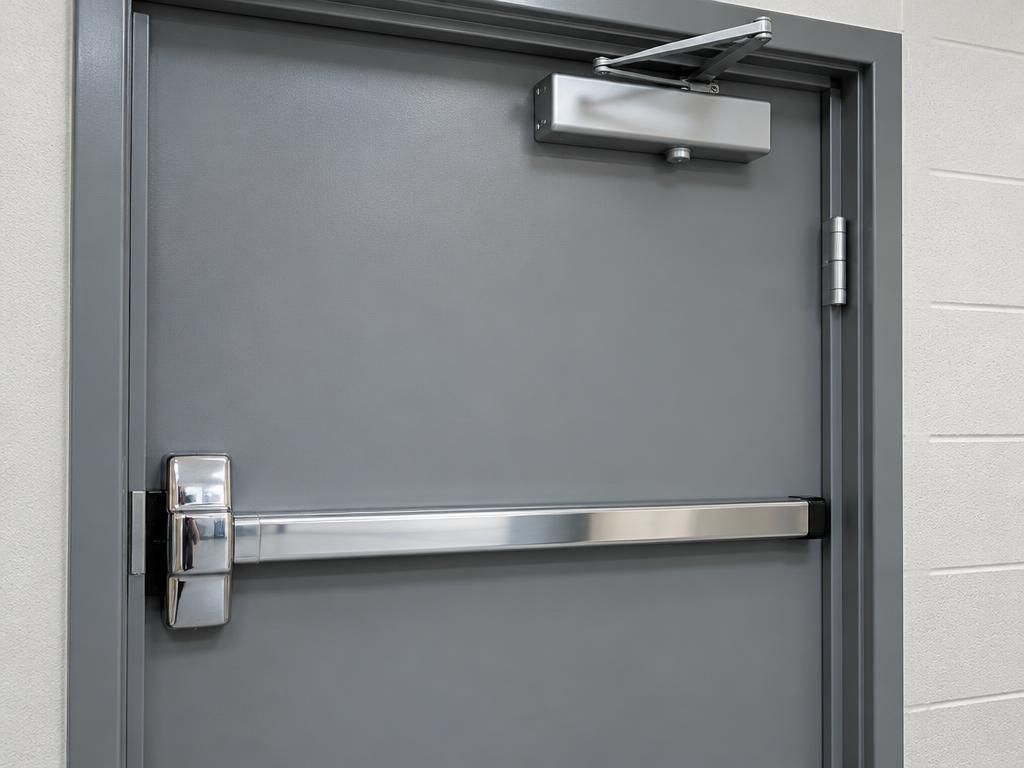
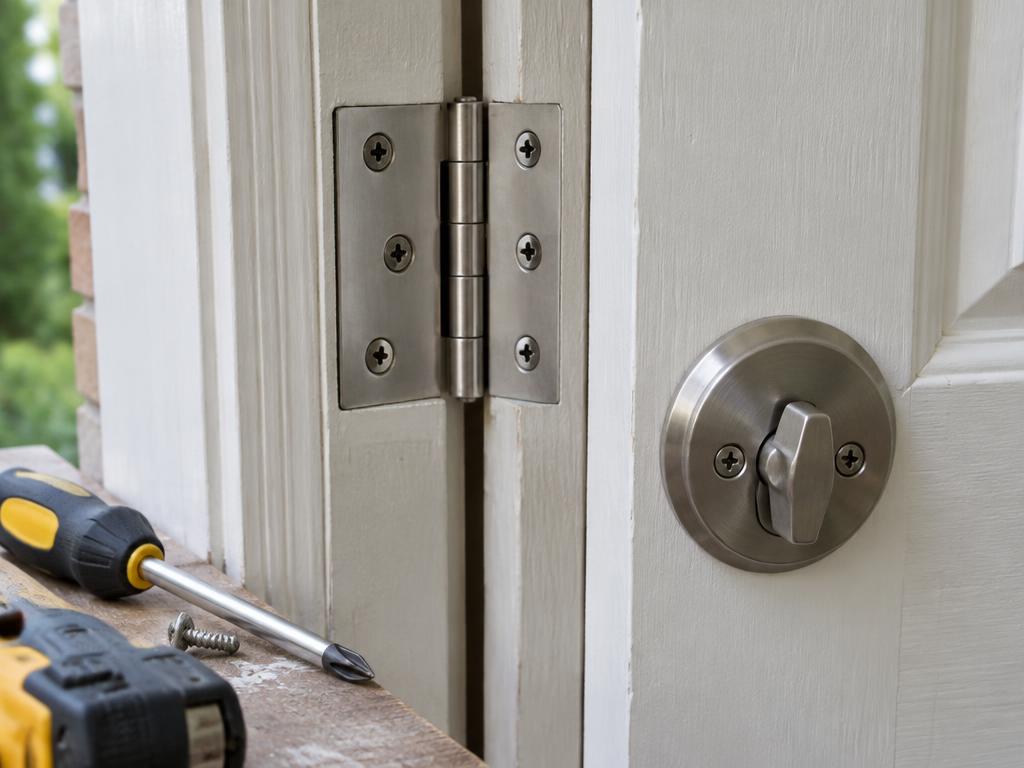
What does access control door hardware repair in Winnipeg cover?
Access control door hardware covers the mechanical and electronic components that let a business, condo, or multi-tenant building manage who can open a particular door and when. This includes electric strikes, electromagnetic locks, card readers, keypads, fobs, request-to-exit sensors, door position switches, power supplies, and the closers and hinges that keep the assembly working together. When one piece fails, the entry point becomes unreliable, which is why property managers in Winnipeg often look for access control door hardware service that treats the door as one connected system.
DoorMend looks at the physical door hardware side of access control: strikes, mag locks, closers, hinges, and how the door interacts with the frame. Enquiries usually start with a symptom, such as a door that buzzes but does not release, a reader that works intermittently, or a mag lock that holds even after a valid credential is presented.
Because access control hardware sits between carpentry, door mechanics, and low-voltage electronics, availability depends on confirmed specialist capacity. More complex wiring or system programming work may fall outside what a door hardware technician can take on, in which case that portion needs a specialist in building access systems.
- Electric strikes and keepers mounted in the door frame
- Electromagnetic locks and their armature plates
- Card readers, keypads, and credential fobs at the door
- Request-to-exit motion sensors and push-to-exit buttons
- Door position switches that report open or closed status
- Door closers, hinges, and the alignment that keeps hardware working
- Audible buzz or click with no actual release of latch or mag lock
- Gap or misalignment between the strike plate and door edge
Why does my access-controlled door buzz but not unlock?
A door that buzzes on a valid credential but does not release is one of the most common complaints brought to an access control door hardware technician in Winnipeg. The buzz usually means the strike is receiving power, but the strike may be misaligned, the keeper may be binding against the latch, or the door may have shifted in its frame. Worn strikes can also fail to retract even with the correct signal.
Winter and summer movement in a Winnipeg building can make a door that worked fine in October suddenly stick in January. Wood and steel frames expand and contract with temperature and humidity swings, and that small shift is often enough to throw off the millimetre-level tolerances an electric strike needs.
A technician checks the physical fit of the strike and keeper first, since that is the mechanical half of the problem door hardware specialists are positioned to correct. If the issue is in the control panel, wiring, or credential programming, that falls outside physical hardware repair and needs an access control systems specialist, subject to confirmed capacity.
How does Winnipeg's climate affect access-controlled doors?
Winnipeg's freeze-thaw cycle and deep winter cold put real stress on access control door hardware, especially on exterior entries and vestibule doors. As temperatures swing from above freezing to -30 °C and back, door frames and surrounding walls expand and contract. That movement is small, but electric strikes and mag locks are precision hardware, and a frame shift of even a couple of millimetres can take a reader-controlled door out of service.
Dry winter air inside heated buildings can affect hardware indirectly. Wood doors and frames lose moisture and can shrink slightly, while door closers calibrated for summer humidity may need re-adjustment to keep closing speed and latching force consistent. Humid summers can swell wood components enough to change how firmly a door seats against its strike.
Road salt tracked in through vestibules is another Winnipeg-specific factor. Salt-laden slush can accelerate corrosion on exposed strike plates, hinges, and mounting hardware near busy commercial entrances. Frost heave around a foundation can, over several seasons, gradually shift an exterior frame out of square, showing up first as access control hardware that stops behaving reliably.
What happens during an access control door hardware assessment?
An assessment starts with understanding how the door actually behaves day to day. Property managers are usually asked when the problem happens, whether it affects every user or only some, and whether it is consistent or intermittent, since intermittent faults often point toward wiring or power issues rather than the hardware itself.
On site, the technician checks the alignment of the door in its frame, the condition and mounting of the strike or mag lock, the swing and closing behaviour of the door, and whether hinges and closer are contributing. Request-to-exit sensors and door position switches are checked for correct mounting, since a switch slightly out of position can report false states to the panel.
Where the issue involves wiring, the control panel, or credential programming, that scope sits outside standard door hardware repair and depends on confirmed specialist capacity, coordinated with whoever manages the building's access control software.
After the assessment, options are laid out clearly: whether the strike or mag lock needs adjustment, cleaning, or replacement, whether the door or frame needs correction, and whether further specialist involvement is required.
Repair or replace: electric strikes, mag locks, and readers
Deciding whether to repair or replace comes down to how much of the problem is mechanical wear versus alignment, and how old the component is. A misaligned strike can often be corrected by adjusting its position or shimming the frame, far less disruptive than replacing the unit. A strike with worn internal parts that no longer retracts fully usually needs replacing.
Electromagnetic locks depend heavily on correct alignment between the magnet and the armature plate on the door. A mag lock that holds weakly or releases late is often an alignment issue, and adjusting the armature plate or closer timing can resolve it without full replacement.
Readers, keypads, and fobs are electronic components, and troubleshooting internal failures or reprogramming credentials is outside the scope of physical door hardware repair, depending on confirmed specialist capacity and coordination with the building's access control provider.
Older hardware already repaired more than once, or with no readily available replacement parts, tends to be a better candidate for full replacement, especially on high-traffic commercial doors.
What affects the cost of access control door hardware repair in Winnipeg?
Cost depends on several factors that vary from building to building, and an accurate figure can only come from an assessment of the specific door and hardware involved. The type of hardware is a major factor: an electric strike swap is typically more contained than correcting a mag lock and closer timing together, or addressing a door that has shifted enough to need frame correction.
Access and location within the building also play a role. A ground-floor exterior door is usually more straightforward to reach than a door inside a secured area that itself requires access coordination. The age and condition of the surrounding door and frame matter too, since hardware mounted on a warped or poorly fitted door will keep causing problems until the door itself is addressed.
Whether the issue is purely mechanical or involves an electronic or wiring component also affects cost and scope, since anything beyond physical hardware depends on confirmed specialist capacity. The number of doors affected in one visit, and whether parts need to be sourced for an older hardware model, both factor into cost.
What can a property manager check before calling a technician?
There are a few safe observations a property manager, superintendent, or business owner can make before requesting an assessment. None of these checks involve opening electrical components or touching wiring, which should always be left to a trained technician or the building's access control provider.
Noting the pattern of the problem is often more useful than trying to diagnose it. Does the door fail for everyone or only certain credentials? Does it happen at a particular time of day or temperature? Is the buzz audible but the latch stays engaged, or is there no sound at all? These details help narrow down whether the fault is mechanical or electronic.
- Note whether the issue happens with every credential or only some
- Check visually whether the door looks aligned in its frame, without forcing it
- Watch whether the strike or mag lock makes a sound even when it does not release
- Note any recent temperature swings around when the problem started
- Take photos of the hardware and the gap between door and frame
- Never attempt to open, rewire, or reprogram readers, panels, or power supplies yourself
Maintenance tips to keep access control hardware reliable
Regular attention to the physical side of access control hardware can prevent many nuisance faults. Keeping strike plates, keepers, and mag lock contact surfaces free of dust, salt residue, and corrosion helps hardware make clean, consistent contact every time a credential is presented.
Door closers should be checked periodically to confirm they close the door fully and at a consistent speed, since a door slightly ajar or slamming too hard puts extra strain on the strike or mag lock. In Winnipeg buildings it is worth having closers checked seasonally, since closing speed calibrated for summer humidity can drift once the dry winter heating season sets in.
General door and frame condition matters as much as the electronic hardware. A door sagging on its hinges, or a frame that has shifted slightly, will eventually throw off strike or mag lock alignment even if the hardware itself is fine.
- Wipe down strike plates and mag lock contact surfaces periodically
- Have door closers checked each season for consistent closing speed
- Watch for hinge-side sag that could shift alignment over time
- Report intermittent faults early rather than waiting for full failure
- Keep vestibule floors clear of salt buildup near door thresholds
Access control hardware for condos and multi-tenant buildings
Condominium corporations and multi-tenant commercial buildings in Winnipeg have specific considerations around access control door hardware. Shared entry doors see far more daily cycles than a typical residential door, accelerating wear on strikes, mag locks, and closers. A lobby door, parkade entrance, or amenity room door may be used hundreds of times a day, wearing out hardware noticeably faster than a low-traffic door.
Multi-tenant buildings often have layered access control, with different credential groups for different doors, so it is important to be clear about which specific door is causing trouble when requesting service. Electronic reprogramming of access groups stays with the building's access control provider, while physical issues such as a sticking strike or misaligned mag lock can be assessed as door hardware.
Because common-area doors affect every resident or tenant, there is often more urgency around getting them functioning reliably compared to a single-family entry. Scheduling for specialist access control work still depends on confirmed capacity, and some aspects of a repair may need to be coordinated between a door hardware technician and the building's access control vendor.
Common questions about access control door hardware repair
Does DoorMend install new access control systems from scratch? DoorMend's service focuses on the physical hardware side, such as strikes, mag locks, closers, and the door and frame they are mounted on. Full system design, network configuration, and software setup are specialist areas, and availability depends on confirmed specialist capacity.
Can a misaligned strike really stop a whole access control system from working? Yes. Even when the reader, panel, and wiring are functioning correctly, a strike that cannot retract because it is out of alignment with the latch will prevent the door from releasing, which can look like a system failure when it is actually mechanical.
Will DoorMend reprogram access cards or fobs? No. Credential programming is handled through the access control system itself, not through door hardware service.
What if the problem turns out to be electrical rather than mechanical? That work falls outside physical door hardware repair. Depending on confirmed specialist capacity, DoorMend may coordinate on the door-side portion while the electronic side is addressed separately.
How quickly can an access control hardware issue be assessed? Scheduling depends on the nature of the issue and current capacity. Describing the problem clearly and providing photos when requesting a quote helps an assessment get scheduled efficiently.
How to request a quote for access control door hardware repair in Winnipeg
Requesting a quote starts with describing the problem as specifically as possible: which door is affected, what the hardware does when it fails, whether the issue is constant or intermittent, and any recent changes such as a new reader or a change in weather around when the trouble started.
Photos make a real difference. Clear images of the strike or mag lock, the gap between door and frame, visible wear or corrosion, and the general condition of hinges give a much better starting picture than a description alone. For intermittent issues, a short video of the door failing to release is also useful.
An enquiry is not a booking. Submitting details and photos starts the process of scheduling an assessment, and the assessment itself determines the actual scope of work, the options available, and whether any portion depends on specialist access control capacity beyond door hardware.