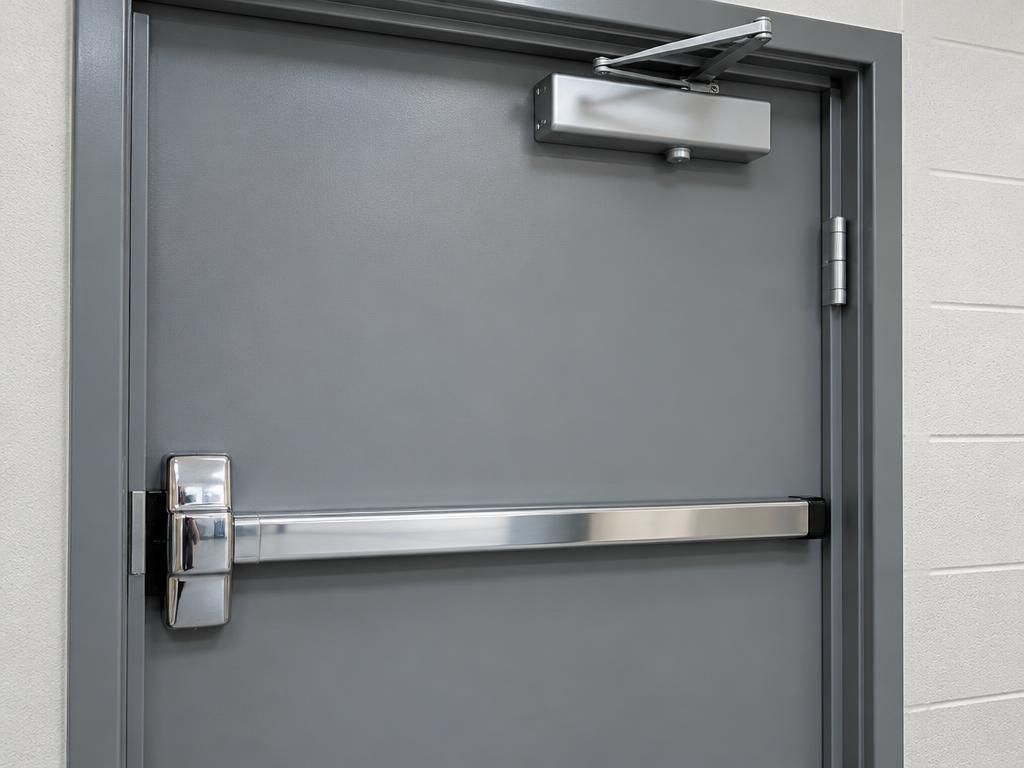
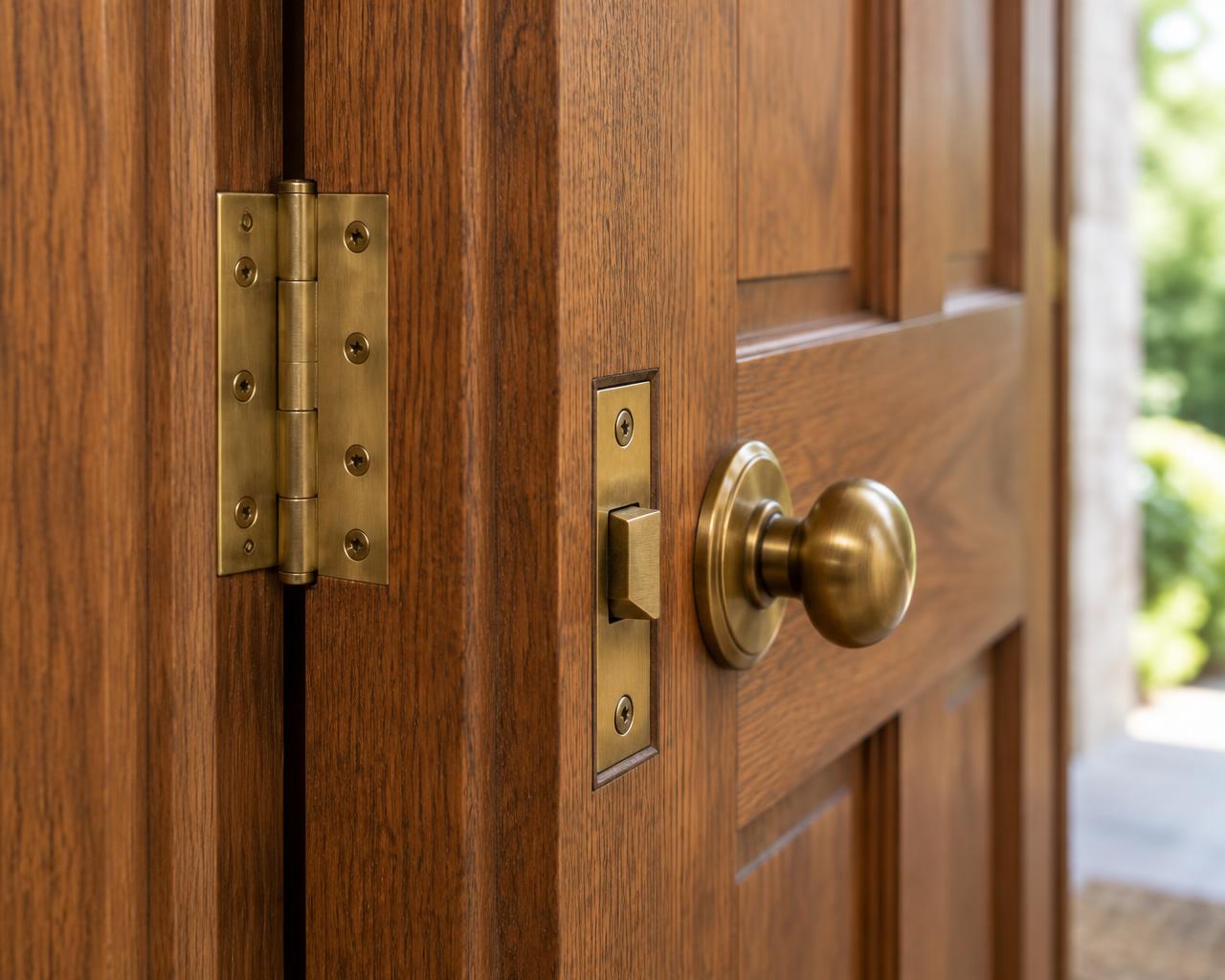
What does commercial door repair in Winnipeg include?
Commercial door repair covers the doors that keep a business operating: front entrances, back-of-house employee and delivery doors, interior office and washroom doors, fire-rated doors, and the hardware that goes with them, such as closers, panic hardware, thresholds and weatherstripping. Unlike a home, a commercial building often has dozens of door openings in daily use, each one tied to staff workflow, customer impressions, or code requirements.
A commercial repair call might involve a closer that slams an office door shut too hard, a storefront entry that no longer seals against the cold, a warehouse man-door that has started to sag, or hardware that has simply worn out from heavy daily traffic. Because commercial doors see far more open-and-close cycles than residential ones, wear patterns and failure points tend to show up sooner and matter more immediately to day-to-day operations.
Property managers overseeing office buildings, retail plazas and mixed-use properties across Winnipeg often deal with several of these issues at once across a single site, which is part of why commercial door repair requests tend to come in batches — a scheduled walk-through of a building's entrances, rather than a single isolated complaint, often surfaces more small issues than anyone expected.
Business owners searching for commercial door repair in Winnipeg are often looking for a way to address a specific entrance problem without disrupting operations, and understanding the general scope of what a door repair visit can cover is a useful starting point before requesting an assessment.
Signs a commercial door needs repair
Businesses often notice door problems first through customer or staff complaints — a door that is hard to open, a draft near the entrance, or a door that doesn't latch securely at closing time. Because commercial entrances get so much traffic, small issues tend to escalate quickly if left alone.
Other early indicators include a door that feels noticeably heavier to open than it used to, hinges that have started to squeal under frequent use, or an entrance that customers visibly hesitate at because it sticks or requires extra force — all worth noting and passing along when requesting an assessment.
- A door that no longer closes and latches on its own, requiring staff to pull it shut
- A closer that slams, drifts, or fails to control the door's swing
- Visible gaps, drafts, or light around the frame of an exterior entrance
- Worn or damaged weatherstripping and thresholds at high-traffic entries
- Hardware that is loose, sticking, or difficult for customers to operate
- A door that no longer sits flush or square in its frame after heavy use
How Winnipeg winters affect commercial entrances
Commercial entrances in Winnipeg take a particular kind of abuse: constant opening and closing by customers and staff, combined with the same freeze-thaw cycles, -30°C cold snaps, dry winter air and humid summers that affect residential doors — but at a much higher frequency of use. A storefront door that is opened hundreds of times a day loses heat every time, and over a winter season that adds up to real wear on closers, hinges and weatherstripping.
Frost heave around a commercial building's foundation can shift door frames just as it does with homes, but on a larger structure the effects can be more pronounced across wider openings or multiple adjoining doors. Road salt and de-icing chemicals tracked in by customers also accelerate corrosion on thresholds and floor-mounted hardware, particularly at entrances near downtown Winnipeg where foot traffic and salt exposure are both higher through the winter months.
Businesses with vestibules or double-door entry systems may notice that only the outer or inner door develops problems first, since the two doors are exposed to different amounts of direct weather, wind and temperature swing even though they are only a few metres apart.
What happens during a commercial door assessment?
A commercial assessment typically looks at the door and its full opening in the context of how the business actually uses it. A technician will check door alignment, hinge condition, closer function, hardware operation, and how well the door seals when shut, while also asking about the volume of daily traffic and any specific complaints from staff or customers.
Because many commercial doors are tied to fire separation or life-safety requirements, an assessment also needs to consider how a repair interacts with those functions — for example, whether a door needs to remain self-closing and self-latching. DoorMend's assessment will identify what repair work is appropriate for the specific door and use, and flag any situation where the door's role in the building means the fix needs to meet particular functional requirements.
For buildings with several entrances, the assessment may be broken into a walk-through of the whole exterior envelope followed by a closer look at the specific doors flagged as problematic, giving the business a fuller picture of overall door condition rather than just a fix for the one complaint that triggered the call.
Repair or replace a commercial door?
For businesses, the repair-versus-replace decision often weighs ongoing operational disruption alongside the condition of the door itself. A door that can be kept in service with hardware repairs, hinge adjustments or weatherstripping replacement is usually the lower-disruption option, and many commercial door problems fall into that category.
Replacement becomes necessary when a door slab has become too warped or damaged to seal properly, when a frame has shifted beyond what shimming or realignment can correct, or when repeated repairs to the same hardware suggest the door or frame itself is at the end of its service life. For a business, the cost of lost heat, security gaps, or an entrance that makes a poor impression on customers is also worth factoring into that decision alongside the repair cost itself.
Businesses operating on tight margins sometimes ask whether a temporary patch can hold a door over until a slower season for a fuller repair — this is a fair question to raise during the assessment, since the honest answer depends heavily on how much the door is relied upon and how exposed it is to winter weather in the meantime.
What influences the cost of commercial door repair?
Commercial door repair costs vary with the scale and complexity of the job far more than with any flat rate per door, since a single storefront entry and a bank of warehouse doors involve very different amounts of work and materials.
Buildings with older or non-standard commercial door sizes may also need parts sourced specifically for that opening, which can add to both cost and lead time compared with a standard-sized replacement component.
- The number of doors needing attention and whether they can be addressed in one visit
- Door type and construction — aluminum storefront, steel, fibreglass, or wood commercial doors
- Whether the door is fire-rated or otherwise tied to code-related functions
- Commercial-grade hardware such as heavy-duty closers, panic hardware, or electrified components
- Accessibility and scheduling around business hours to minimize disruption
- The extent of frame, threshold, or structural damage found during assessment
What can staff check, and when should a business call a professional?
Staff can safely do some basic observation before calling for an assessment: noting which doors are affected, whether a problem happens at a specific time of day or temperature, whether hardware feels loose, and whether a door drafts noticeably at the base or sides. Passing this information along helps speed up diagnosis.
Businesses should stop and call a trained technician rather than attempting repairs themselves when a door is tied to fire separation requirements, when hardware involves panic devices or access control components, or when a powered or automatic entrance is involved — automatic door and access control work depends on confirmed specialist capacity and should never be attempted by untrained staff. Electrical work of any kind around door hardware should also be left to qualified professionals and is not something DoorMend performs.
Maintaining commercial doors under heavy daily use
Because commercial doors cycle so much more often than residential ones, a bit of regular attention prevents many of the issues that eventually require a service call. Periodically checking closer speed and tension, inspecting weatherstripping for compression, and watching for early signs of hardware wear can catch problems while they are still minor adjustments.
Seasonal checks ahead of winter are especially valuable for Winnipeg businesses — confirming that door sweeps and thresholds are sealing properly before the cold arrives can reduce heating costs and customer complaints through the season. Building managers overseeing multiple tenants or locations often find it useful to track which doors have needed repairs before, since recurring issues at the same opening can point to an underlying frame or installation problem worth addressing directly.
Keeping a simple log of which doors have needed attention and when can also help a business spot patterns — for instance, if the same entrance keeps drafting every winter despite repairs, that may point to a frame or installation issue that deserves a closer look rather than repeated quick fixes.
Why do commercial doors near downtown Winnipeg wear out faster?
Entrances in busy downtown Winnipeg locations tend to see more foot traffic, more exposure to road salt and slush tracked in from sidewalks, and more wind-driven cold at street level than suburban storefronts set back from the road. All of this adds up to faster wear on hardware, weatherstripping and thresholds at these high-traffic entrances.
Businesses in these areas often benefit from slightly more frequent seasonal checks of their entrance doors, simply because the volume of use and weather exposure accelerates normal wear. This doesn't mean the doors themselves are lower quality — it mainly reflects how much more often they're opened, closed, and exposed to winter conditions compared with a quieter entrance elsewhere in the city.
Storefronts, offices and warehouses: different considerations
A retail storefront entrance prioritizes smooth operation, a tight seal, and an inviting appearance for customers, while an office building interior door is more about controlling noise and providing reasonable privacy, and a warehouse or loading door is about durability under rougher daily handling. Each setting tends to call for different hardware choices and repair priorities even when the underlying door problems look similar.
Multi-tenant commercial buildings also raise questions about who is responsible for which doors — common area entrances may fall under property management, while interior unit doors are often the tenant's responsibility. Clarifying that before scheduling a repair can help avoid delays, particularly for businesses that lease their space rather than own the building.
Condo and strata-titled commercial units add another layer, since common hallway or lobby doors may be managed collectively even though individual unit doors are the responsibility of each business owner — understanding which category a given door falls into is often the first practical question in a multi-tenant building.
Frequently asked questions about commercial door repair
Can repairs be scheduled around business hours? Scheduling is discussed as part of arranging the assessment and repair, and accommodating a business's operating hours is a normal part of that conversation.
Does a commercial door repair affect our fire or building code compliance? DoorMend's assessment will take the door's function into account, but DoorMend does not provide formal code compliance certification — businesses with specific code questions should also check with their own compliance advisors.
What if the door is part of an automated or access-controlled entrance? Work on automatic doors, access control and panic hardware depends on confirmed specialist capacity, so this is addressed during the enquiry and assessment stage.
How many doors can be assessed in one visit? That depends on the building and the scope of concerns raised, and is something to describe when requesting a quote so the visit can be planned appropriately.
Is emergency or after-hours service available for an urgent commercial door problem? Availability for any particular scheduling request is discussed directly when arranging the assessment rather than promised in advance.
How to request a commercial door repair quote from DoorMend
To start the process, describe the doors involved, what staff or customers have noticed, and roughly how many entrances or interior doors are affected. Photos of the doors, frames, hardware and any visible damage help give a clearer starting point, especially for buildings with several doors that may each need different levels of attention.
An on-site assessment is what determines the actual condition of each door and the realistic repair or replacement options, including how any fire-rated or access-controlled doors would be handled. Sending an enquiry to DoorMend is the first step toward arranging that assessment — it is not a booking or confirmation of work, just the beginning of figuring out what the business's doors actually need.
Whether the concern is a single sticking office door or a full review of every entrance in a commercial plaza, the same process applies: describe what's been noticed, share photos if possible, and let the on-site assessment determine the right path forward for each door.