What does commercial door installation in Winnipeg actually involve?
Commercial door installation covers the planning, fitting, and finishing work needed to put a new exterior or interior door into a Winnipeg business, warehouse, office building, retail unit, or condo common area. That can mean a single steel entry door at a storefront, a pair of aluminum and glass doors at a lobby, a heavy fire-rated door between a stairwell and a corridor, or a back-of-house service door for deliveries. Each of these has different hardware, different framing requirements, and different expectations for how often it will be used in a day.
Unlike a straightforward swap of one door for another identical unit, a full commercial door installation often means squaring up a frame, checking that the rough opening is plumb and level, fitting weatherstripping and thresholds suited to Winnipeg winters, and installing commercial-grade hardware such as closers, panic hardware where applicable, or electronic access components. Businesses in Winnipeg frequently need this work done around existing operating hours, so scheduling and protecting the opening during the work are part of the job as much as the door itself.
Because commercial buildings see far more daily traffic than a house, the components involved are built to a higher duty cycle: heavier hinges, reinforced frames, and closers rated for commercial use. When you are comparing commercial door installation in Winnipeg to a residential job, that difference in load and frequency of use is the main reason the assessment and material choices look different.
Signs your Winnipeg business needs a new door instead of a repair
Not every sticking or drafty commercial door needs full replacement, but certain signs point toward installation of a new unit rather than patching the old one. A frame that has rusted through at the base, a door slab that has delaminated or bowed, or hardware mounting points that have stripped out from years of heavy use are common indicators that repair will not hold for long.
Other signs include a door that no longer closes square in its frame even after adjustment, visible daylight around the perimeter that worsens every winter, or a storefront door that customers regularly have to muscle open and closed. If your business has gone through multiple repairs on the same door within a short period, that pattern itself is often a sign that the frame or slab has reached the end of its useful life.
For condos and multi-tenant buildings, a shared entry door that is constantly in use by many residents and visitors tends to wear out faster than a single-business entrance, so boards often look at replacement sooner than an individual building owner might for a lower-traffic door.
- Rust or corrosion at the bottom of a steel frame or door slab
- Persistent drafts or ice buildup around the door edge each winter
- Door no longer sits square in the frame despite hinge adjustment
- Hardware screws or strike plates that repeatedly strip out
- Visible warping, bowing, or delamination of the door panel
How Winnipeg winters affect commercial entry doors
Winnipeg's freeze-thaw cycles put real stress on commercial door frames and thresholds. As temperatures swing from well below -30 °C up toward brief thaws, moisture gets into small gaps in masonry, concrete, and frame anchors, then expands when it refreezes. Over several winters, that cycle can loosen a frame that was originally installed square and tight, leading to doors that drag, don't latch properly, or let in cold air along one edge.
Dry winter air inside heated commercial buildings can also shrink wood components and some composite materials slightly, while sudden temperature differences between a heated lobby and an unheated vestibule can cause condensation on glass and metal surfaces. That moisture, combined with road salt tracked in on boots and delivery equipment, accelerates corrosion on steel frames, thresholds, and hardware if it is not addressed.
Frost heave is another factor specific to this climate. When the ground beneath or around a slab-on-grade entrance shifts slightly due to frost, the door frame attached to that structure can shift too, even if only by a small amount. For businesses with at-grade entrances, this is one of the more common reasons a previously well-fitted commercial door starts binding every winter.
Because of these conditions, installation work in Winnipeg typically pays close attention to weatherstripping selection, threshold design, and how the frame is anchored, since those choices affect how well the door performs through its first few winters.
Steel, aluminum, fibreglass, and glass: choosing commercial door materials
Commercial entrances in Winnipeg are installed in a range of materials, and the right choice depends on the opening's exposure, traffic, and appearance requirements. Steel doors are common for back-of-house, service, and utility entrances because they hold up well to heavy daily use and impact, and they can be insulated for exterior applications.
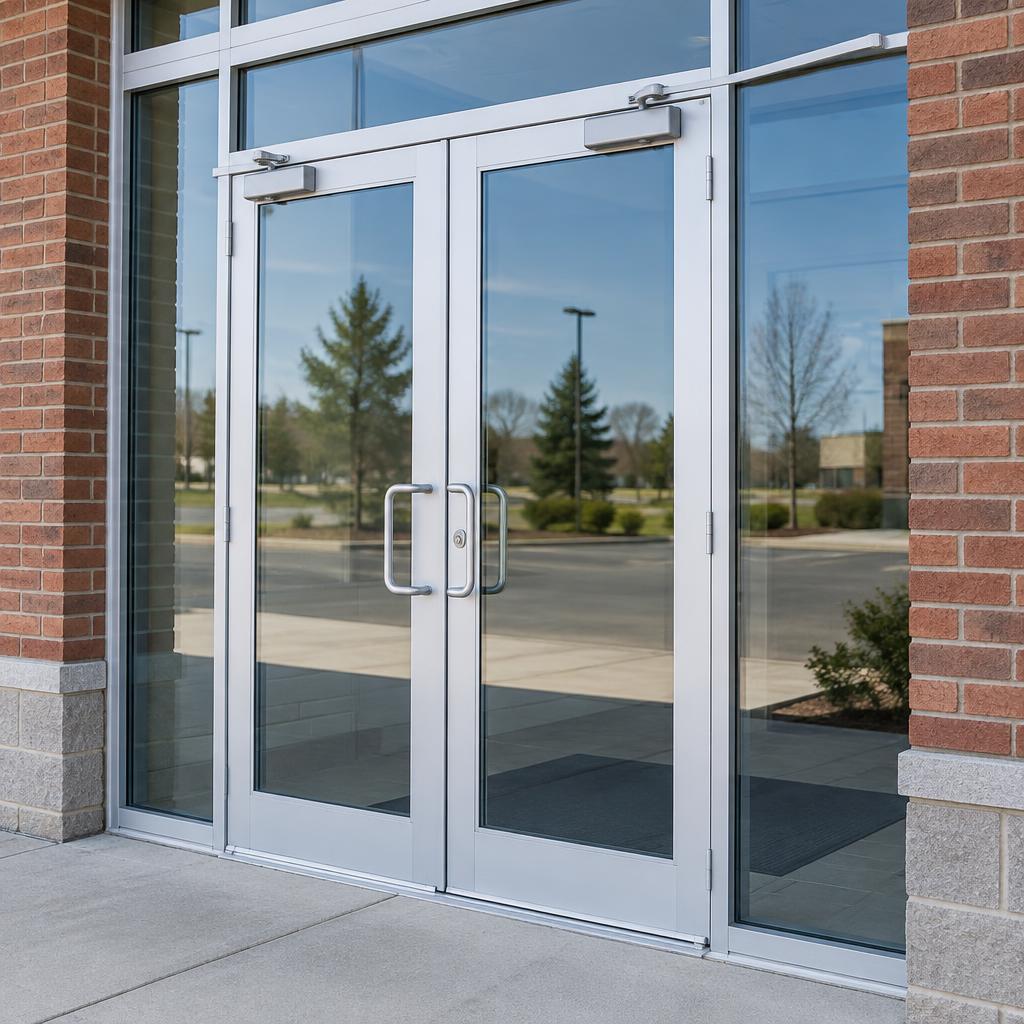
Aluminum-framed doors, often paired with glass, are typical at storefronts and office lobbies where visibility and a finished appearance matter. These systems combine a metal frame with glazed panels and are usually installed as part of a storefront system rather than a single stand-alone slab. Fibreglass doors, a composite material rather than true glass, are sometimes used where a wood-look finish is wanted along with better resistance to dents and moisture than solid wood.
Wood doors still appear in some commercial interior settings, particularly offices and older heritage buildings, though they generally need more upkeep in Winnipeg's humidity swings than steel or fibreglass. Vinyl is less common for primary commercial entries but can show up in certain interior or low-traffic applications.
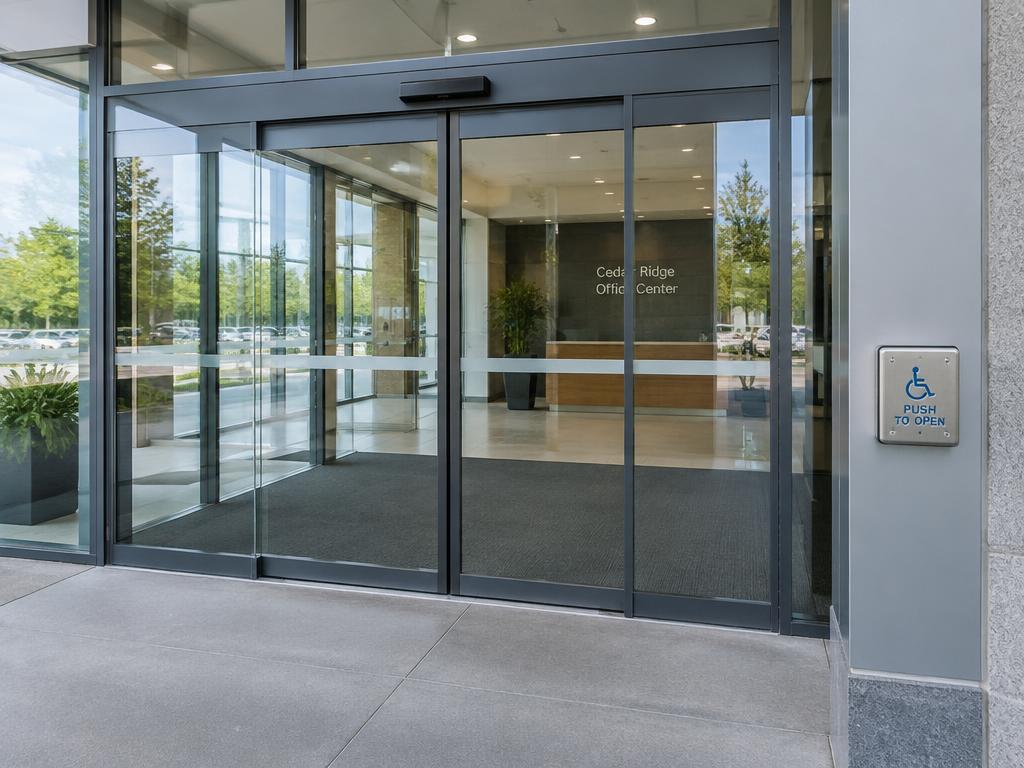
Specialist glass doors, including frameless or heavy tempered-glass entrance systems, and any automatic or powered commercial door, fall into a category where availability for installation depends on confirmed specialist capacity, since these systems require specific expertise and components.
Step by step: what a commercial door installation assessment and project look like
A typical project starts with an assessment of the opening: measuring the rough opening, checking whether the existing frame can be reused or needs replacement, noting the wall material around the opening, and confirming what hardware the business needs, such as closers, panic hardware, or access control tie-ins. For businesses, this assessment also usually considers how the door will be used throughout the day and what traffic patterns look like.
Once the scope is confirmed, the work generally involves removing the old door and, if needed, the old frame, preparing the opening, setting and shimming the new frame so it is plumb, level, and square, then hanging the door and fitting hardware. Weatherstripping, sweeps, and thresholds are fitted with Winnipeg's climate in mind, since a poorly sealed commercial entrance will show drafts and ice buildup quickly in January.
After the door is hung, the closer or any automatic components are adjusted so the door closes fully and latches consistently without slamming or sticking. A final check usually covers whether the door meets flush with the frame, whether locks and panic hardware (where fitted) engage properly, and whether the opening is sealed against weather.
For fire-rated doors, a correctly installed and labelled assembly matters, but DoorMend does not certify code or fire-rating compliance; building owners and managers remain responsible for confirming any code requirements with the appropriate authority.
Repair or replace: a decision guide for Winnipeg business owners
Deciding whether to repair an existing commercial door or install a new one usually comes down to the condition of the frame, the age and condition of the slab, and how the repairs so far have held up. If the frame is still square, solid, and free of significant corrosion, and the issue is isolated to hardware, a closer, or weatherstripping, repair is often the more practical route.
Replacement tends to make more sense when the frame itself has shifted, rusted, or rotted, when the door slab has structural damage like delamination or warping that affects how it seals, or when a business is upgrading to different hardware such as new access control or panic hardware that the existing frame cannot easily support. A pattern of recurring problems on the same door, even after repair, is also a signal that installation of a new unit will be more cost-effective over time than continuing to patch an aging opening.
For multi-door commercial buildings and condos, it can also make sense to assess all entrances at once rather than door by door, since similar age and exposure conditions often mean several doors are approaching the same point in their service life.
What affects the cost of commercial door installation in Winnipeg
Cost for commercial door installation depends on several factors rather than a flat rate, since every commercial opening is a little different. The scope of the opening itself matters: a single steel slab replacement within an existing, sound frame is a smaller project than replacing both the frame and the door, or installing a new storefront aluminum and glass system.
Material choice plays a role too, since steel, aluminum and glass, fibreglass, and wood differ in cost and in how they are fitted. The hardware specified, such as a commercial-grade closer, panic hardware, or integration with an access control system, adds to the scope and the time required.
Site conditions affect cost as well. An opening with square, solid framing and easy access is more straightforward than one where the wall structure needs repair, the opening is out of square, or access for crews and materials is limited. Scheduling needs, such as working outside a business's operating hours to minimize disruption, can also be a factor in planning a project.
Because these variables differ from one business to the next, DoorMend does not quote prices without first assessing the specific opening and discussing what the business needs the new door to do.
- Whether the frame can be reused or needs replacement
- Door material and size (steel, aluminum and glass, fibreglass, or wood)
- Hardware specified, including closers, panic hardware, or access control tie-ins
- Condition of the surrounding wall or storefront structure
- Scheduling needs around business operating hours
What can a business owner check before calling in a professional?
There are a few things a business owner or property manager can look at before requesting an assessment. Checking whether a door closes and latches fully on its own, looking for visible gaps or daylight around the frame, and noting whether drafts or ice tend to form at a particular corner can all help describe the problem clearly when reaching out.
It is also reasonable to note how long the current door has been in place and whether any previous repairs were done, since that history is useful context for an assessment. Taking a few photos of the door, frame, and any visible damage, from both inside and outside if possible, gives a much clearer starting point than a verbal description alone.
What should be left to trained technicians is anything involving heavy commercial door panels, frame removal, powered or automatic door components, or hardware tied into building access or fire-rated assemblies. These components can be heavy, under spring tension, or electrically connected, and mishandling them risks injury or further damage. If a commercial door involves an automatic operator, access control wiring, or any electrical connection, that work should not be attempted without trained technicians, and electrical work itself is outside DoorMend's scope and should be handled by a licensed electrician.
Maintaining a newly installed commercial door through Winnipeg's seasons
Once a new commercial door is installed, a bit of regular attention helps it perform well through repeated Winnipeg winters. Keeping tracks, thresholds, and weatherstripping clear of ice, grit, and salt buildup reduces wear on the sealing components and keeps the door closing smoothly. Wiping down metal frames periodically, especially near entrances where salt is tracked in from parking areas and sidewalks, helps slow corrosion.
Checking that the door closer is still adjusted correctly a season or two after installation is worthwhile, since settling of the building or frame can change how the door swings and latches over time. For storefronts and lobby doors with heavy daily traffic, periodically checking hinge and hardware screws for looseness can catch small issues before they turn into bigger ones.
In summer, Winnipeg's humidity can affect wood components more than steel or fibreglass, so wood commercial doors may need more attention to finish and sealing to prevent swelling or sticking. For any multi-tenant building, having a simple seasonal checklist for common-area doors, even informally, tends to catch small problems before residents or customers notice them.
Commercial door installation for condos, offices, and multi-tenant buildings
Condo boards and property managers often deal with shared entry doors that see far more use than any single-family home door, and decisions about installation typically need to account for all residents and visitors using that opening. Scheduling installation work for a shared entrance usually means coordinating around building access needs so residents are not left without a working entry for longer than necessary.
Office buildings and retail tenants have their own considerations, such as matching the appearance of a storefront system to a building's overall look, or making sure a new door's hardware integrates with existing access control used by other entrances in the same building. In mixed-use buildings, interior doors between common areas and private units sometimes have fire-rating requirements that affect what kind of door and frame can be installed, though confirming code compliance remains the responsibility of the building owner or manager rather than something DoorMend certifies.
Whether the project is a single office door or a full storefront replacement, describing the building type and how the door is used day to day helps an assessment account for the right traffic and hardware expectations from the start.
Frequently asked questions about commercial door installation
How long does commercial door installation take? Timing depends on the scope of the project, whether the frame needs replacement, and the hardware involved, so it varies from a half-day job on a single door to a longer project for a full storefront system.
Can an existing frame be reused for a new commercial door? Sometimes. If the frame is still square, solid, and free of significant corrosion or rot, it can often be reused, which keeps the project smaller than a full frame-and-door replacement.
Does DoorMend install automatic or powered commercial doors? Availability for automatic operators, access control integration, and panic hardware systems depends on confirmed specialist capacity, since these components require specific expertise.
What if my business needs work done outside regular hours? Scheduling around a business's operating hours is something to discuss during the assessment, since minimizing disruption to day-to-day operations is often a priority for commercial clients.
Is a quote request the same as booking the work? No. Submitting an enquiry starts a conversation about the problem; an assessment is needed to determine the options and scope before any work is scheduled.
What is the best way to request a quote for commercial door installation in Winnipeg? Describe the problem or project as specifically as you can, including the door type, location within the building, and any hardware needs, and send photos of the door and frame from a few angles. That information lets an assessment get started with a clear picture of the opening before anyone visits the site.