
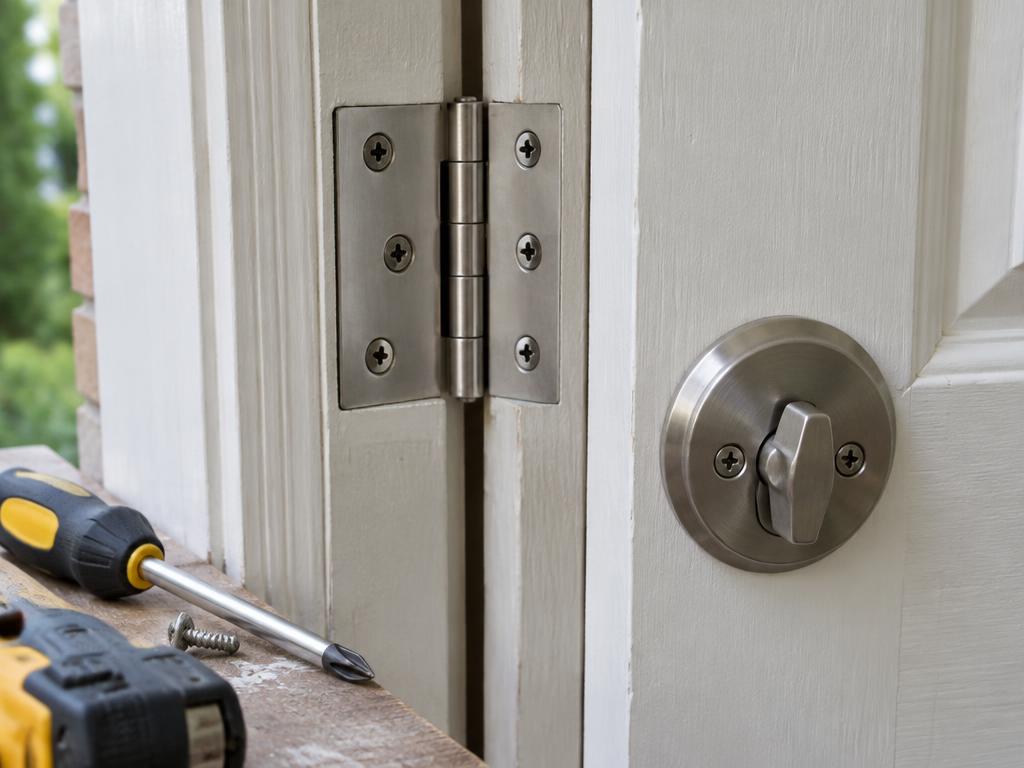
Why does my door close but refuse to latch?
A door can reach the frame without its latch engaging the strike opening. The latch may be too high, too low, short of the opening or held back by pressure against the seal. Alternatively, the latch mechanism itself may not extend normally. The distinction matters: replacing a lock does not correct every alignment problem, and moving a strike does not restore damaged hinge support.
Start with safe observations. Does the door close freely before the latch contacts the frame? Is the gap around the slab uneven? Does the handle behave differently when the door is open? Do not repeatedly slam the door to make it catch. If an exterior door cannot be secured, treat that as a security concern and arrange appropriate qualified help. The enquiry form is a way to request assessment, not emergency dispatch or confirmation of an immediate visit.
Door latch, strike plate and deadbolt: different jobs
The latch is the spring-operated part that usually holds a door closed after the handle is released. The strike is the receiving hardware on the frame. A deadbolt is a separate locking component on many entries. A door may latch but have a deadbolt that does not align, or it may appear closed without either component engaging correctly. Describe which function has failed.
For a safe, stable assembly, observe whether the handle returns normally and whether the visible latch extends when the door is open. Do not put fingers into the strike opening or take the lock apart. A deadbolt that requires pushing or lifting the door may be meeting a misaligned opening. A key that binds even with the door open may involve the cylinder or mechanism. These observations are useful starting points, not a substitute for inspecting the hardware.
Why lifting the handle sometimes makes a door lock
When lifting or pressing on the door changes whether the latch catches, the relationship between the slab and frame is likely involved. Loose hinge support, worn hinges, damaged fixings or a distorted opening can change that relationship. However, the location and cause of movement need to be established rather than guessed from one symptom.
Handles should not serve as lifting points for a heavy slab. Repeated upward force can damage the handle or its connections while leaving the original problem unresolved. Look for visible hinge movement, uneven perimeter gaps and fresh rub marks without levering the door. Tell the assessor whether the problem developed gradually or started after an impact or hardware replacement. A repair should consider support and alignment before simply enlarging the strike opening to accommodate a door that continues to move.
Strike plate scratches and what they can tell you
Fresh marks on the strike can show where the latch is contacting the receiving hardware. A mark above or below the opening may support an alignment investigation. Contact along another edge may indicate that the door is not reaching the correct closed position. Old scratches can reflect earlier adjustments, so they should be interpreted alongside current operation.
Do not file or drill the opening just because a scrape is visible. Removing material can affect the fit and strength of the assembly, and it may conceal another problem. A professional should determine whether the strike is correctly positioned, firmly supported and suitable for the latch. Frame material matters too: timber, hollow metal and other systems use different fixings and repair methods. An internet tip for a bedroom door is not automatically appropriate for an exterior, commercial or rated entry.
Door locks when open but not when closed
If a lock works normally while the door is safely open but resists when closed, contact or alignment is one possible explanation. The deadbolt may be meeting the strike edge, or the door may be pressing unevenly against its seals. This distinction can help avoid assuming the cylinder is faulty. It does not prove the lock is otherwise perfect.
Avoid testing the bolt repeatedly under pressure or using tools to turn a stubborn key. Broken keys and damaged mechanisms create an additional problem. Note whether a gentle change in door position affects engagement, without forcing it. Explain if the issue occurs only during cold weather or after new weatherstripping was fitted. An assessed solution should aim for normal closing and locking rather than requiring a particular push, pull or lifting motion every time the door is used.
Handle sticks or latch fails even with the door open
A handle that does not return, a latch that stays retracted or a key that remains difficult with the door open may point to hardware concerns. Incorrect installation, loose or over-tightened connections, worn components and incompatible parts can all require investigation. The symptom alone does not tell you which replacement component to purchase.
Locate a visible brand or model marking if it can be seen without dismantling. Existing product paperwork can also help identify the hardware. Do not spray an unknown product into a cylinder or mechanism; manufacturer care instructions should guide that decision. If new hardware recently replaced older hardware, mention it. A mismatch in fitting or function may need a different remedy from ordinary wear. For security, do not publish key photographs or access details when seeking advice about a lock problem.
Weatherstripping pressure and seasonal latch problems
A newly fitted seal can keep a door from reaching the position where its latch engages. A displaced bottom seal or threshold issue can create resistance too. Seasonal changes may make an existing fit problem more noticeable, but they do not establish that the lock has failed. Note whether the difficulty started after seal work or follows a consistent weather pattern.
Do not keep adding material around the opening to address a draft while ignoring the closing resistance. A door should remain usable and securely latch with the appropriate seals in place. Ask whether the assessment will consider the door, frame and weatherstripping together. If the door also rubs at an edge, hinge or slab alignment may be involved. The related sticking-door guide explains those observations, while the weatherstripping guide addresses gaps that remain when closing and locking are otherwise normal.
Damaged jambs, loose hinges and failed support
A split jamb, visibly loose hinge or damaged strike fixing can affect both everyday operation and security. Those are support issues, not merely cosmetic defects. Tightening a screw may not restore a damaged hole, and longer screws are not automatically appropriate for every frame. Concealed conditions and the construction of the opening influence the repair method.
Do not remove the door to explore the damage. A heavy slab can become unstable if its support is disturbed. Where there are signs of impact or forced entry, describe the damage honestly and ask what can be assessed by a qualified person. Specialist security, glazing or structural work may be outside routine door repair. Keep the affected area safe and use appropriate urgent assistance when needed. No online guide or quote form should be treated as a guarantee that the entry is secure.
Interior privacy latches versus exterior entry locks
A bedroom or bathroom privacy latch differs from exterior locking hardware in purpose and construction. Commercial, condo and common-area assemblies can introduce additional requirements. A repair suggestion suitable for a lightweight interior door may be unsuitable for a main entry or exit. Identify the door type before discussing adjustments or replacement.
For rented homes and shared buildings, check who is responsible for the hardware and what alterations require permission. Do not replace common-area locks or modify an exit assembly without authorisation. Panic hardware, powered systems and access-control equipment require appropriate expertise; they are not ordinary residential latches. This guide does not provide lockout instructions or a method of bypassing a lock. Its purpose is to help describe normal operation problems and understand why a qualified assessment may involve more than one component.
What a useful latch and lock assessment should include
The assessor should establish whether the door can move normally, whether the latch and bolt function, and how they meet the frame. Hinge support, clearances, strike condition and seal pressure can be relevant. A good explanation separates failed hardware from alignment problems and identifies any combination of causes. Ask what evidence supports the proposed remedy.
A quotation should clarify whether it covers adjustment, support repair, replacement hardware or wider frame work. If several components remain in place, ask whether their condition limits the expected result. Confirm any specialist or property-permission requirements before authorising work. An enquiry is not a booked appointment or an approved repair. The aim is dependable operation without force; it is not enough for the lock to catch only when the door is held in a particular position during a demonstration.
How much does repairing a door that will not latch cost?
The cost depends on the fault and the assembly. Alignment work, damaged timber repair and replacement lock hardware have different scopes. Proprietary parts, door material, support condition and access can affect the options. Replacing several components because their names appear related is not a diagnosis. A detailed inspection may find one cause or several interacting issues.
The estimator gives typical market ranges in Canadian dollars, not DoorMend rates or a guaranteed invoice. Use the frame-and-hinge or appropriate hardware service as initial budgeting context and explain the uncertainty in your message. Combined services may include overlapping work. An eventual quotation should say what parts and labour are proposed, identify exclusions and clarify taxes and other charges. Do not infer response times, parts availability or specialist capability from the range. Those details must be established for the actual request.
A door pops open after it seems to latch
A door that appears closed but opens again without normal handle operation may not be engaging its latch properly. Pressure against the seal, incomplete latch extension or a mismatch at the strike can be involved. Observe whether there is a clear engagement or merely contact with the frame. Do not assume that a clicking sound proves the assembly is secure.
For an exterior door, unreliable engagement deserves prompt qualified attention. Do not rely on improvised wedges or repeated slamming as a repair, especially where safe exit requirements apply. Describe whether the problem affects the latch, deadbolt or both. An assessment should check the mechanism and receiving hardware as well as the door position. Ask what must change for the entry to secure normally, rather than accepting a solution that only works when the panel is held under extra pressure.
New lock installation and a problem that was already present
A new lock can make an existing alignment problem more noticeable. If the previous hardware required pushing or lifting the door too, include that history. It may help distinguish a fitting problem with the new lock from an older issue in the door support. Conversely, a fault that began immediately after installation should be described accurately without assuming the surrounding frame is the cause.
Keep the available model and installation information for the assessor. Ask whether the hardware matches the prepared opening and whether its operation has been checked with and without frame contact. Those are different checks. Do not mix parts from unrelated products to make the new assembly fit. A repair plan should identify compatible components and any support or alignment work needed, explaining what is confirmed and what still requires inspection before more replacements are authorised.
Reliable operation after latch or hinge work
Ask for the agreed repair to be explained in terms of ordinary use. Does the handle return normally, does the latch engage without slamming, and does the bolt enter without lifting the slab? If another concern remains, such as damaged frame material or excessive seal resistance, it should be distinguished from completed hardware work. This helps you understand the outcome without assuming every aspect of security has been certified.
Keep records of the approved scope and any product-specific maintenance instructions. If the problem recurs, describe the change and when it started rather than moving the strike again. A growing dependence on force can be a sign that another cause needs attention. No general guide can promise that a repaired lock or door will never need future maintenance, and no warranty terms should be assumed unless they have actually been provided and agreed.
What to include in a request about a door that will not lock
Explain which part is affected: the latch, deadbolt, handle or key cylinder. Say whether it works while the door is open, whether the slab rubs, and whether you have to lift or push it to engage the lock. Mention recent hardware or weatherstripping changes and any visible damage. “The back door latches, but its deadbolt hits the strike unless I lift the handle” is useful without claiming a diagnosis.
The form requests your name, phone number, email address, address and message. Do not include keys, codes or sensitive security details. Suitability and timing need confirmation, and the form is not emergency assistance. Use the related frame-and-hinge page to understand possible support work and the sticking-door guide if the slab also rubs. Before approving a repair, ask how it will restore ordinary closing and locking rather than merely make a worn assembly catch temporarily through extra force.
Door repair price estimator
Pick one or more services — the estimate combines them.
Services needed (select all that apply)
Estimated typical range (CAD)
$150 – $750
Door Frame & Hinge Repair
Typical Canadian market range, compiled from published 2025–2026 price guides. Not a DoorMend quote — your price is confirmed after assessment. This estimator is a rough guide only; combining services may change the final price after assessment.
Frequently asked questions
Does a stiff key always mean I need a new lock?
No. The cylinder, mechanism, fitting and pressure against the receiving opening can all require consideration. Explain whether the key remains stiff while the door is open, without forcing it. Manufacturer care advice and qualified assessment are safer than assuming a spray or replacement will resolve every case.
Can a deadbolt hold a poorly fitted door in position?
It should not be used as a substitute for proper fit and support. If engagement requires pushing, pulling or lifting, ask why the assembly is misaligned. The repair should restore normal closing and securing rather than depend on continued force through the locking components.
What should I ask when a strike adjustment is proposed?
Ask whether the door position and hinge support have been checked, whether the receiving hardware remains securely supported and what caused the mismatch. A well-explained adjustment can be part of a repair, but moving the opening without investigating recurring movement may leave another fault unresolved.