
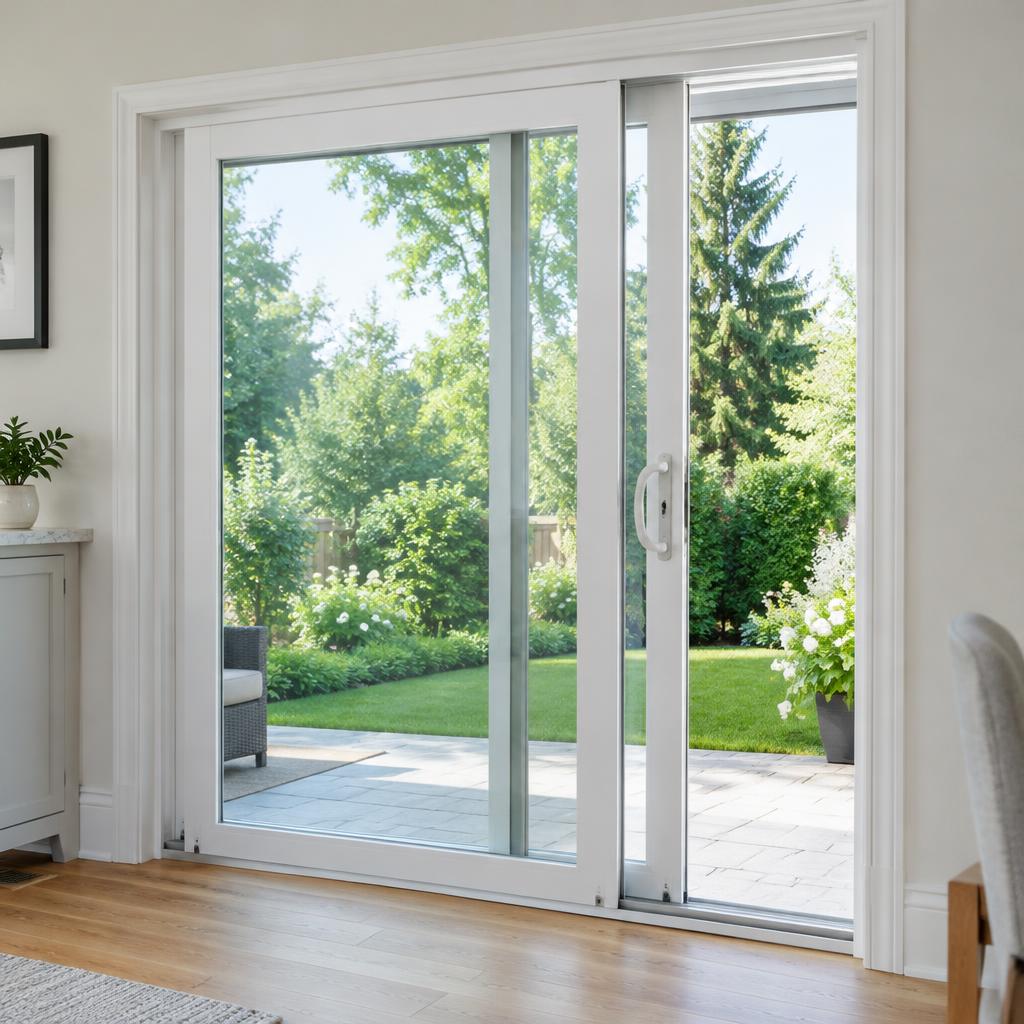
Why is my sliding patio door so hard to open?
A patio door that takes two hands to move is telling you that something has changed. The difficulty might come from dirt in the track, worn rollers beneath the moving panel, damage to the running surface, or a frame that no longer supports the panel evenly. A latch that has not released completely can also make the door feel stuck. The useful first question is not which replacement door to buy, but where the resistance starts and whether the panel still moves safely.
If the glass is cracked, the panel is leaning, or the door appears to be leaving its track, stop using it and keep people away. Do not lift the glass panel out to investigate. Heavy glazed doors require appropriate handling and knowledge of the particular system. For an otherwise stable door, you can describe whether it drags throughout its travel, catches at one point, or moves freely until the final few centimetres. Those differences help separate roller problems from closing and locking problems.
Track dirt, damaged rails and worn patio door rollers
The bottom track is exposed to shoes, garden debris, pet hair and household dust. Loose material can interfere with movement and hide damage underneath. With the door stationary and the track accessible, remove loose debris using a vacuum and a gentle wipe, following the manufacturer's cleaning advice. Avoid scraping with metal tools or bending the track. If ordinary cleaning makes little difference, repeated cleaning is unlikely to fix a worn mechanical component.
Rollers support the sliding panel and allow it to move along its running surface. A roller that is worn, damaged or no longer rotating properly may make the panel drag or travel unevenly. However, a grinding sound alone does not establish which part has failed. A damaged track can produce similar symptoms. During an assessment, the condition of the running surface and the support hardware should be considered together. Replacing wheels while leaving a damaged contact surface can leave the underlying cause unresolved.
Why a sliding glass door catches in one place
A catch at the same position each time suggests a local obstruction, damaged running surface or contact between the moving panel and another part of the assembly. Note where it happens without forcing the door past the obstruction. A problem near the closed position might involve a latch, seal or keeper. A problem halfway across the opening may have a different cause. The location is more useful information than simply saying the door is old.
Look from a safe position for visible debris, a loose piece of weatherstripping or an obvious scrape mark. Do not reach into pinch points while someone else moves the door. If movement suddenly became difficult after an impact, moving furniture or recent renovation, include that history in your enquiry. An assessor can then check whether the panel, frame or track was disturbed rather than assuming the rollers have simply reached the end of their useful life.
Patio door roller adjustment versus roller replacement
Some sliding doors provide model-specific roller adjustments. That does not mean every stiff door needs a height change, or that the same adjustment works on every brand. A sound roller sitting at the wrong height is a different problem from a seized or damaged roller. Changing height without understanding the latch, head clearance and panel support can create new problems. Follow the exact product instructions rather than an unrelated online demonstration.
Replacement decisions depend on the roller assembly, panel weight, track condition and available compatible parts. Photos of a visible manufacturer label or an existing maintenance record can be useful; dismantling the panel to identify hidden hardware is not a necessary homeowner step. Older doors may have serviceable parts, but availability must be checked. Ask whether the proposed work addresses both movement and closing alignment, and whether any track damage would remain after new rollers are fitted.
Sliding patio door will not lock after it starts dragging
When a panel changes position, its latch may no longer meet the keeper on the frame. You might find that the handle operates but the lock misses, or that pulling upward on the handle makes it catch. That is a reason to investigate support and alignment, not to keep using the handle as a lifting device. Handles and lock cases are not substitutes for working rollers.
A useful observation is whether the handle and latch operate normally while the door is safely open. If they do but fail when closed, alignment or keeper contact may be involved. If they remain stiff while open, the hardware itself may need attention. Neither observation proves a diagnosis. Avoid modifying the lock opening, drilling the frame or adding improvised security devices. A patio door that cannot be secured needs prompt qualified attention, and an online quote request is not emergency dispatch.
Winter sticking, ice and weatherstripping around patio doors
A door that becomes difficult only during cold weather needs a slightly different investigation. Ice, compressed seals, debris and changes in the assembly may contribute. Condensation or frost does not by itself prove that the rollers are faulty. Record whether the problem improves when conditions change, and whether the resistance is at the track, the perimeter seal or the lock. A seasonal pattern is useful evidence, but it should not replace an inspection.
Do not pour boiling water onto a cold glass door, chip ice with sharp tools or use an open flame. Keep drainage openings clear only as directed by the manufacturer, without drilling new holes. A draft around the sliding panel may require attention to weatherstripping or alignment rather than more force on the handle. When asking about a sliding patio door that freezes or sticks in winter, mention both the movement problem and any visible moisture so they can be considered together.
Should I lubricate a sliding door track?
There is no universal lubricant instruction for every patio door. Manufacturers distinguish between track cleaning, roller care and lubrication of particular hardware. The wrong product can leave residue, attract debris or affect finishes and seals. Before applying anything, locate the care instructions for the actual door model. If those instructions cannot be identified, ask a qualified person rather than choosing a spray simply because it is described as suitable for household use.
Cleaning an accessible track is not the same as servicing the rollers beneath the panel. A spray might briefly change the feel of movement without correcting a damaged bearing or running surface. If the door becomes difficult again soon after treatment, describe that history during assessment. It can help explain what has already been tried. Avoid mixing chemicals, saturating seals or treating a clean-looking track repeatedly when the panel clearly needs mechanical attention.
Repair or replace a hard-to-slide patio door?
Repair may be worth considering when the frame and glass remain sound and the difficulty is concentrated in accessible, compatible hardware. Replacement deserves discussion when there is significant frame deterioration, damaged glazing, recurring water entry, unavailable parts or several independent failures. A door that moves badly is not automatically beyond repair, but movement alone is not the only measure of its condition.
Compare options against the same goals: safe operation, dependable locking, reasonable sealing and an assembly suitable for its location. Ask which existing components would remain and what limitations would still exist after repair. Replacing rollers will not restore failed insulated glass, and new seals will not straighten a badly damaged track. For condo or apartment properties, establish who owns the assembly and whether alterations need approval before authorising work. A practical decision includes permissions as well as parts.
What affects sliding patio door repair costs in Winnipeg?
The price depends on what is actually wrong, the door system, the number of affected panels and the availability of matching components. Cleaning, alignment, roller replacement, track work, lock replacement and glazing are different scopes. A larger or heavier panel may require different handling arrangements. Restricted access or several interacting problems can also change the assessment and the work required.
The estimator on this page provides a typical market range in Canadian dollars, not a DoorMend quote or a diagnosis. Choose the most relevant service and describe any uncertainty instead of selecting every possible repair. If you select several services, some work may overlap; the sum should not be interpreted as a guaranteed bill. An assessed quotation should identify the proposed parts, labour and any exclusions, and explain whether taxes and removal costs are included. Do not assume that an online estimate reserves an appointment.
What to check before requesting patio door help
Start with observations rather than dismantling. Which panel moves? Is it the glazed patio door or the separate insect screen? Does the problem happen while opening, closing or locking? Is there a particular sound or position where it catches? Note whether the issue developed gradually or followed an impact. If ordinary track cleaning was tried, say whether it changed the movement. These details can make the initial conversation more focused.
Photographs can be useful during a later agreed assessment process, but do not send keys, access codes or private documents. The enquiry form requests your name, phone number, email address, address and message. Use the message to explain the symptom, door type and any immediate safety concern. Submission is an enquiry, not a booking or a guarantee of specialist capability. Timing, suitability and the actual scope need confirmation. If the panel looks unstable, keep it unused while arranging appropriate qualified help.
Patio door questions: handles, screens and repeated problems
Can replacing the handle make a heavy patio door slide better? Not if the underlying problem is panel support or the running surface. A damaged handle may need replacement, but it should not have to overcome abnormal resistance. Explain whether the handle is loose because it has been pulled hard, or whether the latch itself has stopped working. Those are related but distinct problems.
Does the sliding screen use the same repair as the glass panel? Usually the screen has its own lightweight frame, rollers and guides. Identify which panel is troublesome so the work is not confused. Can a repaired door start dragging again? Yes, if another contributing cause remains or later wear develops. Ask what maintenance suits the particular model and which findings should trigger another inspection. A useful repair plan addresses the cause, not merely the immediate symptom, and avoids promising that an ageing assembly will never need attention again.
Patio door drags, but the track looks clean
A clean-looking track rules out neither roller wear nor alignment trouble. Some dirt is hidden, and components supporting the panel are not all visible during an ordinary household check. If the door resists across its entire travel, describe that rather than repeating cleaning until the surface becomes damaged. If only the last part of closing is difficult, mention that separately because seals and latch contact may deserve investigation.
Ask whether a proposed roller repair includes checking the running surface and the closed position. Those checks address different aspects of operation. A panel can slide more freely after work but still fail to lock or seal correctly if another problem remains. When reviewing a proposal, distinguish the confirmed findings from parts that might be required after further inspection. That makes it easier to approve a defined repair rather than an unexplained list of replacements.
French patio doors and sliding glass doors are not the same mechanism
A hinged French patio door does not use the same support arrangement as a sliding glass panel. Its rubbing or latching issue may involve hinges, frame clearances or meeting edges rather than bottom rollers. A pair of hinged doors can also have an active and inactive leaf with different hardware. Identify which leaf is troublesome and whether the difficulty concerns swinging, closing or securing it.
The phrase patio door describes a location and purpose, not one universal repair. If you are unsure which service to select in the estimator, describe how the door moves in your enquiry instead of assuming a sliding-door repair applies. An assessor can clarify the system and scope. Keep the separate screen panel in that description too. Matching the problem to the correct assembly helps avoid comparing price ranges for work that would not apply to the door you actually have.
A clearer description leads to a more useful assessment
A message such as “the glass panel drags across the whole track, cleaning did not help, and the latch only catches if I pull upward” offers more direction than “patio door broken.” It still does not diagnose the fault, but it gives the assessor a sensible starting point. Mention visible labels, approximate panel size if known and any property permission requirements without removing hardware to gather information.
If you are comparing repair proposals, ask why each component is recommended and whether the existing frame remains suitable. Keep records of the agreed work and the product-specific care instructions. The aim is a patio door that can be moved and secured without force, not an unnecessary replacement or a quick adjustment that hides another problem. Use the related patio and sliding door service page for the service scope, and the guide on drafty doors if movement is acceptable but perimeter sealing remains a concern.
Door repair price estimator
Pick one or more services — the estimate combines them.
Services needed (select all that apply)
Estimated typical range (CAD)
$180 – $780
Patio & Sliding Door Repair
Typical Canadian market range, compiled from published 2025–2026 price guides. Not a DoorMend quote — your price is confirmed after assessment. This estimator is a rough guide only; combining services may change the final price after assessment.
Frequently asked questions
Can dirty tracks and bad rollers happen together?
Yes. Cleaning may expose a worn running surface or reduce some resistance while a mechanical problem remains. Explain how much movement improved and which symptoms persisted. That helps distinguish a maintenance issue from the parts or alignment that may still need inspection.
Does fog between glass panes explain a dragging patio door?
Fog inside an insulated glass unit and poor panel movement are different symptoms. They may coexist, but changing rollers will not repair a failed glass seal. Describe both so a proposed repair does not address only movement while overlooking a separate glazing concern.
Should I order universal patio rollers before an assessment?
Similar-looking parts can differ in mounting, size and load suitability. Ordering before the system is identified risks buying an incompatible component. Ask how the matching assembly will be established and whether availability affects repair options before approving a parts-based quotation.