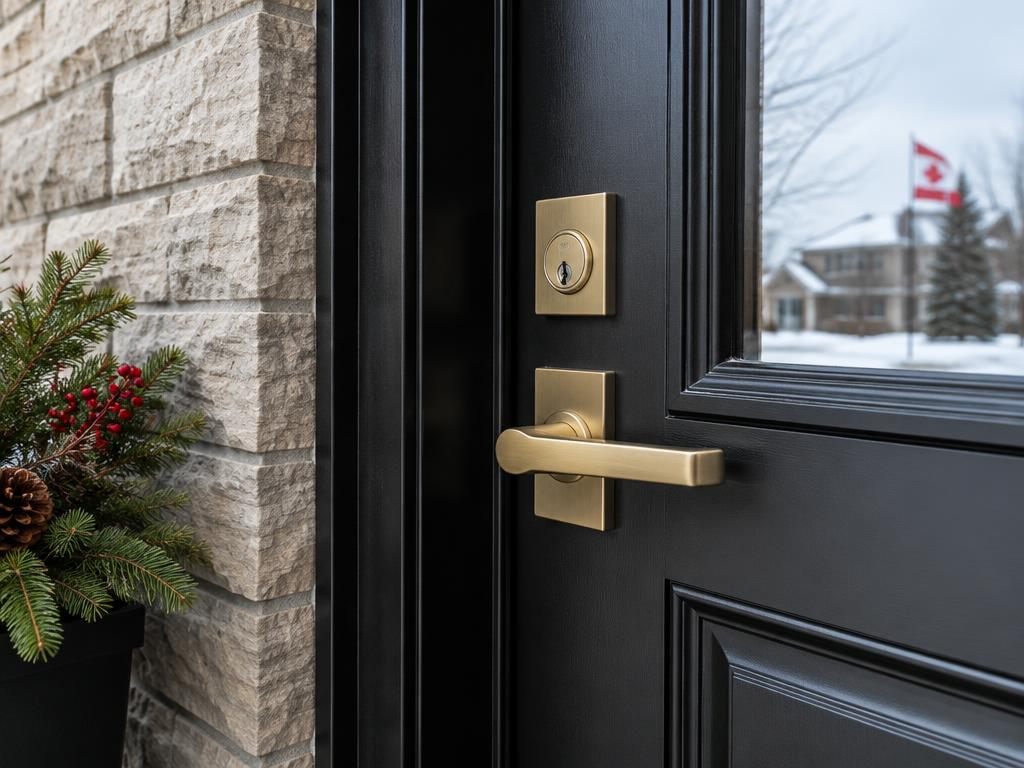
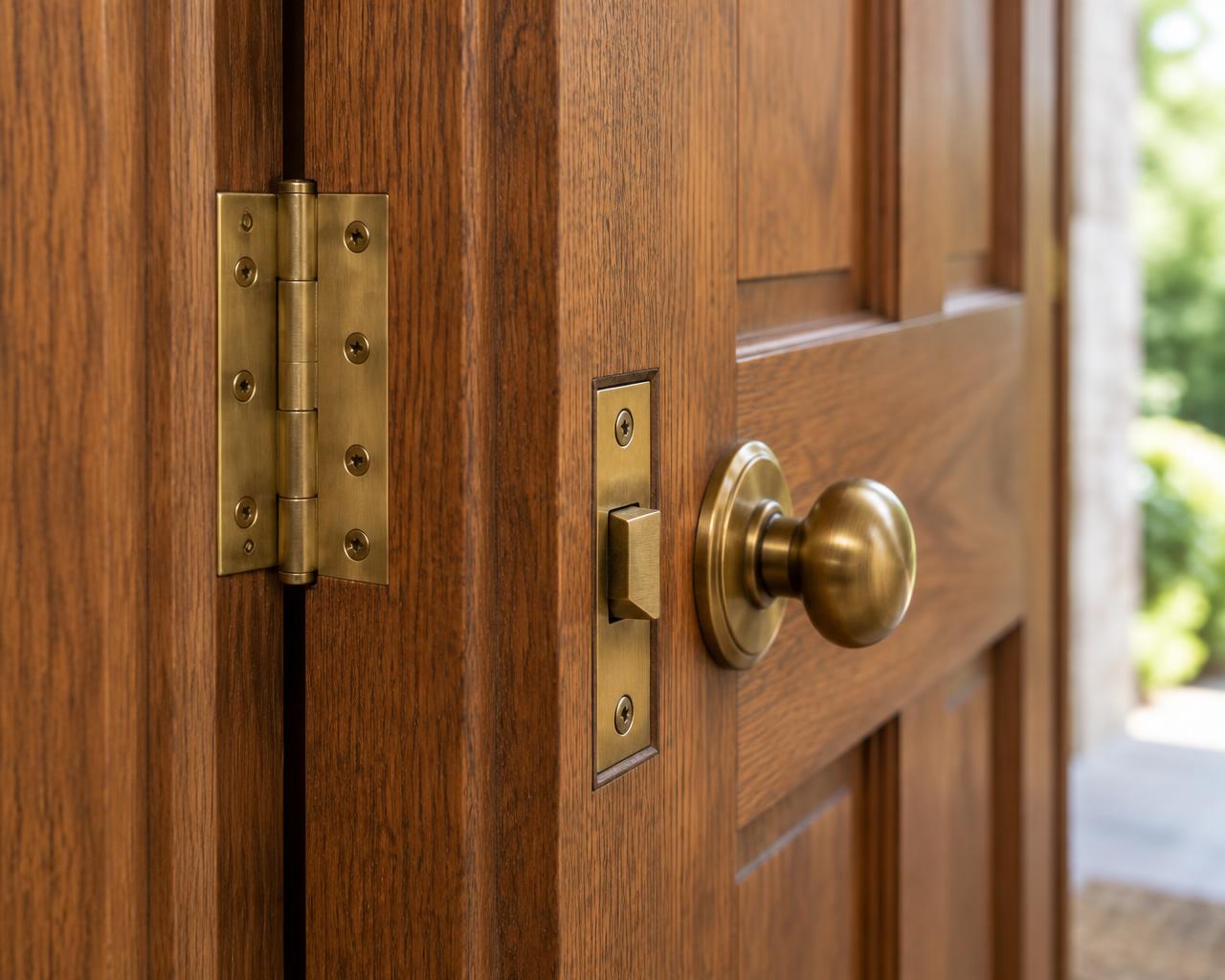
What does entry and exterior door repair in Winnipeg actually cover?
Entry and exterior door repair covers the front door, back door, side door, and any exterior-facing door that separates the inside of a Winnipeg home or business from the outdoors. This includes the door slab itself, the frame and jambs, hinges, weatherstripping, thresholds, sweeps, and the hardware that lets the door open, close, and seal properly against the weather.
Because an exterior door is a structural and climate barrier as well as a point of entry, repair work often touches more than one part of the assembly at once. A door that sticks in July might also be letting in cold air in January because the same swelling and shrinking cycle that jams the slab is also opening gaps around the weatherstripping.
DoorMend looks at exterior doors made of wood, steel, fibreglass, vinyl, and aluminum, along with doors that include glass inserts or sidelights. Each material behaves differently in Winnipeg's climate, and an assessment takes the specific material and construction into account before any repair work is recommended.
Why won't my front door close or latch properly anymore?
A front door that will not latch is one of the most common exterior door problems in Winnipeg homes, and it rarely has a single cause. The strike plate and the latch need to line up precisely, and small amounts of movement anywhere in the door, frame, or house structure can throw that alignment off.
Seasonal wood movement is a frequent culprit on wood doors, where the slab expands in humid summer air and contracts in dry winter air, shifting the latch position by a few millimetres in either direction. Steel and fibreglass doors move less than wood, but their frames are often built around wood jambs that still expand and contract with temperature and humidity.
House settling is another factor specific to Winnipeg's clay-heavy soil, which expands and contracts with moisture and freeze-thaw cycles. As a foundation shifts slightly over the years, exterior door frames can rack out of square, which changes how the door hangs and whether the latch reaches the strike plate cleanly.
Worn or loose hinges are a simpler but equally common cause. Hinge screws can work loose over years of daily use, allowing the door to drop slightly, which changes the gap at the latch side enough to prevent clean closing.
- Door drags on the floor or frame before it reaches the latch
- Latch bolt does not line up with the strike plate hole
- Door appears to close but does not feel fully secure
- Visible gap between the door and frame on one side
How does Winnipeg's winter and freeze-thaw cycle affect exterior doors?
Winnipeg's climate puts exterior doors through some of the widest temperature and humidity swings of any Canadian city, and that range is a major reason exterior door repair is such a recurring need here. Winters that dip toward -30 °C followed by chinook-like warm spells, then a humid summer, mean door materials are constantly expanding, contracting, and adjusting moisture content.
Wood doors and wood door frames are the most sensitive to this cycle. Dry winter air pulls moisture out of wood fibres, which can shrink a slab enough to open gaps around the weatherstripping, while humid summer air swells the same wood enough to make the door drag against the frame.
Freeze-thaw cycles affect more than the door itself. Water that gets into small gaps around a threshold or frame can freeze and expand, gradually widening cracks and loosening fasteners over several seasons. This is one reason a minor draft in autumn can become a noticeably stuck or misaligned door by the following spring.
Frost heave in the ground beneath and around a foundation can also shift an exterior door frame that is set close to grade, particularly on older homes or additions without deep footings. Road salt tracked in on boots and splashed up from driveways can accelerate corrosion on steel door bottoms, hinges, and thresholds over time.
Signs your exterior door needs attention before winter
Catching exterior door problems before the cold sets in can prevent a minor adjustment from turning into a drafty, hard-to-close door partway through a Winnipeg winter. A few signs are worth watching for as the seasons change.
Visible daylight around the edges of a closed door, especially near the top corners or along the hinge side, usually points to weatherstripping that has compressed, cracked, or pulled away from the frame. A door that used to close with a light push but now needs a shoulder bump into it is often telling you the frame has shifted slightly or the hinges have loosened.
Cold air noticeably moving across the floor near an exterior door, sometimes called a draft, frequently traces back to a worn door sweep or a threshold that has dropped or warped. Rust streaks on a steel door bottom or soft, spongy spots on a wood door bottom suggest moisture has been getting past the threshold seal for some time.
- Daylight visible around the closed door edges
- Door needs extra force to close or lock
- Noticeable draft at floor level near the door
- Rust, rot, or soft spots near the door bottom
- Weatherstripping that looks flattened, torn, or missing in sections
- Condensation or frost forming on the inside of the door slab
What happens during an exterior door assessment and repair?
An exterior door assessment typically starts with a visual and functional check of the whole assembly, not just the part that seems obviously broken. A technician looks at how the door hangs in the frame, checks for square and plumb, tests the swing and latch, and examines the weatherstripping, threshold, sweep, and hardware.
Hinges are checked for loose screws, worn pins, and sagging, since even one weak hinge can throw off the alignment of the whole door. The frame is checked for any racking, rot, or movement, and the gap between the door and frame is measured at several points to see where it is uneven.
Depending on what the assessment finds, repair work might involve re-securing or replacing hinge screws, planing or trimming a swollen door edge, adjusting or replacing a strike plate, replacing worn weatherstripping, adjusting or replacing a threshold, or repairing minor frame damage. On doors with glass inserts, the glazing and seals around the glass are checked separately from the door hardware.
For doors with more significant structural movement, such as a frame that has shifted out of square due to foundation settling, repair can involve re-shimming and re-securing the frame itself rather than just adjusting the door.
Repair or replace: when is a warped, rotted, or damaged exterior door too far gone?
Deciding between repairing an existing exterior door and replacing it entirely comes down to how much of the door and frame is still sound versus how much has been compromised by age, moisture, or damage. A door with a single sticking point, a loose hinge, or worn weatherstripping is almost always a repair candidate.
A wood door with widespread rot in the bottom rail, extensive warping across the slab, or a frame with rotted jambs on both sides is a different situation, since repairing isolated spots on a door that is failing throughout its structure often does not hold up. Steel doors with rust perforating through the skin, rather than just surface rust, are similarly past the point where patching makes sense.
Fibreglass and vinyl exterior doors tend to resist rot and rust, but they can still suffer from core damage after impact, or from frame and hardware issues even when the slab itself is fine, which often makes them good repair candidates for longer than comparable wood doors.
An assessment is the most reliable way to know which side of that line a specific door falls on, since visible symptoms like a draft or stuck latch do not always reveal whether the structure underneath is still solid.
What affects the cost of exterior door repair in Winnipeg?
The cost of exterior door repair depends on several factors that vary from home to home, which is why a specific dollar figure cannot be given without an assessment. The scope of work is the biggest factor: adjusting a hinge and strike plate is a much smaller job than repairing a racked frame or replacing a rotted threshold.
Door material plays a role as well, since sourcing matching trim or weatherstripping for an older wood door profile can take more effort than working with common steel or fibreglass door hardware. The extent of any water or rot damage matters too, because repairs that only address visible symptoms without dealing with underlying moisture damage tend to need redoing sooner.
Access and complexity also factor in, such as whether a door is standard or part of a more complex assembly with sidelights or double doors. An assessment turns these general cost factors into an actual scope of work for a specific door.
- Scope of repair needed, from a single adjustment to multiple components
- Door material and age, and availability of matching parts
- Extent of rot, rust, or water damage found during assessment
- Whether the frame, not just the door slab, needs attention
- Complexity of the door assembly, such as sidelights or double doors
What can homeowners safely check themselves before calling a professional?
There are a handful of simple checks a homeowner or business owner can safely do before deciding whether a door issue needs a professional. Visually inspecting the weatherstripping for tears, gaps, or flattening is safe and can sometimes explain a draft on its own. Checking whether hinge screws are visibly loose, and gently tightening ones that are easy to reach, is generally a safe first step.
Watching where a door drags against the frame as it opens and closes, and noting whether the gap is even or uneven along the edge, gives useful information even if the owner does not attempt the fix themselves. Looking at the bottom of the door and the threshold for soft spots, rust, or peeling finish can help identify moisture damage early.
Where it is time to stop and call in a trained technician is when the issue involves structural frame repair, cutting or planing a door slab, replacing a threshold or sill, working with glass inserts, or any sign that the door is no longer hanging securely in its opening. Forcing a door that will not close, or attempting to re-square a racked frame without the right tools, risks making the damage worse or creating a security gap.
Exterior doors that double as part of a home's security also deserve a cautious approach: a door that has been pried, forced, or otherwise damaged during a break-in attempt should be assessed by a professional rather than patched temporarily, since hidden frame damage is easy to miss.
Maintaining an entry door so repairs don't keep coming back
Regular, light maintenance goes a long way toward preventing exterior door problems from returning after a repair. Wiping down weatherstripping and checking it for wear once or twice a year, especially before winter, helps catch flattening or cracking before it causes a draft.
Keeping hinges lightly lubricated and checking that screws are snug helps prevent the sagging that throws off door alignment over time. Clearing snow, ice, and salt residue away from the threshold and door bottom through the winter reduces the moisture exposure that leads to rust and rot.
For all exterior door types, periodically checking that the door still closes with even pressure across the whole edge is a simple way to catch frame or hinge movement early, before it turns into a bigger repair.
- Inspect and replace worn weatherstripping before winter
- Keep hinges lubricated and screws snug
- Clear snow, ice, and salt buildup from thresholds
- Re-finish or seal wood door surfaces on a reasonable schedule
- Check for even closing pressure across the whole door edge
Common questions about entry and exterior door repair in Winnipeg
Does a drafty front door always mean the whole door needs replacing? Not necessarily. Many drafts trace back to worn weatherstripping, a dropped threshold, or slight misalignment, which can often be repaired without replacing the door. An assessment is the only way to know for a specific case.
Can a sticking door be fixed without planing the slab? Sometimes. If the sticking is caused by a loose hinge or shifted strike plate rather than a swollen edge, adjusting hardware can solve the problem without removing material from the door.
Is it normal for a door to behave differently in summer and winter? Yes, this is common in Winnipeg due to the humidity and temperature swings described earlier, though a well-fitted door and frame should still close and seal reasonably well across seasons. Significant seasonal changes in how a door closes can be worth having assessed.
What about doors with sidelights or glass panels? These are assessed as part of the overall door system, since the frame, glazing, and seals around glass inserts all interact with how the main door hangs and closes.
Does DoorMend handle window repair or lock rekeying as well? No, window repair, lockouts, rekeying, and security or alarm system work are separate from DoorMend's exterior door repair services and are not offered.
Are condo and commercial entry doors handled differently than house doors? Commercial and condo exterior doors often see higher daily traffic and may be subject to building-specific hardware requirements, which an assessment takes into account alongside the same material and climate factors that affect residential doors.
Requesting a quote for exterior door repair in Winnipeg
Getting a quote for entry or exterior door repair starts with describing the problem as specifically as possible: what the door does or does not do, when the issue started, and whether it changes with the weather or time of day. Noting the door's material, whether it has glass inserts, and roughly how old it is also helps set the stage for an assessment.
Sending photos of the door from a few angles, including close-ups of any visible gaps, damaged weatherstripping, rust, or warping, gives a clearer picture than a description alone. Photos of the frame and threshold are useful too, since issues there are not always obvious from a quick glance at the door itself.
From there, an assessment is what determines the actual scope of repair and the options available for a specific door, whether that is a straightforward hardware adjustment, more involved frame work, or a conversation about whether replacement makes more sense than repair. Submitting an enquiry starts that conversation, but it is not the same as booking a repair, since the details of the work are confirmed only after the door has been properly assessed for homes and businesses across Winnipeg, including properties closer to downtown Winnipeg.