What does preventive door maintenance in Winnipeg include?
Preventive door maintenance is a scheduled check-up for the doors in a home or business, aimed at catching small problems, loose hardware, worn seals, misaligned hinges, before they turn into a door that will not latch, will not open, or lets in cold air all winter. Rather than waiting for a door to fail, the idea is to inspect and adjust the components that wear gradually over time.
A typical maintenance visit covers hinges, strike plates, locksets, closers where present, weatherstripping, thresholds, and the general fit of the door within its frame. On exterior doors this also means checking for the specific wear patterns that Winnipeg's climate causes, since cold, dry winters and humid summers put unusual stress on door hardware and materials compared to milder parts of the country.
This service applies broadly across door types: wood, steel, fibreglass, vinyl, and aluminum doors, on both residential entries and commercial or condo building doors. Garage doors, automatic or powered doors, access control systems, and panic hardware are specialist categories where availability depends on confirmed specialist capacity, so those should be flagged separately when requesting an assessment.
Why do doors need regular maintenance at all?
Doors are one of the most frequently used moving parts of any building, opening and closing dozens or hundreds of times a day in busy households or businesses. Every cycle puts a small amount of wear on hinges, hardware, and the weatherstripping compressed against the frame, and that wear adds up steadily even when nothing seems obviously wrong.
Beyond simple mechanical wear, doors are exposed to moisture, temperature swings, and in Winnipeg's case, dramatic seasonal extremes that most other building components do not experience to the same degree. A door that operates perfectly in July can develop a stubborn drag by January simply because materials expand and contract differently across a 60-degree temperature swing over the year.
Preventive maintenance exists because most door problems do not appear overnight. A hinge screw that is slightly loose, a strike plate that is a millimetre out of alignment, or weatherstripping that has just started to compress unevenly are all early signs that, left unaddressed, typically lead to a door that sticks, sags, or drafts noticeably within a season or two.
How does Winnipeg's climate accelerate door wear?
Few cities in Canada put doors through the range of conditions Winnipeg does in a single calendar year. Temperatures that fall toward -30 °C in deep winter cause metal hardware to contract, wood to shrink as dry winter air pulls moisture out of it, and rubber or vinyl seals to stiffen and sometimes crack. A door that was properly adjusted in October can need a fresh look by February simply because the materials have changed shape.
Then comes the opposite extreme. Humid summer air causes wood doors and frames to swell, sometimes enough that a door which swung freely all winter suddenly starts to bind against the frame or strike plate. This freeze-thaw and humidity cycle repeats every year, and it is the single biggest reason Winnipeg doors benefit from more frequent preventive checks than doors in a more climate-stable region.
Frost heave adds another layer specific to the Prairies. As the ground beneath an entryway freezes and thaws unevenly over winter, concrete steps and slab foundations can shift slightly, which in turn can throw an entry door and its frame slightly out of square. This kind of gradual seasonal settling is rarely dramatic on its own, but over several years it is a common contributor to doors that no longer close as cleanly as they once did.
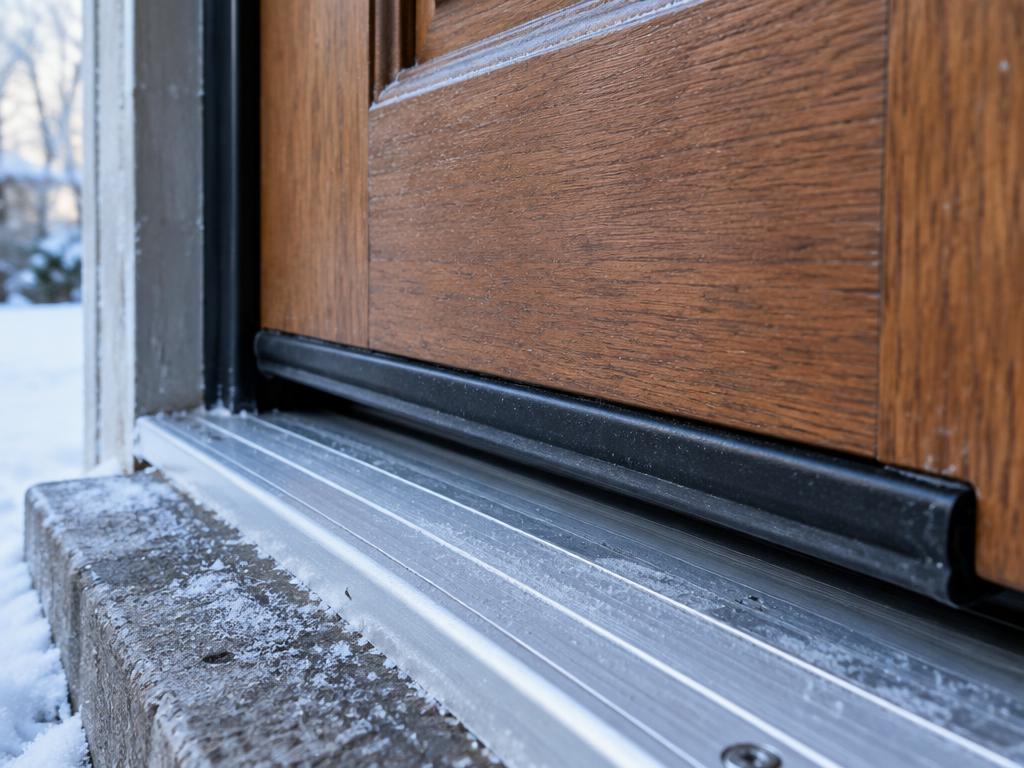
Road salt and sand, tracked in on boots and blown against exterior doors by winter wind, also accelerate corrosion on metal hardware, hinges, thresholds, and some lock components. A maintenance visit that includes cleaning and inspecting these parts for early corrosion can meaningfully extend their working life compared to leaving them to accumulate grit all winter.
Signs your door is due for a maintenance check
Most doors give warning signs well before they fail outright, and recognizing them early is the whole point of preventive maintenance. A door that has started to drag slightly on the floor or frame, that takes a bit more effort to latch than it used to, or that has developed a faint squeak when opening are all common early indicators.
Other signs include a deadbolt or latch that lines up slightly off from its strike plate, hinges with visible wear marks or loose screws, and drafts that were not noticeable in previous winters. On commercial doors, a closer that slams shut harder than it used to, or swings too slowly to latch properly, is also worth flagging during a maintenance visit.
- The door drags on the floor or frame when opening or closing
- A deadbolt or latch no longer lines up cleanly with the strike plate
- Hinges show visible wear, rust, or loosened screws
- New drafts appear around a door that sealed well in previous seasons
- A door closer slams, swings too slowly, or fails to latch consistently
- Hardware feels looser or stiffer than it did the previous season
- Paint or finish cracking around hinge or hardware mounting points
What happens during a preventive door maintenance visit?
A maintenance visit starts with a general walk-through of each door being assessed, checking how it swings, whether it latches cleanly, and whether there are visible gaps or drag points. This step by step look at operation often reveals issues before any hardware is even touched.
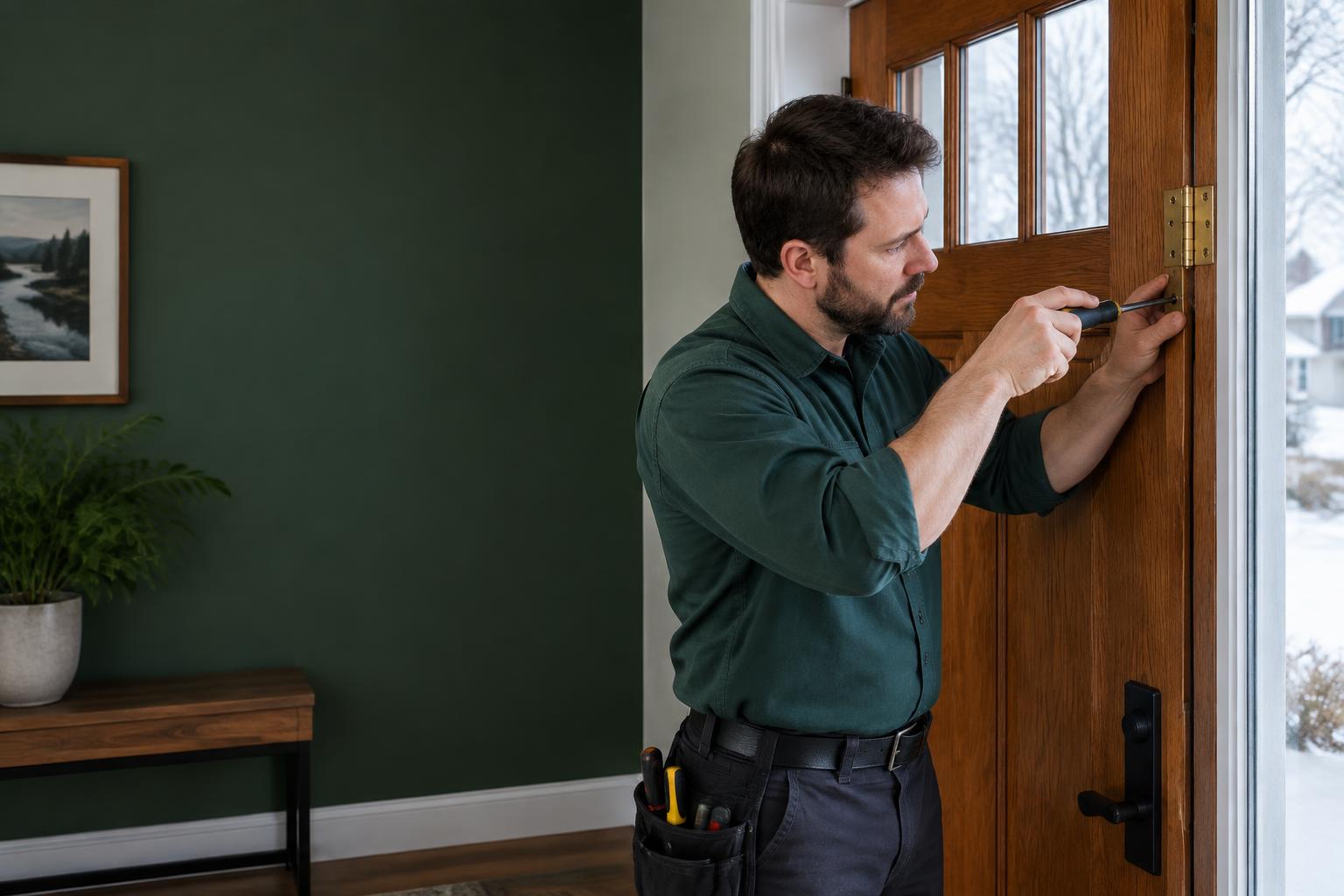
Next, hinges are checked for loose screws, wear, and squeaking, and tightened or lubricated as needed. Strike plates are examined to see whether they still align properly with the latch and deadbolt, since even a small amount of seasonal frame movement can throw this alignment off enough to make a door harder to lock.
Weatherstripping and thresholds are inspected as part of the same visit, since a door that seals poorly is often flagged alongside operational issues. Closers, where present on commercial or condo doors, are checked for proper closing speed and latching force.
At the end of the visit, the technician explains what was adjusted, what is holding up well, and what is likely to need attention in the near future, such as weatherstripping that is nearing the end of its useful life or a hinge that may need replacement before next winter. This gives homeowners and property managers a realistic picture of what to expect rather than surprises partway through the season.
Which door materials need different maintenance attention?
Wood doors need the most attention to seasonal humidity swings, since they expand and contract more than other materials across a Winnipeg year. Maintenance on wood doors often includes checking for swelling against the frame in summer and shrinkage gaps in winter, along with periodic attention to the finish, since exposed or worn finish allows moisture to penetrate unevenly and accelerate warping.
Steel doors hold their shape well through temperature changes but are vulnerable to surface rust, particularly around the bottom edge where road salt and moisture collect, and around hardware cutouts where the protective coating can wear thin over time. Maintenance for steel doors focuses more on hardware and corrosion checks than on the slab itself.
Fibreglass doors, a durable composite material rather than glass, are generally stable across temperature swings and resist moisture well, so maintenance tends to focus on the hardware, hinges, and weatherstripping rather than the door slab. Vinyl doors and vinyl-clad patio doors behave similarly, with most issues arising from track hardware and seals rather than the material warping.
Aluminum doors and frames, common on some commercial storefronts, conduct cold efficiently, which can make condensation and frost around hardware more noticeable in winter. Maintenance on these doors often includes checking closer function and hardware alignment, since aluminum frames can be less forgiving of small misalignments than other materials.
Preventive maintenance or wait for a repair: which makes more sense?
Addressing small issues during a scheduled maintenance visit is typically less disruptive than waiting for a door to fail outright, since a loose hinge or slightly misaligned strike plate is a quick adjustment, while a neglected version of the same issue can eventually damage the frame or door slab itself. Catching problems early also tends to avoid the inconvenience of a door that will not lock properly or that lets in cold drafts during the coldest part of winter.
That said, preventive maintenance is not a substitute for repair when something has already failed significantly, such as a warped door, a broken closer, or a threshold that has deteriorated. In those cases, the maintenance visit becomes the starting point for identifying what needs a full repair versus what can simply be adjusted and monitored.
For buildings with multiple doors, such as condos or commercial properties, scheduling a broader maintenance check across all doors at once, rather than reacting to each individual complaint, generally makes more sense logistically and helps identify patterns, like a batch of doors installed at the same time all nearing the end of their hardware's useful life together.
What affects the cost of a preventive maintenance visit?
Cost depends mainly on the number of doors being assessed and the scope of adjustments needed. A single entry door with a minor hinge adjustment is a much smaller job than a multi-door commercial property where several doors need hardware tightening, weatherstripping checks, and closer adjustments in the same visit.
The type of hardware involved also matters. Standard residential hinges and strike plates are generally quicker to service than specialized commercial closers or older hardware that may need careful handling to avoid damage. Door material plays a role too, since wood doors sometimes need more involved checks for seasonal movement than steel or fibreglass doors.
Accessibility of the building and how many separate entry points need to be checked also factor into the overall scope. Because every property and every set of doors is different, DoorMend does not provide pricing without first understanding what is being assessed, so requesting a quote starts with a description of the doors and property involved.
What can a homeowner safely check between professional visits?
Between scheduled maintenance visits, there are a few simple checks homeowners and property managers can do safely. Opening and closing each exterior door while paying attention to any new drag, squeak, or resistance is a good habit, especially heading into winter when seasonal changes are most noticeable.
Visually checking hinge screws for looseness and gently tightening any that are visibly loose with a screwdriver is generally safe. Looking at weatherstripping for obvious cracking, and checking whether a deadbolt turns smoothly into its strike plate without needing to lift or push the door, are also useful things to note.
What should be left to a trained technician includes any adjustment to door closers (especially on commercial or fire-rated doors), realigning hinges that require shimming, or working on any door connected to access control or electrical hardware, since this falls outside general maintenance and into specialized or electrical work that DoorMend does not perform. If a door has a significant structural issue, such as a sagging frame or a crack in the slab, that is also a point to stop self-diagnosing and request a professional assessment.
- Open and close doors periodically to notice new drag or resistance early
- Check hinge screws for looseness and tighten gently if needed
- Visually inspect weatherstripping for cracking or gaps
- Confirm a deadbolt turns smoothly without lifting or pushing the door
- Leave closer adjustments, hinge shimming, and electrical hardware to professionals
Building a maintenance schedule that fits Winnipeg's seasons
Because Winnipeg's climate swings so dramatically between seasons, a maintenance check timed before the coldest part of winter and again after the most humid part of summer tends to catch the two periods when doors are under the most stress. A pre-winter check can catch weatherstripping that needs replacing before the deep cold sets in, while a post-summer check can catch swelling-related binding before it causes a door to be forced shut repeatedly.
For businesses and condo buildings with higher door traffic, more frequent checks, or at least a mid-season look at the doors used most heavily, such as a main entrance, generally helps avoid the cumulative wear that comes from constant daily use. Entry doors used by delivery staff or in high-traffic commercial corridors wear noticeably faster than a rarely used side door.
Keeping a simple record of what was checked and adjusted at each visit also helps identify patterns over time, such as a particular door that consistently needs hinge adjustments each winter, which might eventually point toward a hinge or hardware upgrade rather than repeated seasonal fixes.
Homes, condos, and commercial buildings: how maintenance needs differ
A single-family home typically has a handful of exterior doors with moderate daily use, so an annual or twice-yearly maintenance check is usually sufficient to catch seasonal issues before they become real problems. Interior doors in a home rarely need the same attention unless there is a specific complaint, such as a door that has started sticking.
Condo buildings often have shared entry doors and corridors with much higher traffic than any single unit sees, which means common-area doors wear out hardware and seals faster and benefit from more frequent checks. Coordinating maintenance visits with building management, including scheduling access to common areas, is often part of planning condo maintenance work.
Commercial properties bring their own considerations, including doors that see constant customer or staff traffic, closers that need to function reliably for both convenience and accessibility, and sometimes multiple entry points that all need checking in a single visit. Storefront and office doors often use different hardware than residential doors, so a commercial maintenance visit may take a different approach than a home visit, even though the underlying goals, catching wear early, are the same.
Frequently asked questions about preventive door maintenance
How often should door maintenance be done in Winnipeg? This depends on door traffic and exposure, but given the seasonal extremes here, checking exterior doors before winter and again after the humid summer months is a reasonable general approach for most homes, with higher-traffic commercial or condo doors benefiting from more frequent attention.
Does preventive maintenance prevent every door problem? No. It reduces the likelihood of common wear-related issues developing into bigger problems, but it cannot prevent damage from external events like a forced entry attempt, major frame damage, or a significantly warped slab, which would need a dedicated repair assessment instead.
Can maintenance visits include garage doors or automatic doors? Garage doors, automatic or powered doors, access control systems, and panic hardware are specialist categories, and availability for maintenance on these depends on confirmed specialist capacity, so it is worth asking specifically about these door types when requesting a quote.
Will maintenance fix a door that is already badly warped or will not close at all? A maintenance visit can identify that a door has gone beyond adjustment and needs repair or replacement, but it is not designed to fix significant structural problems on its own; those typically require a separate repair.
Is DIY door maintenance enough on its own, or should a professional still be involved periodically? Basic checks like tightening visible hinge screws are fine for homeowners to do, but a professional assessment catches issues that are not obvious from a visual check, such as early frame misalignment or hardware nearing the end of its service life.
Does DoorMend handle window maintenance or rekeying as part of this service? No. Window repair, lockouts, rekeying, and electrical or alarm system work are separate from DoorMend's door maintenance service and are not included.
How to request a preventive maintenance quote from DoorMend in Winnipeg
Requesting a quote for preventive door maintenance starts with describing the doors involved: how many, what type of property they are in, and whether any specific issues have already been noticed, even minor ones like a slight drag or squeak. This helps set expectations for the scope of the visit before anyone arrives on site.
Photos of the doors, hinges, and any visible wear, taken from a few angles, help with an initial assessment and give a clearer starting point than a description alone. For properties with multiple doors, noting which ones see the most daily traffic is also useful information to include.
From there, an assessment determines what maintenance work makes sense for the specific doors and property, whether that is a straightforward annual check or a more involved visit covering several entry points. As with any DoorMend enquiry, submitting a request is not the same as booking a visit; it is the first step toward understanding what maintenance would involve before scheduling is arranged.
Whether the goal is simply to keep a single front door operating smoothly through another Winnipeg winter, or to set up a recurring maintenance routine across a commercial or condo property, describing the doors and sending a few photos is the most useful way to begin.