What does shower glass door replacement in Winnipeg include?
Shower glass door replacement covers swapping out a damaged, cracked, cloudy, or poorly functioning shower enclosure door for a new one, along with any hardware, hinges, tracks, or seals needed to get it operating properly again. This can mean a sliding bypass shower door, a pivoting framed or frameless door, a hinged swing panel, or a fixed glass panel paired with a door.
Because shower doors sit at the intersection of plumbing fixtures, tile work, and glass hardware, an assessment usually looks not just at the glass itself but at the surrounding frame, the base or curb it sits on, and whether the opening has shifted or settled in a way that affects fit. Shower glass is considered specialist glass, and depending on confirmed specialist capacity, availability for certain custom or heavy frameless glass jobs may vary.
This service is distinct from general window glass repair, which is a separate category of work. Shower glass door replacement is specifically about the enclosure around a bathtub or shower stall, including the moving or fixed glass panels and the hardware that holds them in place.
- Sliding bypass shower doors
- Pivoting framed or frameless doors
- Hinged swing shower doors
- Fixed glass panels paired with an operable door
Signs your shower glass door needs repair or replacement
The clearest sign is visible damage to the glass itself: cracks, chips, or a cloudy, etched appearance that no longer wipes clean no matter how much effort goes into cleaning it. This cloudiness is often caused by hard water mineral deposits that have etched into the glass surface over years of use, and once etching sets in, it typically can't be polished out at home.
Hardware issues are just as common a trigger for a replacement enquiry. A sliding door that jumps its track, drags, or won't glide smoothly, a pivot door that sags on its hinges, or a door that no longer closes flush against the frame are all signs that something in the hardware or alignment has gone wrong, even if the glass itself still looks fine.
Leaking is another frequent complaint. Water escaping around the base of the door, a seal or sweep that's worn out, or gaps where the door meets the frame can lead to water damage on surrounding flooring or walls over time if left unaddressed. A door that feels loose, rattles in its track, or has visibly corroded metal framing components is also worth having assessed.
- Cracked, chipped, or etched/cloudy glass
- Door dragging, sticking, or jumping its track
- Door not closing flush or sagging on hinges
- Water leaking around the base or edges
- Corroded or rusted metal framing or hardware
How does Winnipeg's climate affect shower glass doors and bathroom humidity?
Winnipeg's dry winter air might seem unrelated to a bathroom fixture, but the dramatic humidity swing between a hot shower and very dry indoor winter air can affect the metal framing, seals, and caulking around a shower enclosure over time. Metal components can contract slightly in cold, dry conditions, and rubber or vinyl seals can become more brittle, which sometimes shows up as small gaps or drafts that let water escape the enclosure.
In summer, Winnipeg's humidity is higher, and bathrooms without adequate ventilation can experience more persistent condensation, which contributes to mineral buildup and can accelerate corrosion on hinges, tracks, and other hardware if moisture isn't managed well. This cycle of humid summers and dry winters, repeated year after year, is part of why shower door hardware and seals in older Winnipeg homes often show more wear than the glass panels themselves.
Hard water, which is common in many Winnipeg households, compounds this by depositing mineral scale on glass and hardware. Combined with temperature and humidity swings, this creates the kind of long-term wear that eventually makes replacement, rather than repeated cleaning or spot repair, the more practical option.
What happens during a shower glass door assessment?
An assessment starts with a look at the glass itself: checking for cracks, chips, or etching, and noting the glass type, thickness, and whether it's tempered safety glass, which is standard for shower enclosures. The technician also checks the frame or frameless clamp system, the hinges or rollers, and how the door aligns with the base or curb.
Measurements are taken carefully, since shower enclosures are often custom-fit to the specific opening, especially in older homes where the base, walls, or curb may not be perfectly square after years of settling. The technician also inspects the condition of the seals, sweeps, and any silicone sealant around the perimeter, since these affect whether a new door will actually keep water contained.
From there, the assessment identifies whether a straightforward swap of glass and hardware will work, or whether the enclosure needs a custom-measured replacement due to an irregular opening. Because shower glass is cut to precise dimensions and tempered for safety, cutting, grinding, or otherwise altering shower glass is not something to attempt without proper equipment and training, so this part of the work is handled by trained technicians rather than as a DIY task.
- Inspect glass for cracks, chips, and etching
- Check hinges, rollers, tracks, and frame alignment
- Take precise measurements of the opening, base, and curb
- Inspect seals, sweeps, and existing sealant condition
- Determine standard swap versus custom-measured replacement
Shower glass door styles and materials to consider
Framed shower doors use a metal perimeter frame around the glass panel, which adds structural support and can make the door more forgiving of a slightly out-of-square opening, though the frame does require regular cleaning to prevent mineral and soap scum buildup in the corners and track.
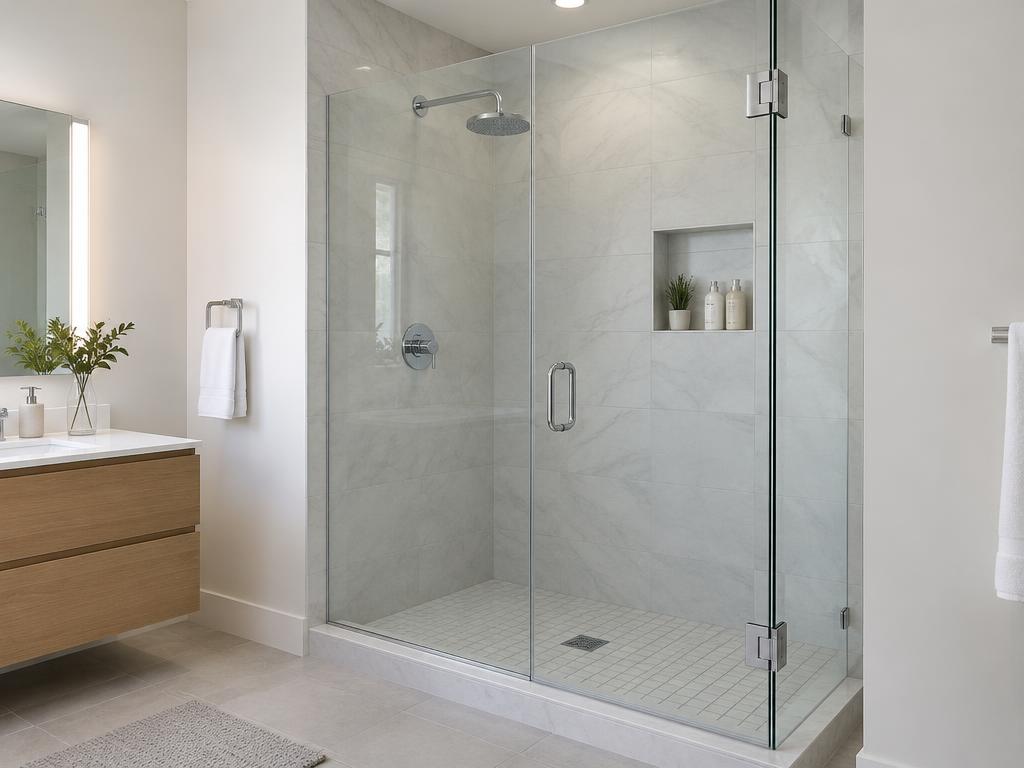
Frameless shower doors use thicker tempered glass, typically held in place with minimal metal hardware such as hinges and a header or clamps, giving a cleaner, more open look. Because there's less frame to mask small imperfections, frameless doors generally require more precise measurement and installation.
Semi-frameless doors sit between these two options, offering some metal framing around the door panel edges while minimizing frame elsewhere. Sliding or bypass doors are common for tub-shower combinations where swing clearance is limited, while pivoting and hinged doors are more typical for walk-in shower stalls. Glass thickness, typically measured in millimetres, also affects the overall look and sturdiness, with thicker glass generally used in frameless designs.
As specialist glass, certain custom frameless or heavy glass configurations may depend on confirmed specialist capacity, so it's worth discussing the specific style you're considering during the enquiry process.
- Framed shower doors: more forgiving of uneven openings
- Frameless shower doors: thicker glass, minimal hardware, cleaner look
- Semi-frameless: partial framing, a middle-ground option
- Sliding/bypass doors for tub-shower combinations
- Pivoting or hinged doors for walk-in shower stalls
Repair or replace: how to decide on a cloudy or damaged shower door
If the glass itself is cracked or chipped, replacement of the glass panel is generally necessary rather than a patch repair, since damaged tempered glass can be structurally compromised even if it doesn't look severely broken. Etched or permanently cloudy glass caused by long-term hard water buildup also tends to fall into the replacement category, since etching is typically a permanent change to the glass surface rather than something that can be reliably reversed.
On the other hand, if the glass itself is in good condition but the door isn't functioning well, such as dragging on a track, sagging on a hinge, or no longer closing flush, it's often the hardware, rollers, or seals that need attention rather than the glass panel itself. In these cases, a hardware-focused repair may resolve the issue without needing to replace the glass.
Age and the condition of the surrounding enclosure matter too. If the base, curb, or wall tile around the shower has also shifted or shows signs of water damage, that's a sign the whole enclosure situation may need a closer look beyond just the door, which an assessment can help clarify.
What affects the cost of shower glass door replacement in Winnipeg?
DoorMend doesn't provide set pricing without an assessment, since several variables shift the cost of a shower glass door replacement. Glass style is one major factor: frameless doors generally use thicker, more substantial glass and more precise custom measurement than framed doors, which can affect the overall cost.
The size and configuration of the opening also matters, since a custom-measured enclosure for an irregular or non-standard opening typically involves more work than a standard-sized swap. Hardware condition plays a role too: if hinges, rollers, tracks, handles, or seals need to be replaced along with the glass, that adds to the scope of the job compared to a glass-only swap using existing hardware in good condition.
Access and the condition of the surrounding tile, base, or curb can also factor in, particularly if water damage or settling around the enclosure needs to be addressed as part of the project. An assessment that accounts for your specific bathroom, glass style preference, and hardware condition is the only reliable way to understand what a particular job will cost.
- Framed versus frameless or semi-frameless glass style
- Standard-sized versus custom-measured opening
- Condition of hinges, rollers, tracks, and seals
- Glass thickness and overall configuration
- Condition of the surrounding base, curb, or tile
What can homeowners check themselves, and when to call a professional?
There are a few things worth checking before reaching out. You can look at whether cloudiness or etching wipes away with regular bathroom cleaning products or if it seems permanently embedded in the glass surface. You can also check whether a door drags or sticks at a specific point in its track, which can sometimes indicate a buildup of soap scum or mineral deposits that a thorough cleaning might improve.
Checking the condition of the door sweep or seal at the base, and noting whether water pools or escapes during a shower, is useful information to share when requesting an assessment. Visually inspecting hinges and hardware for visible rust or looseness is also something most homeowners can do safely.
What should not be attempted without professional equipment and training is removing, cutting, drilling, or otherwise handling tempered shower glass yourself. Tempered glass can shatter unpredictably if it's chipped, stressed, or improperly handled, and working with it safely requires proper tools and technique. If a panel is cracked or chipped, it's best to avoid using the shower until it's been assessed and to leave the handling of the glass itself to trained technicians.
- Check if cloudiness is surface buildup or permanent etching
- Note where exactly a sliding door sticks or drags
- Check door sweeps and seals for wear
- Visually inspect hinges and hardware for rust or looseness
- Never attempt to cut, drill, or remove tempered glass yourself
Maintenance tips to prevent shower glass doors from clouding or failing again
Regular squeegeeing of the glass after each shower is one of the simplest ways to slow mineral buildup from Winnipeg's hard water, since it prevents water from sitting on the glass surface and evaporating in place, which is what leaves mineral deposits behind. A gentle, non-abrasive glass cleaner used periodically can help maintain clarity without scratching the surface.
Keeping tracks and the base channel clear of soap scum and mineral buildup helps sliding doors continue to glide smoothly and reduces strain on rollers and hinges. For framed doors, periodically checking and cleaning the corners of the frame, where moisture tends to collect, can help prevent corrosion from taking hold.
Running a bathroom fan or ensuring adequate ventilation during and after showers helps manage the kind of humidity swings that contribute to hardware corrosion over time, which is especially relevant given Winnipeg's humid summers paired with dry winters. Inspecting and, when needed, resealing silicone caulking around the base of the enclosure helps prevent water from escaping into the subfloor or wall cavity, which can lead to more significant damage if left unaddressed.
- Squeegee glass after each use to reduce mineral buildup
- Use non-abrasive cleaners to preserve the glass surface
- Keep tracks and base channels free of scum and debris
- Ventilate the bathroom to manage humidity swings
- Check and refresh silicone caulking periodically
Shower glass doors in homes versus condos and rental properties
In single-family homes, shower glass door replacement is usually a straightforward decision made by the homeowner, with flexibility to choose framed, frameless, or semi-frameless styles based on preference and the condition of the existing opening. Condo units may involve additional considerations, since plumbing and bathroom fixtures can sometimes be subject to condo corporation rules, particularly if any work might affect shared walls or waterproofing membranes behind tile.
Rental properties and multi-unit buildings often deal with a higher volume of general wear across several units, and property managers may be weighing straightforward framed replacements against more premium frameless options depending on the building's overall finish level and budget considerations. In these settings, hardware durability and ease of maintenance often take priority over appearance alone.
Whatever the setting, an assessment of the specific bathroom and existing enclosure is the best way to determine the right approach, since the age of the building, the condition of the surrounding tile and base, and the intended use of the space all factor into the right style and scope of replacement.
More questions about shower glass door replacement
Can a cracked shower door be repaired instead of replaced? Generally, no. Tempered glass used in shower enclosures is designed to shatter into small, less sharp pieces for safety if it fails, and once it's cracked or chipped, it's typically compromised enough that replacement of that glass panel is the appropriate path rather than a patch repair.
Why does my shower door look cloudy even after cleaning? This is usually hard water etching, which happens when mineral deposits bond to the glass surface over time. Once etching has set in, it's generally a permanent change to the glass rather than a surface residue, which is why replacement is often the solution rather than continued cleaning.
Is a frameless shower door more expensive to replace than a framed one? Generally, frameless doors use thicker glass and require more precise custom measurement, which can affect cost compared to a standard framed door, though the exact difference depends on the specific opening and hardware involved, best confirmed through an assessment.
Does DoorMend handle window glass as well as shower glass? No. Window glass repair is a separate category of work and is not part of DoorMend's service offerings; this service is specifically focused on shower enclosure glass doors and panels.
How long does a shower glass door replacement usually take? Timing depends on the specific job, including whether the glass is a standard size or custom-measured, and whether hardware or sealant work is also needed. An assessment is the best way to get a sense of timing for your specific bathroom.
How to request a shower glass door replacement quote in Winnipeg
If your shower glass door in Winnipeg, whether near downtown Winnipeg or in the surrounding neighbourhoods, is cracked, cloudy, leaking, or just not sliding or closing the way it should, the first step is to describe the problem clearly: the style of door you currently have, whether it's framed, frameless, or semi-frameless, and what specifically is going wrong, whether that's visible damage, hardware trouble, or water escaping the enclosure.
Sending photos of the shower door, including the glass condition, the hardware, and the base or track area, helps give a clearer starting picture. Photos of any cracks, chips, or areas of visible leakage are especially useful to include.
From there, an assessment will determine whether the right path is a hardware repair, a glass-only swap, or a full custom-measured replacement, along with the style and glass options available for your bathroom. As with all enquiries, submitting a request through DoorMend is the start of the conversation and is not the same as confirming a booking; it simply gets the process moving toward a proper in-person assessment.
- Describe your current door style and the specific issue
- Send photos of the glass, hardware, and base or track
- An assessment determines hardware repair versus glass or full replacement
- An enquiry is the first step, not a confirmed booking