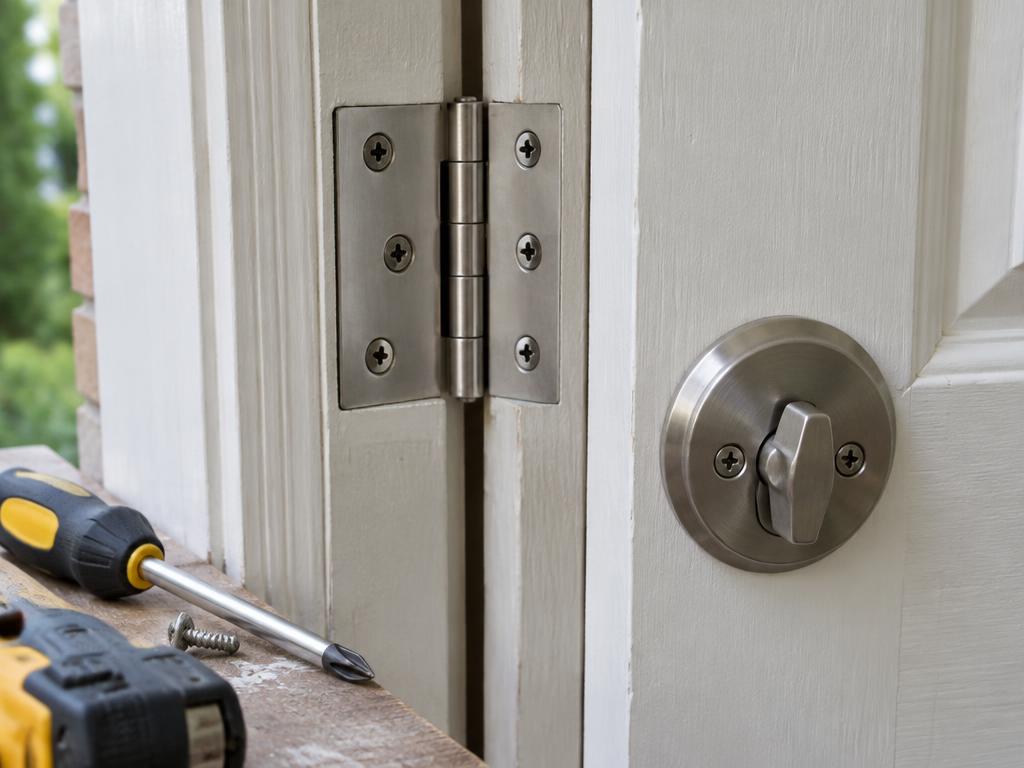
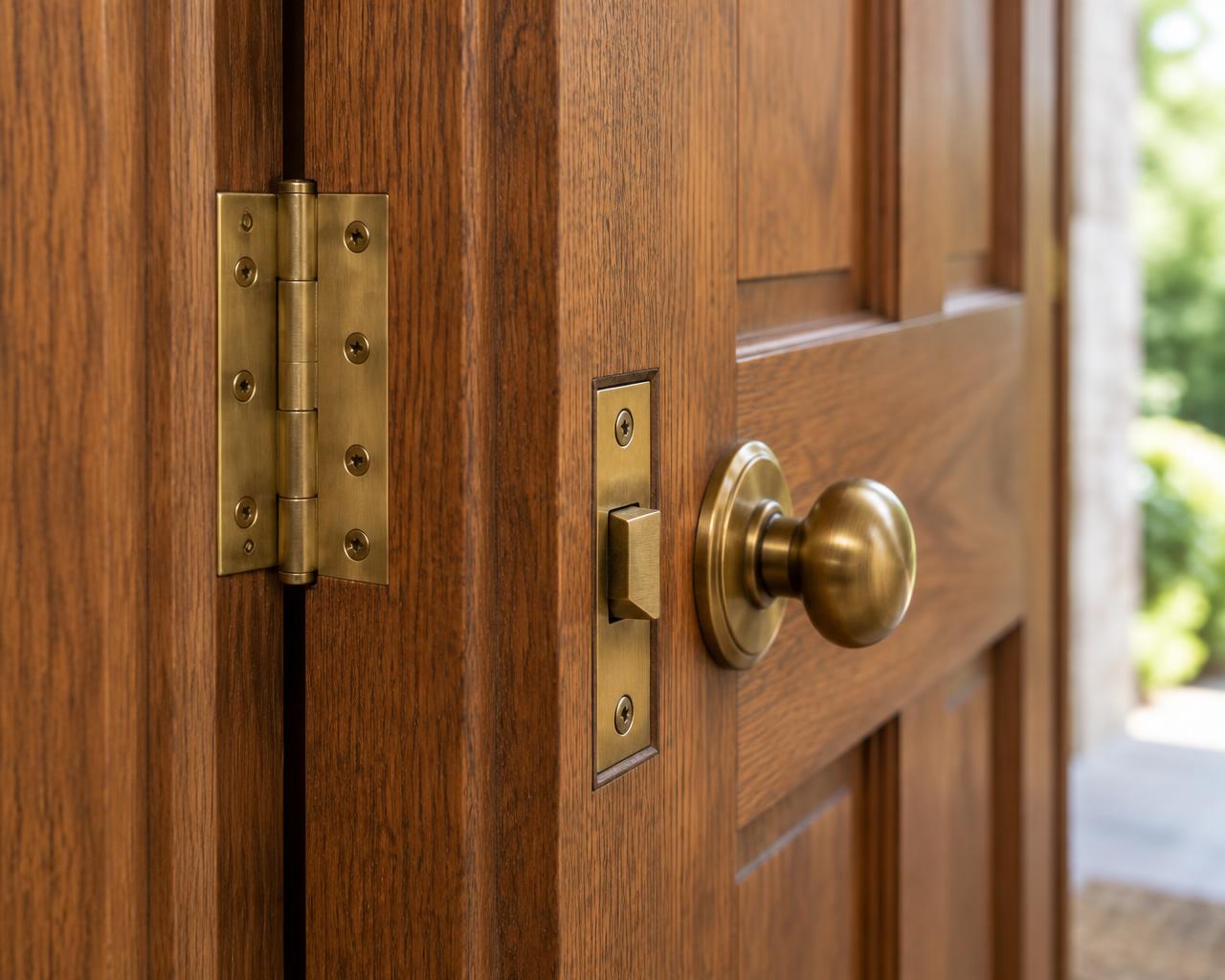
Why is my door suddenly jammed and won't open or close?
A door that suddenly sticks, binds, or refuses to latch is a very common problem for Winnipeg homeowners and businesses, and it tends to spike right along with our biggest seasonal temperature swings. One week a door swings freely, and after a cold snap or a humid stretch it is suddenly dragging on the floor, catching at the top corner, or impossible to latch without a hard shove.
Jammed door repair covers a wide range of situations: interior doors that stick along one edge, exterior doors that will not seal or latch properly, sliding doors that bind in their track, and doors that have become stuck shut or stuck open entirely. Because the causes range from something as simple as humidity-driven wood swelling to something as structural as a frame that has shifted out of square, getting the diagnosis right matters more than guessing at a quick fix. This page covers the common causes specific to Winnipeg's climate, what you can safely check yourself, and when it is time to call in a professional for jammed door repair.
Common signs of a jammed or binding door
Jammed doors rarely happen all at once; most show warning signs for weeks before they become a real problem. Recognizing these signs early can make the eventual repair simpler and less disruptive.
- The door drags along the floor or frame at one specific spot rather than the full length of the edge
- You need to lift the handle slightly or push with extra force to get the latch to catch
- The door swung freely a season ago but now binds, especially noticeable after a change in weather
- A visible gap appears on one side of the door while the opposite side is tight against the frame
- Hinges look slightly loose, bent, or the screws have backed out of the jamb
- A sliding door grinds, hops, or requires extra force to move along its track
- The door has become completely stuck, either refusing to open or refusing to close and latch
- Paint or finish is worn or cracked along the edge where the door is rubbing against the frame
How does Winnipeg's climate cause doors to jam?
Winnipeg's climate is one of the most common underlying reasons doors jam, and understanding the mechanism helps explain why the same door can behave completely differently from season to season. The city sees very low humidity in winter, often paired with extreme cold down to -30 °C or lower, followed by much higher humidity in summer.
Wood doors and wood door frames absorb moisture from the air and release it depending on humidity levels. In humid summer conditions, wood can swell slightly, which is often when homeowners notice a door that suddenly drags or will not close without force. In the dry winter months, that same wood can shrink back, sometimes revealing gaps that were not visible in summer. This swelling-and-shrinking cycle, repeated year after year, can also work hinge screws loose over time, which changes how the door hangs in its frame.
Beyond humidity, Winnipeg's freeze-thaw cycling affects the building itself. As the ground around a foundation freezes and thaws repeatedly through the fall, winter, and spring, slight shifts in the foundation and framing can occur, particularly where drainage or insulation around the foundation is imperfect. Even a very small shift, a few millimetres, can be enough to throw a door frame slightly out of square, which shows up as a door that binds at one top corner or drags along the bottom on one side. Frost heave can also affect exterior concrete slabs and thresholds, subtly changing the geometry of an exterior door opening over time. Temperature swings additionally cause metal door frames, tracks on sliding doors, and hardware to expand and contract, which can change clearance and alignment in ways that are most noticeable right after a sharp cold snap.
What does an assessment for a jammed door involve?
Because a jammed door can stem from several different causes, a proper assessment starts with figuring out where exactly the binding is happening and why, rather than jumping straight to an adjustment. A technician will typically open and close the door slowly, watching where it first makes contact with the frame, and check whether the gap around the door is even on all sides when closed.
The hinges are checked for looseness, worn pins, or screws that have backed out of the jamb, since a sagging door caused by worn hinges looks similar to a swelling-related jam but needs a different fix. The frame itself is checked with a level or square to see whether it has shifted out of true, which points toward a structural cause rather than a seasonal one. For sliding doors, the track is inspected for debris, bent sections, or worn rollers. The door slab is also examined for actual swelling, warping, or delamination, particularly along the edge that is making contact.
Once the cause is identified, the repair itself might involve something as simple as tightening or replacing hinge screws, planing a small amount off a swollen edge, adjusting the strike plate position, cleaning and lubricating a track, or re-squaring and re-shimming the frame if the opening itself has shifted. In more significant cases, where the door or frame has been damaged by repeated forcing or long-term swelling, a larger repair or a full door or frame replacement may be the more practical option.
Jammed doors in wood, steel, fibreglass, and sliding door types
The way a door jams, and the right fix, often depends on what the door is made of. Solid or engineered wood doors are the most sensitive to Winnipeg's humidity swings, since wood is a natural material that continuously absorbs and releases moisture; a wood door that jams every summer and loosens every winter is showing a very typical seasonal pattern.
Steel doors with a foam core are generally more dimensionally stable than wood, so if a steel door is jamming, the cause is more often hinge wear, a frame that has shifted, or a dent or bend in the door skin itself rather than the door material swelling. Fibreglass composite doors, being a manufactured composite rather than solid wood, also tend to resist moisture-driven swelling better than wood, so jamming in a fibreglass door more often points to frame movement, hardware issues, or a damaged edge rather than the slab itself changing shape.
Sliding doors, whether patio-style aluminum or vinyl-framed glass units or interior sliding closet and pocket doors, jam for different reasons entirely: debris or ice buildup in the track, worn or broken rollers, a track that has become bent, or a frame that has racked slightly out of square. Vinyl-framed sliding doors can also become stiff in extreme cold as the vinyl material itself contracts slightly, which is a normal seasonal effect but can still make a door difficult to operate smoothly.
Should I repair a jammed door or is it time to replace it?
Most jammed door situations are repairable rather than requiring full replacement, especially when the problem is caught before repeated forcing has damaged the hardware or the door itself. A door that jams seasonally due to humidity, or one with loose hinges or a slightly misaligned strike plate, is typically a strong candidate for a straightforward repair.
Replacement becomes the more sensible conversation when the door has been forced open or closed repeatedly and has developed cracking, splitting, or warping that goes beyond the surface, when the frame has shifted so significantly that reasonable adjustment and shimming cannot bring it back to square, or when a sliding door's track and rollers are damaged beyond simple cleaning and part replacement. An assessment is the most reliable way to tell which category applies, since a door that looks like a simple binding issue from the outside can sometimes reveal more significant frame or structural movement once it is examined closely.
What affects the cost of jammed door repair in Winnipeg?
DoorMend does not provide a flat price for jammed door repair without an assessment, since the actual work required can range from a five-minute hinge adjustment to a more involved frame re-squaring, and pricing always reflects the specific scope found on site. That said, a few general factors tend to influence the cost of fixing a jammed door.
The underlying cause matters a great deal: a loose hinge or simple strike plate adjustment is a much smaller job than correcting a frame that has shifted out of square due to foundation movement. The material of the door affects how it is handled, since planing a wood door edge, for example, is a different process than adjusting hardware on a steel or fibreglass door. How long the problem has been forced rather than addressed also matters, since repeated forcing can damage hinges, strike plates, or the door edge itself, adding scope to the repair. For sliding doors, the condition of the track and rollers, and whether replacement parts are needed, plays a role. Access, such as whether the door is at ground level or within a condo unit or commercial space with building-specific access requirements, can also factor into the time needed.
What can I safely check myself before calling about a jammed door?
There are a few things a homeowner or business owner can safely check before requesting an assessment, and noting what you find will help describe the issue clearly when you reach out to DoorMend.
It is safe to visually check whether hinge screws are visibly loose or missing, though you should avoid forcing a screwdriver into a stripped screw hole, since that can make the repair more involved. You can look at where exactly the door contacts the frame when closing slowly, which helps identify whether the binding is at the top, bottom, latch side, or hinge side. For a sliding door, visually checking the track for obvious debris, ice, or a bent section is reasonable, and gently clearing light debris with a soft brush is generally safe.
What you should avoid doing yourself is forcing the door repeatedly to try to make it close, since repeated forcing is one of the most common ways a simple jam turns into a more expensive repair involving a damaged frame, split door edge, or broken hardware. You should also avoid removing a door from its hinges, cutting or planing the door edge, or attempting to re-square a frame, since these tasks require the right tools and experience to avoid making the problem worse. If a door is part of a garage, an automatic or powered entry system, or includes access control or panic hardware, do not attempt any adjustment yourself; these systems involve components that require trained technicians, and availability for this work depends on confirmed specialist capacity.
Jammed doors in homes versus condos and commercial spaces
Jammed door repair looks a little different depending on whether it is a bedroom door in a house, a condo unit entry, or a commercial space's interior or exterior door. In single-family homes, the most common jammed door calls involve exterior front and back doors affected by seasonal humidity and frame movement, along with interior doors, particularly in basements or additions, where framing may have settled unevenly over time.
In condo buildings and multi-unit properties, a jammed unit entry door can affect fire separation and building security expectations set by the condo corporation, so property managers often want these addressed promptly once noticed, even though DoorMend's assessment and repair process is the same as for a single-family home. Commercial spaces around downtown Winnipeg and throughout the city frequently deal with heavier daily door traffic, which accelerates hinge wear and hardware loosening compared to a typical residential door, and some commercial entries include hardware such as closers or panic bars that require specialist handling, with availability depending on confirmed capacity.
How to prevent a door from jamming again
Once a jammed door has been repaired, a few simple ongoing habits can reduce the odds of the same problem coming back, particularly given how much Winnipeg's seasonal swings contribute to this issue.
Check hinge screws periodically, perhaps once each fall and spring, and tighten any that have started to back out before they loosen enough to let the door sag. Keep an eye on how a door's gap looks across the seasons; if you notice the same binding pattern reappearing each summer or winter, mention that pattern during any future assessment, since a recurring seasonal pattern can sometimes be addressed more permanently than a one-time fix. For sliding doors, clean the track regularly to prevent debris and ice buildup, and avoid forcing a door that feels like it is catching on something. If you notice a door becoming harder to close over several weeks rather than suddenly, address it promptly rather than waiting, since early attention is generally a smaller job than a fully jammed door that has been forced repeatedly.
Jammed door repair: frequently asked questions
Why does my door only jam in summer or only in winter? This seasonal pattern is typically caused by wood absorbing or releasing moisture as humidity changes, which is extremely common in Winnipeg's climate. An assessment can confirm whether humidity is the main driver or whether a frame or hardware issue is compounding the seasonal effect.
Can a jammed door fix itself once the weather changes? Sometimes a seasonal gap will close up again once humidity shifts back, but relying on the weather to resolve a jam is not a reliable long-term fix, especially if hinges have loosened or the frame has shifted, since those causes do not reverse with the seasons.
Is it safe to keep forcing the door closed until I can get it looked at? Forcing a jammed door repeatedly is one of the most common ways a minor adjustment turns into a more involved repair, since forcing can crack a door edge, strip hinge screws, or bend a strike plate. It is better to use the door as gently as possible, or use an alternate entry temporarily, until it can be assessed.
Does a jammed door mean my foundation has a problem? Not necessarily. While frame movement linked to frost heave or foundation settling is one possible cause, many jammed doors are simply the result of normal humidity-driven wood movement or worn hinges. An assessment can help clarify which is happening in your specific situation.
What about a door that is jammed because of a broken lock or deadbolt? Lock and deadbolt mechanisms are part of what DoorMend can assess as part of jammed door repair, but rekeying a lock or full lockout service is a separate specialty and is not something DoorMend offers.
My sliding patio door won't budge at all. Is that a jammed door repair? Yes, a sliding door stuck fully shut or fully open is within the scope of jammed door repair, and the assessment will look at the track, rollers, and frame alignment to determine the cause.
How to request a jammed door repair quote from DoorMend
If a door in your home or business has started sticking, binding, or has become fully stuck, the most useful first step is describing exactly what you are experiencing: which door, where it binds or catches, whether the problem appeared suddenly or gradually, and whether it seems tied to recent weather changes.
Sending a few photos, including a shot of the door fully open, the frame and hinges, and any visible gap or contact point where it is dragging, helps give a clearer picture of the situation before anyone visits. From there, an assessment is used to pin down the actual cause and determine the realistic repair options for your specific door and frame.
Keep in mind that requesting a quote or submitting an enquiry starts that conversation; it is not the same as a confirmed booking. It simply means your situation can be reviewed properly so the right next step, whether a simple adjustment or a more involved repair, can be worked out before anything is scheduled.