What does residential door repair in Winnipeg actually cover?
Residential door repair covers the exterior and interior doors that make up the everyday working parts of a Winnipeg house: front entry doors, back and side doors, garden doors, interior bedroom and closet doors, and the hardware, frames and weatherstripping that hold them together. A typical call might involve a front door that has started to drag on the threshold, a back door that will not latch properly, a bedroom door with a loose hinge, or a storm door whose closer has failed after a hard winter.
Because a house relies on its doors for security, comfort and day-to-day convenience, residential door repair is rarely a single, narrow task. An assessment usually looks at the whole opening — the slab, the frame, the hinges, the strike plate, the weatherstripping and the threshold — because a problem that shows up as a sticking door is often caused somewhere else in that system. Homeowners across Winnipeg, from older character homes in Wolseley and River Heights to newer builds in Waverley West, deal with very similar issues once a Manitoba winter has had a chance to work on the house.
Because so many different door types can be found in a single Winnipeg home — a steel front door, a fibreglass garden door off the kitchen, hollow-core bedroom doors, and perhaps a solid wood door on a home office — residential door repair work often spans several materials and styles even within one visit. This variety is part of why a general assessment, rather than a narrow single-fix request, tends to give homeowners the clearest picture of what their home actually needs.
Common signs your home's doors need attention
Most residential door problems announce themselves gradually. A door that used to close with a light push suddenly needs a shoulder into it, or a deadbolt that threw smoothly all summer starts to bind the moment the weather turns cold. These are the kinds of small, cumulative changes that homeowners often live with for months before deciding to call someone, even though many of them are quick to diagnose once a technician is standing in front of the door.
Other signs are less obvious but just as worth noting: a door that rattles in its frame when the wind picks up, a deadbolt that feels gritty or stiff when turning the key, visible gaps that seem to widen with the seasons, or hardware finishes that have started to pit or discolour near coastal-style exposure points like a mudroom entry that gets a lot of salt and moisture tracked through it over a Winnipeg winter.
- A door that sticks at the top corner or drags along the floor or threshold
- Visible daylight or a draft around the edges of a closed door
- A deadbolt or latch that needs the door lifted, pulled, or slammed to engage
- Hinges that squeak, sag, or have screws backing out of the jamb
- Cracking, splitting, or paint failure around the door panel or frame
- A door that swings open or closed on its own when nothing is touching it
How Winnipeg's climate affects doors in a house
Winnipeg's climate is hard on residential doors in ways that homeowners in milder regions rarely have to think about. Temperature swings from a humid +30°C summer day to a dry -30°C winter night put real stress on wood, steel and fibreglass door slabs, as well as on the wood framing behind them. Materials expand and contract at different rates, so a door that fit its frame perfectly in July can bind badly by January, or develop a draft gap by March once everything has shrunk back the other way.
Freeze-thaw cycles are particularly tough on exterior door frames and the foundation areas around them. As the ground freezes, thaws, and refreezes through a Manitoba winter, frost heave can shift a doorframe just enough to throw off the alignment between the latch and the strike plate. Dry winter air inside a heated home also pulls moisture out of wood doors and jambs, which can cause shrinkage, loose joints and squeaky hinges, while humid summer air does the opposite and can make a wood door swell and stick. Road salt tracked in on boots contributes to corrosion on steel thresholds, hinges and other exposed hardware over time.
What happens during a residential door assessment and repair
A residential door assessment typically starts with a conversation about what the homeowner has noticed — sticking, drafts, a lock that is hard to turn, a sagging panel — followed by a hands-on check of the door itself. A technician will usually open and close the door slowly to feel for binding points, check the gap around all four edges, test the hinges for play, and look at how the latch lines up with the strike plate when the door is shut.
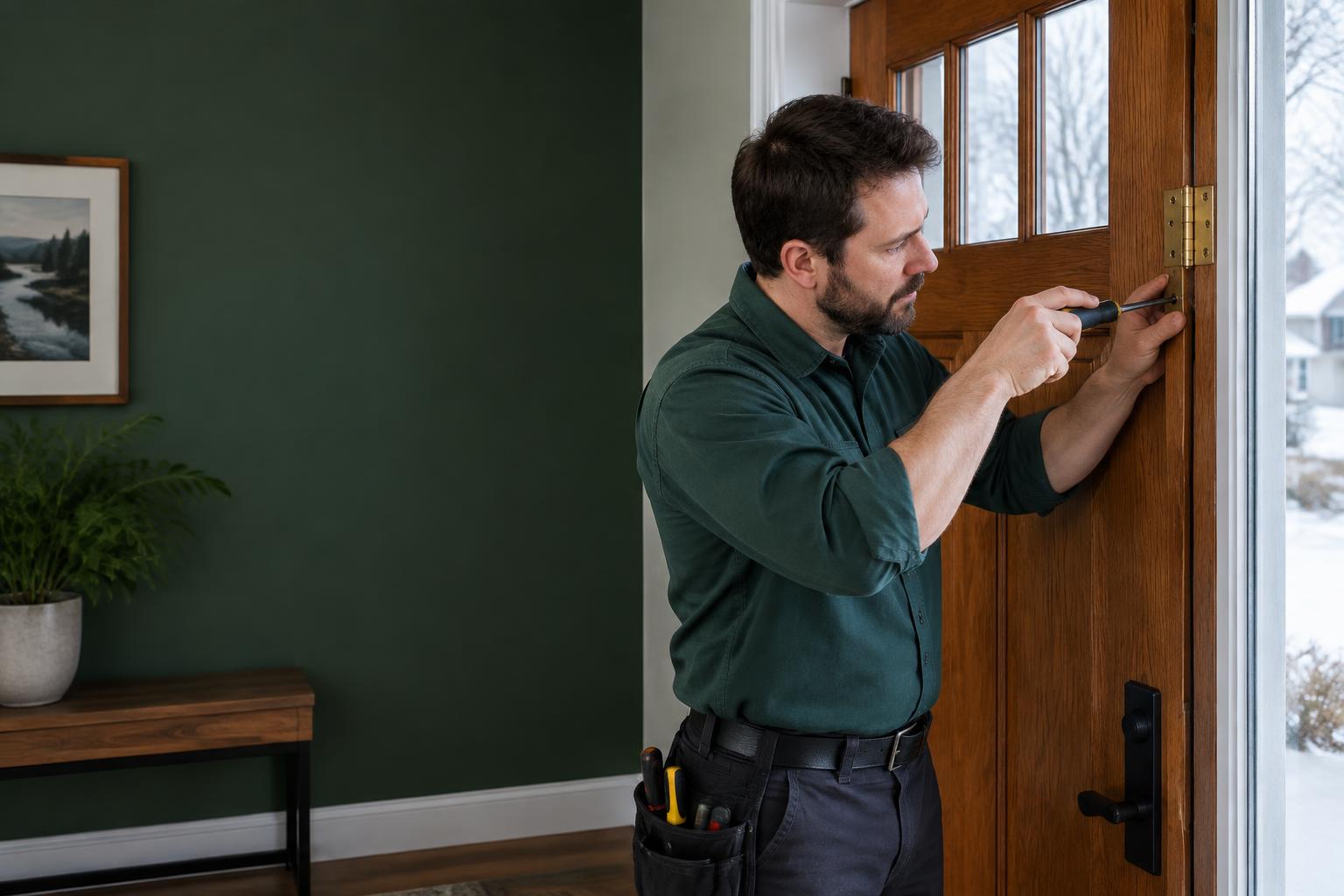
From there, the repair work depends on what the assessment finds. Hinge issues might mean tightening or replacing screws, swapping a worn hinge, or using longer screws to bite into solid framing. Alignment problems may call for adjusting hinge position, planing a small amount off a sticking edge, or shimming the frame. Weatherstripping and threshold wear is usually addressed by replacing the worn material rather than the whole door. Where the slab itself is damaged, warped, or beyond reasonable repair, the technician will explain the options, including when replacement makes more sense than continued patching.
Repair or replace: when does a residential door need a new slab?
Many residential door problems are genuinely repairable. Hinges, strike plates, weatherstripping, closers and hardware can usually be fixed or swapped without touching the door slab at all, and even some frame and alignment issues can be corrected in place. The decision to repair rather than replace often comes down to how much of the original door and frame is still structurally sound.
Replacement becomes the more sensible option when a wood door has warped badly enough that it will not sit flat in its frame, when water damage has caused rot in the slab or jamb, when a steel or fibreglass door's core has delaminated, or when the frame itself has shifted so far out of square that shimming and adjusting can no longer bring it back into alignment. A good assessment should lay out both paths honestly, including what each one involves, so the homeowner can make the call based on the condition of their specific door rather than guesswork.
What affects the cost of residential door repair in Winnipeg?
There is no single price for residential door repair because every job depends on a different mix of factors. The type of door matters — solid wood, hollow-core, steel-clad, fibreglass and vinyl doors all respond differently to damage and require different techniques and materials to fix. The scope of the problem matters too: a single loose hinge is a much smaller job than a frame that has shifted enough to need rebuilding.
Timing can play a role as well. Scheduling repairs during extreme cold can sometimes limit certain types of work, such as painting or finishing, until conditions are more favourable, and older homes with custom millwork or non-standard door sizes may need parts sourced or adapted rather than taken off a shelf, which can affect both cost and timeline.
- Whether the issue is isolated to hardware or involves the door slab, frame, or threshold
- The material and construction of the door (solid wood, hollow-core, steel, fibreglass, vinyl)
- Accessibility of the door, including upper-floor or awkward entry points
- Whether custom or special-order parts are needed to match an older or unusual door
- How many doors in the home need attention during the same visit
- The extent of any related damage, such as rot, water intrusion, or frame movement
What can a homeowner safely check before calling a professional?
Some early troubleshooting is safe and genuinely useful for a homeowner to do before booking an assessment. Checking whether hinge screws are loose and can be gently retightened, noting exactly where a door drags or binds, feeling for drafts along the weatherstripping, and watching how the latch meets the strike plate can all help a technician understand the problem faster and may even point to an easy fix.
That said, there is a clear line where homeowners should stop and leave things to a trained technician. Removing a door from its hinges, attempting to reshape or plane a slab, working on glass panels in a door, or trying to force a misaligned frame back into position can make the problem worse or create a safety hazard. Doors are heavy and awkward, and a slab that comes loose unexpectedly can cause injury or damage. If a fix requires more than a screwdriver and a few minutes, it is worth having someone experienced take a look rather than risking further damage to the door or frame.
Maintaining residential doors so problems don't come back
A little seasonal maintenance goes a long way toward keeping residential doors working smoothly through Winnipeg's weather swings. Lubricating hinges before winter, checking weatherstripping for compression or gaps each fall, and keeping an eye on how doors behave as the seasons change can catch small issues before they turn into bigger repairs.
It also helps to watch for the early warning signs discussed earlier — a door that suddenly needs extra force, a new draft, or a lock that feels different — and to deal with them promptly rather than waiting. Small adjustments made early are almost always less involved than repairs made after months of a door dragging on its hinges, swelling against its frame, or rubbing through its weatherstripping.
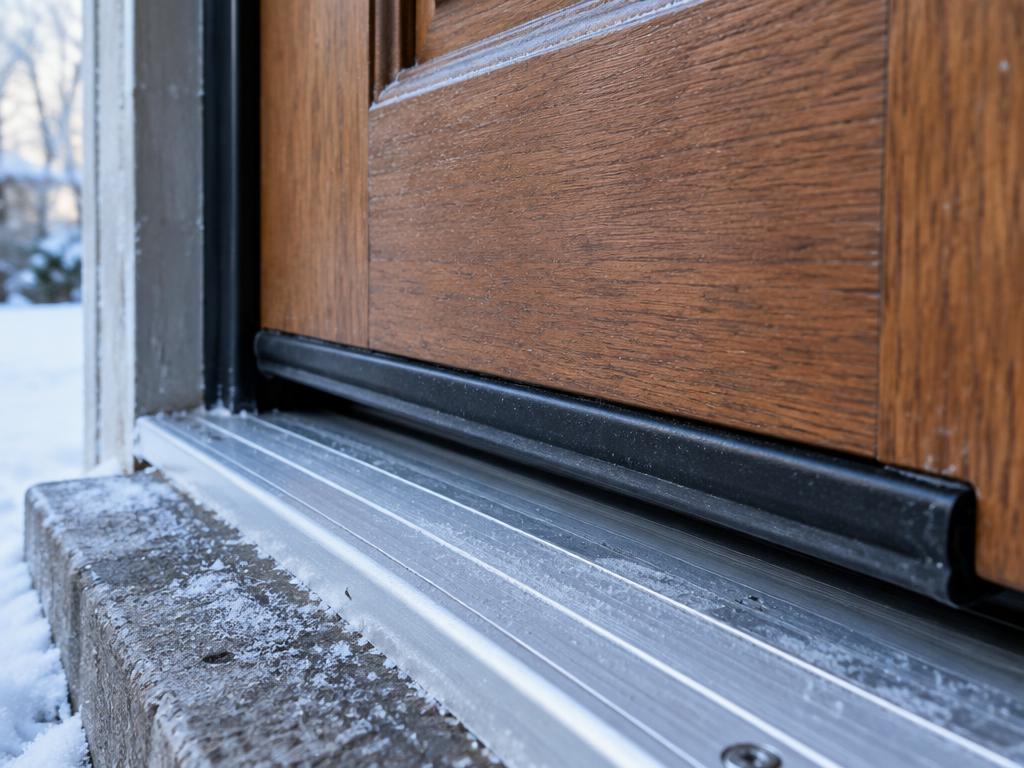
Keeping the area around exterior doors clear of built-up ice, snow and debris also reduces the chances of a threshold freezing shut or a door dragging on accumulated ice. A quick seasonal check of all exterior door sweeps and weatherstripping before the coldest months set in is one of the simplest ways to avoid a draft complaint in January.
Older character homes vs newer builds: different door challenges
Winnipeg's older neighbourhoods have no shortage of character homes with original wood doors, plaster-and-lath walls, and door openings that were never perfectly square to begin with. These homes often need more careful, custom-fitted repair work because replacement hardware and trim may not be a standard size, and decades of settling can mean the frame itself has shifted.
Newer builds tend to have more standardized door sizes and factory-finished steel or fibreglass slabs, which can make sourcing matching parts simpler, but they are not immune to issues — builder-grade hardware and thinner weatherstripping can wear out faster than expected, especially once a house has been through a few full Winnipeg winters.
Homes, condos and townhouses: does the approach differ?
Residential door repair looks a little different depending on the type of home. In a detached house, the homeowner usually has full authority to decide on repairs and can address exterior and interior doors freely. In a condo or townhouse, exterior doors may be part of the building's common property, and any repair or replacement may need approval from a condo board or property manager before work proceeds, even though the inconvenience is felt by the resident living behind that door.
Multi-unit buildings also tend to have more consistent door styles across units, which can actually simplify sourcing matching hardware or trim, but it means residents should check their condo documents or speak with their property manager before scheduling exterior work, so that any repair fits within the building's requirements.
Frequently asked questions about residential door repair
How long does a typical residential door repair take? It depends entirely on scope — a hinge or strike plate adjustment is a short visit, while frame work or slab replacement takes longer and may need a follow-up visit if parts must be ordered.
Can a sticking door really be caused by the weather and not damage? Yes. Seasonal expansion and contraction from Winnipeg's dry winters and humid summers is one of the most common causes of a door that suddenly sticks or develops a gap, even when the door itself is in good condition.
Will my interior doors need the same attention as exterior ones? Interior doors face less weather exposure but still shift with humidity changes in the home and can develop loose hinges or latch issues over time, so they are worth including in an assessment if something feels off.
Do I need to know what's wrong before requesting a quote? No. Describing what you've noticed — a sticking door, a draft, a lock that's hard to turn — is enough to start, and the assessment is what determines the actual cause and the repair options.
How to request a quote for residential door repair from DoorMend
Getting started with DoorMend begins with describing the problem in your own words: which door is affected, what you've noticed, and how long it has been happening. Sending a few photos of the door, the frame, and any visible damage or gaps helps give a clearer picture before anyone arrives, and can speed up the assessment.
From there, an in-person assessment is what actually determines the cause of the issue and lays out the realistic repair or replacement options for that specific door, along with what would be involved in each. Submitting an enquiry through DoorMend is the first step toward getting that assessment — it is not itself a booking or a commitment to any particular repair, just the start of the conversation about what your home's doors actually need.