Why is my interior door sticking, dragging, or hard to latch?
Interior doors in Winnipeg homes often start sticking along the top corner or dragging on the floor after a change of season, and the usual cause is a shift in humidity rather than anything wrong with the hardware itself. Wood and wood-composite interior doors absorb moisture from the air in humid summer months and swell slightly, which can make a door that closed easily in January feel tight and hard to latch by July. When the dry winter air returns, the same door often shrinks back and the latch starts to miss the strike plate.
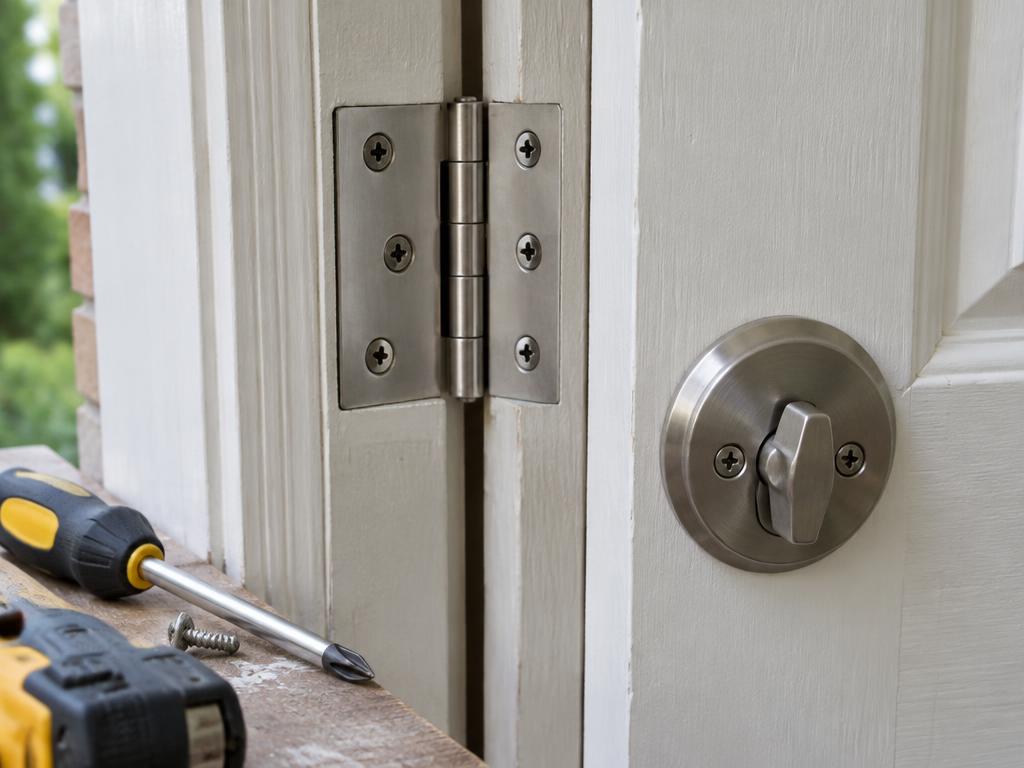
Other common causes include loose hinge screws, a hinge pin that has worked its way up, a door frame that has racked out of square, or paint buildup along the edges from past repainting. Sometimes the sticking is not the door at all but the house settling, which can tilt a frame just enough that a previously fine door now binds on one side.
A door that only sticks occasionally, or only in certain weather, is usually a minor adjustment job. A door that has to be shouldered open or dragged across carpet every single day is more likely to need planing, rehanging, or a hardware repair.
- Door swells and drags along the bottom in summer
- Latch no longer catches the strike plate
- Door scrapes paint off the frame on one corner
- Door swings open or closed on its own (out-of-plumb frame)
Common signs your interior door needs repair
Beyond obvious sticking, there are several signs that an interior door repair is worth scheduling before the problem gets worse. A door that rattles in its frame, one that has a visible gap at the top on one side and none on the other, or a closet or bedroom door that no longer stays latched are all signals that something in the hinge, frame, or hardware has shifted.
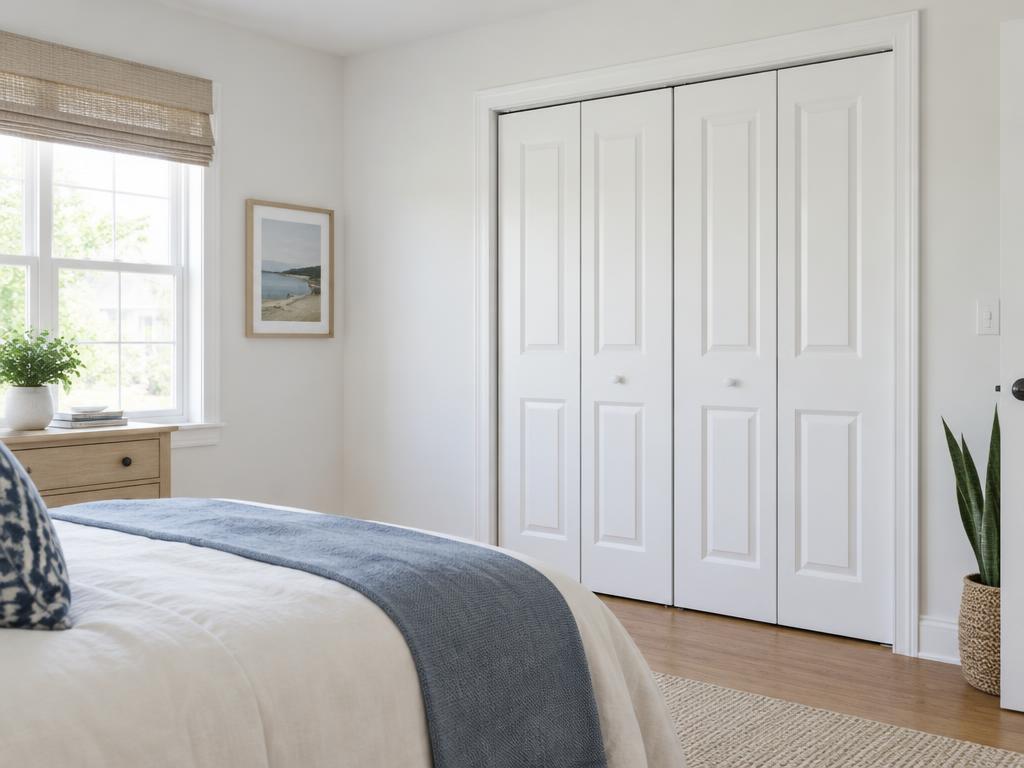
Cracked or split panels, loose or wobbly doorknobs, bent hinges, and squeaking that does not go away with a quick squirt of lubricant are also common reasons Winnipeg homeowners contact a door repair service. Pocket doors and bifold closet doors have their own failure patterns, such as derailed rollers or broken pivot pins, which tend to show up as a door that will not slide smoothly or a bifold panel that sags at one corner.
French doors and other interior doors with glass inserts can develop their own issues, including loose glazing beads or a door that has dropped slightly on its hinges so the two leaves no longer meet evenly in the middle.
- Visible gap at the top of the door on one side only
- Door will not stay closed on its own
- Squeaking or grinding when opening or closing
- Pocket or bifold door jumps the track
- Loose or wobbly handle or deadbolt-style privacy lock
How Winnipeg's climate affects interior doors
Interior doors are protected from direct weather, but Winnipeg's climate still reaches them indirectly through the house itself. Dry winter air, especially once furnaces are running steadily through a long cold stretch, pulls moisture out of wood doors and trim. This can shrink panels and stiles enough that gaps appear around the edges or a previously snug door starts to rattle.
In summer, humidity works the other way, and solid wood or MDF-core doors can swell along the top and the latch-side edge. Homes with poor humidity control, including older houses without a working humidifier or newer condos with tight building envelopes, tend to see this seasonal swing more sharply than homes with stable indoor humidity year-round.
Freeze-thaw cycles and frost heave mostly affect exterior structures and foundations, but a shifting foundation during a Winnipeg freeze-thaw season can still transmit small movements into interior door frames, particularly in basements or additions. A door that suddenly binds after a cold snap or a spring thaw is sometimes telling you something about the house's structure, not just the door itself.
What happens during an interior door assessment and repair
A typical interior door assessment starts with identifying whether the problem is with the door slab, the hinges, the frame, or the hardware, since each of these calls for a different fix. A technician will usually check the gap around all four sides of the door, test how smoothly it swings through its full arc, and look at hinge screws, hinge pins, and the strike plate alignment.
If the issue is a frame that has gone slightly out of square, the repair may involve re-shimming the frame, adjusting or replacing hinges, or in some cases deepening or relocating the strike plate so the latch catches properly again. A door that drags on the floor may need a small amount of material planed from the bottom edge, which is a precise job because removing too much can leave a permanent gap.
For pocket doors, the assessment usually focuses on the overhead track and rollers, since most pocket door problems trace back to a roller that has worn out or jumped the track rather than the door slab itself. Bifold doors are checked at the pivot pins, top and bottom brackets, and alignment between panels. French doors with two leaves are checked for how the astragal or overlap lines up when both sides are closed.
Once the cause is identified, the technician explains the repair options before proceeding, since some fixes are quick hardware adjustments while others involve more involved carpentry work on the door or frame.
Interior door types and materials: wood, hollow-core, MDF, and glass-panel doors
Most interior doors in Winnipeg homes fall into a few categories, and the material affects both what tends to go wrong and how it gets repaired. Solid wood doors are heavier, often found in older character homes, and respond well to planing, hinge adjustment, and refinishing, but they are also the doors most sensitive to seasonal humidity swings.
Hollow-core doors, common in newer builds and many condos, are lightweight and inexpensive, but they are more easily damaged by impacts, door handles punching through the panel, or corners crushing if they are slammed repeatedly. Repairs on hollow-core doors are often more limited, since there is less solid material to work with, and a badly damaged hollow-core door is frequently a replacement rather than a repair.
MDF (medium-density fibreboard) doors sit between the two, offering a smooth paintable surface that holds up reasonably well but can swell or deteriorate if exposed to standing moisture, which is worth watching for in bathrooms or basement doors. Glass-panel interior doors, including French doors, add the consideration of glazing beads, seals around the glass, and the weight distribution across the hinges, since a glass panel adds noticeable weight to one part of the door.
Sliding closet doors and bifold doors are typically lighter hollow-core or vinyl-clad panels running on a track system, so their issues are usually mechanical (rollers, tracks, pivots) rather than issues with the door material itself.
Repair or replace: when does an interior door need more than a fix?
Many interior door problems are genuinely repairable: sticking, minor misalignment, loose hinges, worn rollers on a pocket or bifold door, and small cracks can usually be addressed without replacing the whole unit. An assessment is the best way to find out which category a particular door falls into, since the same symptom (a door that will not close) can have a quick fix or a more involved one depending on the cause.
Replacement tends to make more sense when a hollow-core door has a hole punched through the panel, when a wood door has warped enough that planing would remove too much structural material, when a frame is so far out of square that shimming will not hold, or when a door has been damaged by water and the core material has started to break down. Older doors that no longer match the surrounding trim or that a homeowner is already planning to update as part of a renovation are also sometimes better candidates for replacement than repair.
Because interior doors are less expensive and less complex than exterior doors, many Winnipeg homeowners choose a straightforward repair first and only consider replacement if the problem keeps coming back or if the door is already near the end of its useful life for other reasons.
What affects the cost of interior door repair in Winnipeg?
The cost of an interior door repair depends on several factors rather than a flat rate, since a quick hinge adjustment is a very different job from rehanging a door in a reframed opening. Key factors include which part needs work (hardware, hinges, the door slab, or the frame), the type of door (solid wood, hollow-core, MDF, or glass-panel), and whether the frame itself needs correction in addition to the door.
Accessibility also plays a role: a door in an easily reached hallway is simpler to work on than one in a tight closet or an awkward pocket-door wall cavity. The extent of damage matters too, since a door with a small split can sometimes be repaired, while a door with a large hole or significant warping may require more extensive work or replacement.
Because every home and every door is a little different, DoorMend does not quote a repair over the phone or by description alone. An on-site or photo-based assessment lets a technician see the actual gap, hinge condition, and frame alignment before giving a cost estimate, which avoids surprises once work begins.
What can a homeowner check before calling for interior door repair?
There are a few simple things a Winnipeg homeowner can safely check before deciding whether to book an interior door repair. Looking at the gap around all four edges of the door with it closed can show whether the problem is even, which usually points to hinges, or uneven, which usually points to the frame. Checking whether hinge screws are loose and gently tightening them with a screwdriver is a safe first step that sometimes resolves minor sagging on its own.
Testing the latch by closing the door slowly and watching whether it lines up with the strike plate can help describe the problem accurately when requesting a quote. For pocket and bifold doors, checking whether the door has physically come off its track (rather than just being misaligned) is useful information to pass along, since a derailed roller is a common and specific issue.
What is best left to a professional includes removing a door from its hinges to plane the edges, which requires careful measurement to avoid taking off too much material, and any repair that involves cutting into the frame or wall around a pocket door, since the track and wall cavity are not easily accessible without specialized knowledge of how the unit was installed.
- Check for even or uneven gaps around the door
- Gently test and tighten loose hinge screws
- Watch how the latch lines up with the strike plate
- Note whether a sliding door has derailed versus just misaligned
- Leave planing, rehanging, and frame work to a trained technician
Maintenance tips to keep interior doors working smoothly
Interior doors generally need very little maintenance, but a few habits can reduce how often repairs are needed. Keeping indoor humidity relatively stable throughout the year, as much as a Winnipeg home's heating and cooling systems allow, reduces the seasonal swelling and shrinking that causes sticking and gaps. A light application of lubricant on hinge pins once or twice a year can prevent squeaking and reduce wear.
For pocket and bifold doors, keeping the track clear of dust, carpet fibres, and debris helps rollers move smoothly and reduces the chance of a derailment. Periodically checking hinge screws for looseness, especially on frequently used doors like bedroom and bathroom doors, catches sagging before it becomes a noticeable drag or gap.
Avoiding slamming doors, especially hollow-core doors, protects both the panel and the hinges from repeated shock. In homes with pets, adding a door stop can prevent door handles from punching through drywall or hollow-core panels when a door is pushed open forcefully.
- Keep indoor humidity reasonably stable across seasons
- Lubricate hinge pins once or twice a year
- Keep pocket and bifold door tracks free of debris
- Check hinge screws periodically on heavily used doors
- Use door stops to prevent handle damage to walls and panels
Interior door repair considerations for condos, rentals, and businesses
Interior door repair needs can look a little different depending on the type of property. In condos, interior doors are typically the owner's responsibility, but some buildings have rules about what hardware finishes or door styles are permitted, which is worth checking before a repair that might involve a hardware swap. Condo hallways and tight closets can also make pocket door access more limited, which is useful to mention when describing the issue.
In rental properties, tenants and landlords often need clarity before a repair is scheduled, since access must usually be arranged in advance and any cost questions are typically between the landlord and the service provider. Older rental buildings sometimes have a mix of original wood doors and replacement hollow-core doors from past renovations, so describing the specific door in question helps when requesting a quote.
For businesses and office spaces, interior doors see more frequent use and are more likely to experience hardware wear from a higher volume of daily traffic. Commercial interior doors, including those in multi-tenant office buildings, may also need to meet specific building management expectations around appearance or hardware type, which is helpful information to share at the enquiry stage.
Frequently asked questions about interior door repair in Winnipeg
Does a squeaky door always need professional repair? Not necessarily. A light lubricant on the hinge pins resolves many squeaks. If the squeak returns quickly or is paired with sagging or dragging, the hinge itself may be worn and a professional assessment is worthwhile.
Can a hollow-core door with a hole be repaired? Small holes can sometimes be patched, but larger damage to a hollow-core panel often means the structural integrity of that section is compromised, and replacement is frequently the more practical option.
Why does my closet door come off the track every few weeks? This usually points to a worn roller or a track that has become bent or loose, rather than something the homeowner is doing wrong. An assessment can confirm which part needs attention.
Is it normal for a door to need different adjustments in winter and summer? Yes, seasonal humidity changes are a common and normal cause of minor adjustment needs in Winnipeg homes, particularly for solid wood doors.
Can DoorMend fix a door and frame that are both out of square? In many cases yes, though the approach depends on how far out of alignment the frame has moved, which is something an assessment can determine.
How do I request a quote for interior door repair? Describe the problem as specifically as you can, such as where the gap appears or whether the door is dragging, sticking, or has come off a track, and send a few photos from different angles. An assessment based on that information, or a closer look at the door, helps determine the realistic repair options. Please note that submitting an enquiry is not the same as booking a service.