What are automatic storefront doors and what does repair cover?
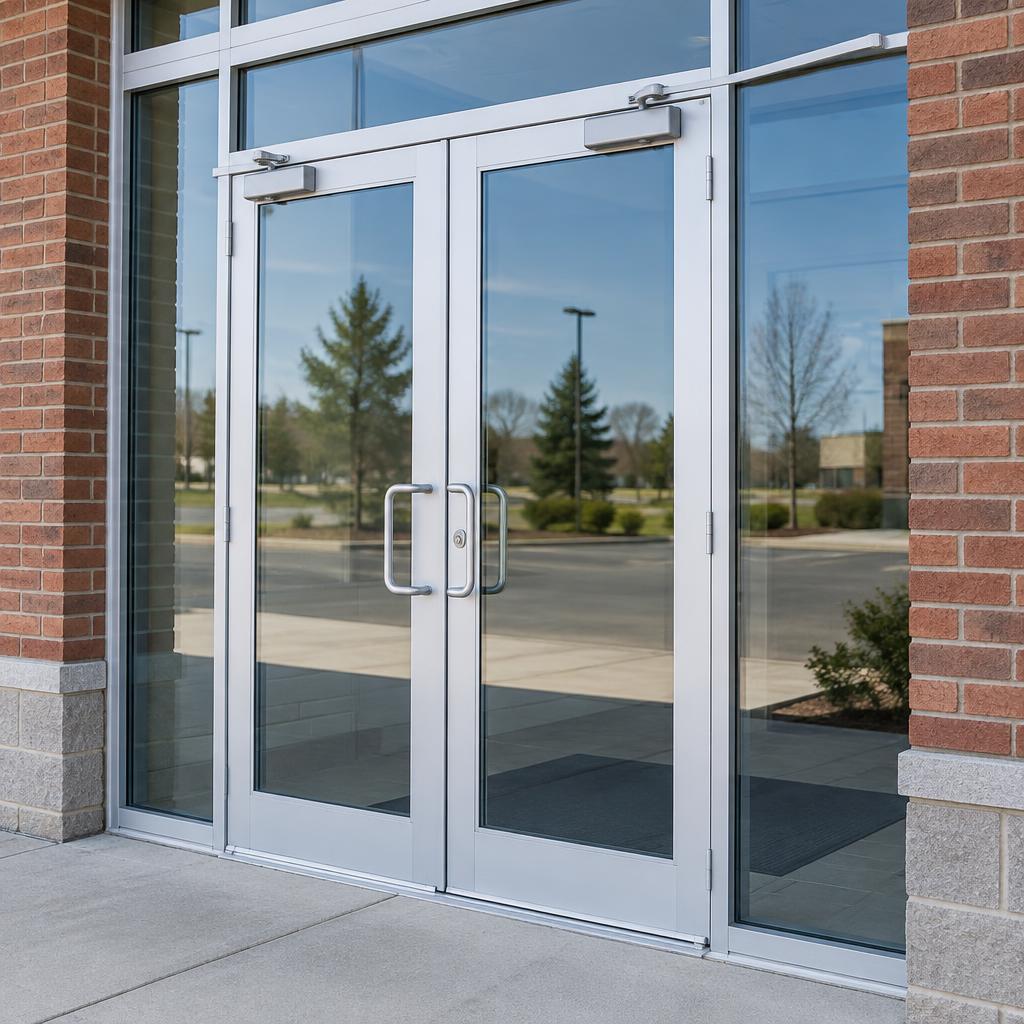
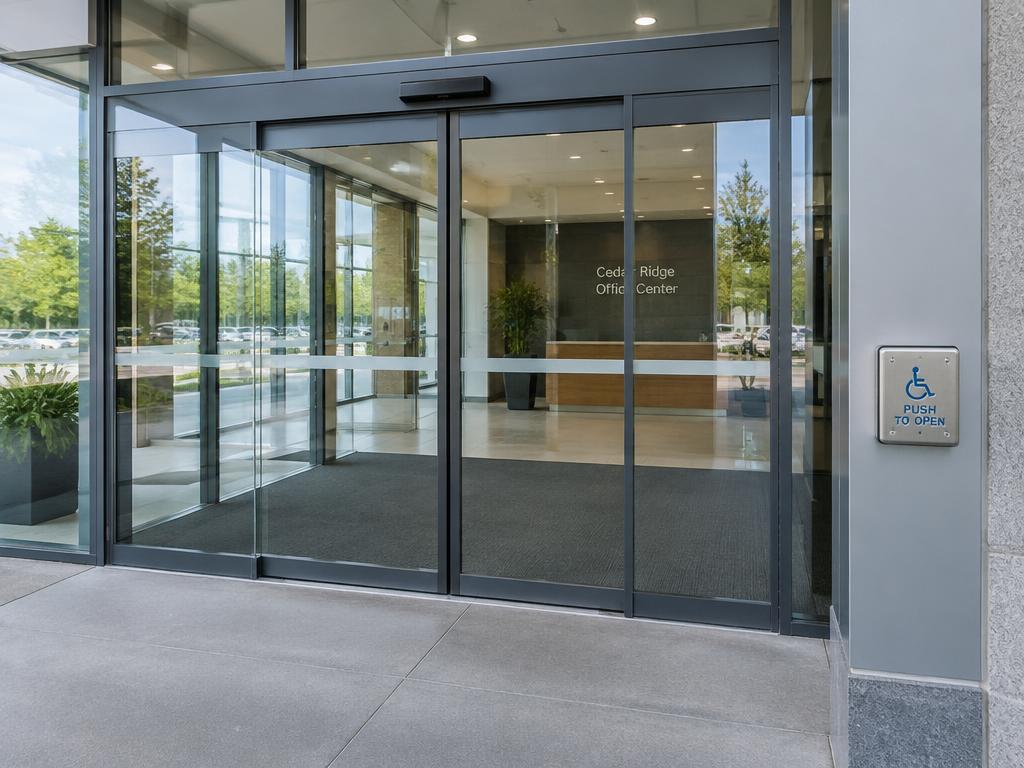
Automatic storefront doors are the powered sliding or swinging entry doors used by retail stores, offices, clinics, restaurants, and other Winnipeg businesses to let customers in and out without pushing or pulling. Repair work for these systems can involve the door panel and frame, the sensors that detect approaching people, the track and rollers for sliding units, the swing arm and hinges for automatic swing doors, and the control system that ties sensors and motor together.
Because automatic storefront doors combine mechanical door hardware with powered operators and electronic sensors, diagnosing a problem usually means looking at more than just the door panel itself. A door that opens too slowly, won't open at all, opens unexpectedly, or makes grinding or clicking noises could point to a worn track, a misaligned sensor, a failing operator component, or simply an accumulation of dirt and debris in the track.
Availability for work on the powered operator itself depends on confirmed specialist capacity, since automatic door operators are specialized equipment that require technicians familiar with that particular system. An enquiry is still a useful first step even if the exact scope of the repair isn't clear yet, since an assessment can determine what's involved and whether the needed expertise is available.
- Sliding automatic storefront doors
- Swinging automatic entry doors
- Door tracks, rollers, and guide wheels
- Motion and presence sensors
- Door panels, frames, and glass components
Why is my storefront door not opening or closing properly?
A storefront door that hesitates, opens partway, or doesn't respond at all is one of the most disruptive problems a Winnipeg business can face, since it affects every customer who tries to walk through. Common causes include a track that has accumulated dirt, grit, or ice, worn rollers that no longer glide smoothly, a sensor that has shifted out of alignment and isn't detecting people reliably, or an operator component nearing the end of its service life.
Doors that open but close too quickly, too slowly, or with a noticeable jolt often point to an issue with the operator's speed or force settings rather than the door panel itself. These settings can drift over time or after a power interruption, and correcting them typically requires a technician familiar with the specific operator model installed.
In some cases, the door seems to work fine mechanically but the sensor behaviour is inconsistent, opening for people who aren't actually approaching or failing to open for someone standing directly in front of it. This points toward a sensor calibration or placement issue rather than a mechanical fault, and distinguishing between the two is a key part of an accurate assessment.
How does Winnipeg's climate affect automatic storefront doors?
Automatic storefront doors face some of the toughest climate exposure of any door type in Winnipeg because they open directly to the outdoors repeatedly throughout the day, every day, regardless of the weather. When temperatures drop toward -30 °C, exterior tracks and thresholds can contract, and any moisture that gets into the track mechanism can freeze, causing a sliding door to stick, bind, or move unevenly along its path.
Freeze-thaw cycling is a particular concern at ground-level thresholds, where melting snow tracked in by customers refreezes overnight in unheated vestibules or near exterior sills, gradually affecting how smoothly a sliding door moves or how well a swing door's bottom sweep makes contact with the floor. Frost heave in the concrete or flooring beneath a storefront entry can also shift a threshold slightly out of level over years, which affects door alignment in ways that aren't always obvious until the door starts behaving oddly.
Road salt is an especially persistent issue for storefront doors because customers track it in constantly during Winnipeg's winter months. Salt residue and moisture together accelerate corrosion on metal tracks, rollers, and hardware, and salt-laden grit can work its way into sensor housings and operator components, contributing to the kind of wear that eventually shows up as a door that sticks, drags, or responds unreliably to the sensors.
Summer brings its own challenges in the form of humidity and temperature swings that can affect sensor sensitivity and cause minor expansion in door frames, while the dust and pollen that collect around a frequently used entry can build up in tracks and sensor lenses over a season. Businesses with heavy foot traffic in summer tourist or patio seasons often notice wear accelerate simply due to higher use.
What does an assessment and repair of an automatic storefront door involve?
An assessment of an automatic storefront door typically begins with observing how the door behaves under normal operation: does it open fully, close at a consistent speed, respond promptly to approaching customers, and seal properly when closed? From there, a technician examines the track, rollers or hinges, and visible hardware for wear, debris, or misalignment, and checks whether sensors are positioned and aimed correctly for the entry's layout.
For sliding doors, the assessment often includes checking the track for debris, corrosion, or wear patterns, inspecting the rollers and guide wheels that carry the door's weight, and verifying that the door glides evenly along its full range of motion. For swing doors, the assessment looks at the swing arm, hinges, and the door's closing speed and force, since these doors have different stress points than sliding systems.
Because the powered operator is a specialized component, any work involving the operator's internal mechanism depends on confirmed specialist capacity at the time of the enquiry. Repairs that fall within standard door hardware, such as track cleaning and adjustment, roller replacement, hinge repair, weatherstripping renewal, and frame or glass panel repair, are more broadly available.
Throughout the process, a technician will typically note whether the issue is isolated to one component or reflects a broader pattern of wear across the system, since storefront doors that see hundreds of openings a day wear differently than a typical home entry door and may need a different repair approach as a result.
Repair or replace: when does an automatic storefront door need full replacement?
Many storefront door issues, including track buildup, worn rollers, misaligned sensors, and damaged weatherstripping, can be resolved through repair rather than full system replacement. Businesses often find that addressing the specific worn component restores reliable operation without needing to replace the entire door and operator assembly.
Replacement becomes a more realistic consideration when the door frame or panel has significant structural damage, when the track has corroded or warped beyond what cleaning and adjustment can fix, or when the operator itself is failing in ways that repair can't reliably address. Glass panel damage in a storefront door is also a factor, since specialist glass work availability depends on confirmed specialist capacity, and a damaged glass unit may need to be assessed separately from the door's mechanical components.
For businesses, the decision often comes down to weighing the disruption of downtime against the age and condition of the existing system. A storefront entry that's central to customer flow may justify a more thorough repair to avoid extended closure, while a door nearing the end of its practical service life might be better addressed with replacement planned around a quieter business period.
An assessment remains the most reliable way to understand which path makes sense for a specific storefront door, since symptoms like slow operation or occasional sticking can stem from either a minor fixable issue or a more significant underlying problem.
What affects the cost of automatic storefront door repair?
The cost of repairing an automatic storefront door depends on which components are involved and how extensive the wear or damage is. A straightforward track cleaning and roller adjustment is a smaller scope of work than diagnosing an inconsistent sensor system or addressing operator components that depend on specialist capacity.
The door type and size matter as well. Larger storefront entries, double-door configurations, and doors integrated with vestibule systems involve more components than a single standard-width entry, which can affect both the diagnostic time and the repair scope.
Access and scheduling around business hours is another real-world factor for storefront doors specifically, since many businesses need the entry functional during open hours and may prefer repair work scheduled before opening, after closing, or during slower periods. Coordinating this timing can be part of planning the repair once an assessment has identified the scope of work needed.
- Which components are affected: track, rollers, sensors, operator, or panel
- Door size and configuration (single, double, or vestibule system)
- Age and model of the operator and availability of matching parts
- Extent of wear, corrosion, or misalignment found during assessment
- Scheduling needs around business operating hours
What can business owners check themselves before calling a professional?
Business owners and staff can safely check a few things before requesting an assessment. Looking at the track for visible debris, ice, or grit buildup is a reasonable first step, since a surprising number of sticking or uneven sliding door problems come down to simple obstruction rather than a mechanical failure.
Noting the specific pattern of the problem is also genuinely useful: does the door fail to open at all, open slowly, open and then stop partway, close too fast, or behave inconsistently depending on time of day or weather? This kind of detail, along with the door's approximate age if known, helps an assessment get to the cause more efficiently.
Automatic door operators involve powered components and are not something staff should attempt to open up, adjust internally, or troubleshoot beyond basic external cleaning. Any work on the motor, control board, or internal operator mechanism should be left to a trained technician, and businesses should stop and call a professional if the door moves unexpectedly, fails to stop when it should, or shows any sign of an electrical issue, since electrical work itself is outside DoorMend's offerings and should be handled by a qualified electrician where relevant.
How can businesses prevent automatic storefront door problems from recurring?
Regular track cleaning is one of the most effective ways to prevent recurring issues with sliding storefront doors in Winnipeg, particularly during winter months when salt, grit, and melting snow are constantly being tracked through the entry. Keeping the track clear reduces wear on rollers and helps the door glide consistently regardless of outdoor conditions.
Placing walk-off mats at the entry can reduce the amount of salt, sand, and moisture that reaches the track and sensor area in the first place, which is a simple preventive step many Winnipeg businesses already use for flooring protection but that also benefits the door system. Periodically checking that sensors remain clear of dust, cobwebs, or displays and signage that might interfere with their field of view also helps maintain reliable operation.
For swing-style automatic doors, keeping hinges and the swing arm mechanism free of debris and checking that the door's closing speed hasn't drifted over time can catch early signs of wear. Businesses that notice a pattern, such as the door struggling every winter once temperatures drop, should mention that pattern when requesting an assessment, since recurring seasonal symptoms often point to a specific component that would benefit from attention before the next cold snap.
Automatic doors for condos, offices, and multi-tenant commercial buildings
Automatic storefront doors aren't limited to retail shops; they're also common at medical clinics, office building lobbies, condo and apartment main entries, and multi-tenant commercial buildings where accessibility and customer flow matter. In these settings, the door often serves a broader population with different needs, from parents with strollers to people using mobility aids, which puts a premium on consistent, reliable operation.
Property managers overseeing a commercial or multi-tenant building with an automatic entry often deal with higher usage volumes than a typical single-business storefront, since a shared lobby door might see traffic from every tenant and visitor in the building throughout the day. This heavier use can mean components wear faster and benefit from more frequent inspection.
Coordinating repair timing in these settings often involves more stakeholders than a single retail business, since building management, tenants, and sometimes a condo board all have an interest in the main entry functioning properly. Describing the building context, the usage pattern, and the specific symptoms when requesting a quote helps ensure the assessment accounts for the realities of a shared commercial entry rather than treating it like a single-business storefront.
Why does my automatic door sensor keep triggering or failing to detect people?
Sensor issues are among the most common complaints with automatic storefront doors, and they can show up in opposite ways: a door that opens constantly even when no one is nearby, or a door that fails to open for someone standing right in front of it. Both symptoms often trace back to sensor alignment, sensitivity settings, or something physically interfering with the sensor's detection zone, such as a nearby display, sign, or reflective surface.
Weather can also play a role in sensor reliability. Direct sunlight at certain angles, heavy snow reflecting light, or condensation forming on a sensor lens in Winnipeg's humid summer conditions can all affect how consistently a sensor detects movement. If the issue only happens at certain times of day or in certain weather, that detail is worth sharing when requesting an assessment.
Correcting sensor problems usually involves recalibrating or repositioning the sensor rather than replacing the entire unit, though persistent sensor failures can sometimes indicate a wiring or operator-side issue that falls under specialist capacity considerations. An assessment can determine whether the fix is a straightforward adjustment or something that needs further diagnosis.
More questions about automatic storefront door repair in Winnipeg
Can a storefront door be repaired without closing the business? In many cases, yes, particularly for issues limited to the track, rollers, or hardware, though the specific approach depends on the scope of work identified during an assessment and may be scheduled around business hours where possible.
Do you work on automatic doors with access control card readers or panic hardware integration? Availability for work involving access control or panic hardware integrated with an automatic door depends on confirmed specialist capacity, since these are specialized systems.
Is electrical work included if the problem turns out to be wiring-related? No. Electrical work is outside DoorMend's offerings, and any wiring-related issue identified during an assessment should be directed to a qualified electrician.
What if the storefront door has a damaged glass panel? Specialist glass repair availability depends on confirmed specialist capacity, so this would be addressed as part of the overall assessment rather than assumed to be automatically available.
How urgent is a sticking automatic door repair for a business? Businesses can decide this based on how the issue affects daily operations, but DoorMend does not offer guaranteed emergency or same-day response, so timing should be discussed when requesting a quote.
How do I request a quote for automatic storefront door repair in Winnipeg? Describe the specific problem as clearly as possible, including how the door is behaving, how long the issue has been happening, and any patterns you've noticed, such as it worsening in cold weather. Sending a few photos of the door, track, and any visible damage helps with an initial review, and from there, an assessment determines the realistic repair options. Keep in mind that submitting an enquiry starts the conversation but is not itself a booking.