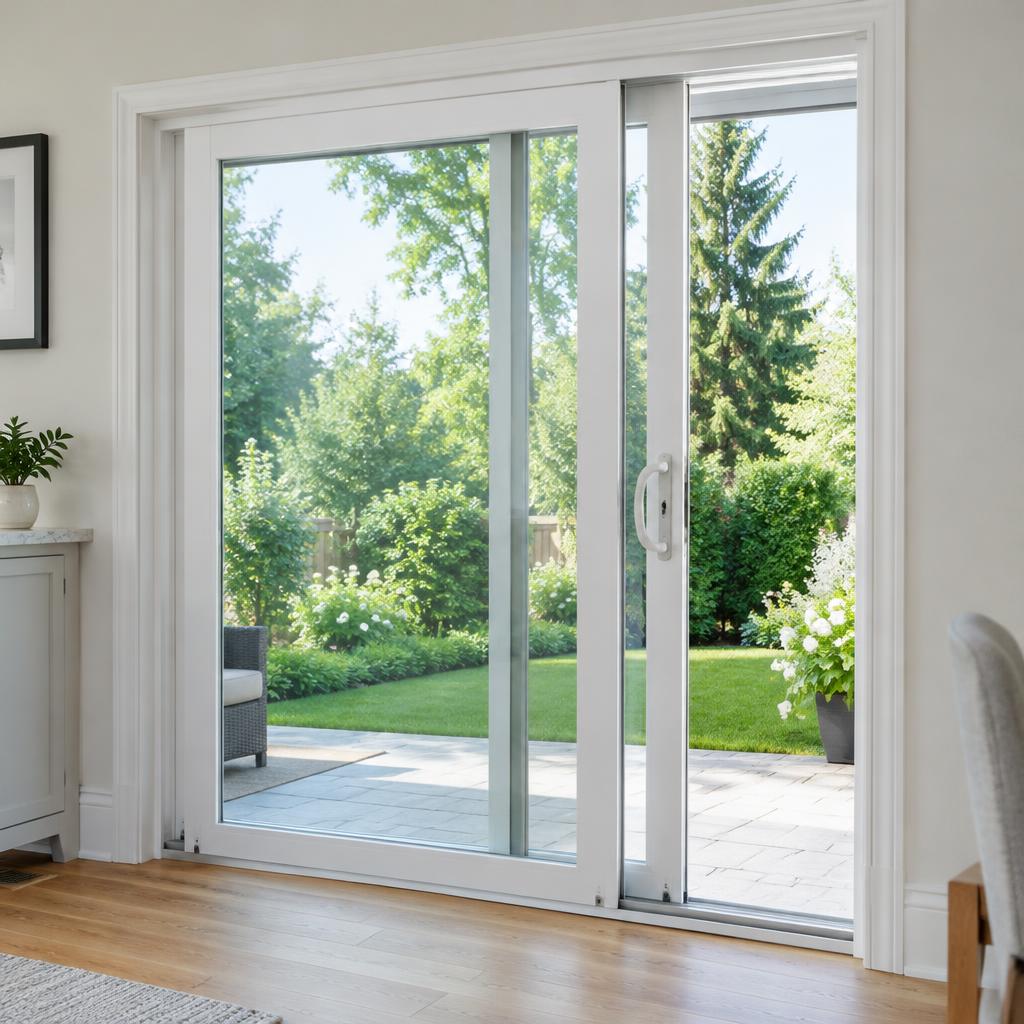
Why is my patio door screen torn, bent, or off its track?
Patio door screens take a lot of abuse over a Winnipeg summer. Kids and pets push through them, screen fabric stretches and tears from repeated use, and the lightweight aluminum frame around the mesh can bend if the screen is forced open when it has jumped its track. A torn screen lets in mosquitoes and other insects, which defeats the entire purpose of having a screen door in the first place.
Bent frames are another common complaint, often caused by leaning on the screen, a door that has been pushed too far open and popped off the track, or a frame corner that has loosened at the joint. Once a frame is bent even slightly, the screen door often becomes harder to slide and may not sit flush in the track anymore, which can let gaps appear at the top or sides.
A screen that has come off its rollers entirely is also common, especially on older patio door screens where the rollers have worn down or where the bottom track has accumulated dirt and debris over years of use. Some homeowners also notice the screen mesh sagging or pulling loose from the frame's spline channel, which is the groove that holds the mesh fabric in place.
- Mesh is torn, punctured, or has a visible hole
- Screen frame is bent or no longer square
- Screen has jumped the track and will not slide
- Mesh sags or pulls away from the frame edge
- Rollers are worn and the door drags or binds
Common causes of patio door screen damage in Winnipeg homes
Patio door screens see more wear in Winnipeg than many people expect, given how short the screen season can feel between winter storage and the return of cold weather. Pets scratching at the mesh to get outside, children leaning on the screen, and simply the repeated daily use of sliding the screen open and closed all contribute to gradual wear on both the mesh and the rollers.
Debris in the bottom track, including sand, grit, and dried leaves, is a major contributor to rollers wearing out faster than they should, since grit acts like sandpaper every time the door slides. Over time this can also cause a screen door to feel stiff or to bind partway through its travel.
Sun exposure over many summers can make screen mesh more brittle, particularly on south-facing patio doors that get long hours of direct sunlight. A mesh that has become brittle is more likely to tear from something as minor as a pet's paw or a light bump.
How Winnipeg's climate affects patio door screens
Patio door screens are seasonal products in Winnipeg, and that seasonal use shapes the kinds of problems that show up. Many homeowners store screens over winter or leave them in place but unused, and the transition in and out of storage is a common time for frames to get bent or mesh to get punctured, especially if the screen is leaned against a wall or stacked with other items.
The temperature swing from a humid Winnipeg summer to a dry, cold winter affects the aluminum frame less than it affects a wood door, but the track and surrounding patio door frame can still shift slightly with freeze-thaw cycles, which may change how well the screen sits once it is reinstalled each spring. A track that has shifted slightly over winter can make a previously well-fitting screen suddenly feel tight or loose.
Humidity in summer can also cause the main patio door track, which the screen door runs alongside, to collect condensation, and any grit or residue in that track transfers to the screen rollers. Keeping the main track clean during the summer screen season reduces strain on the screen door's rollers and glide mechanism.
What happens during a patio door screen assessment and repair
An assessment for a patio door screen repair usually starts with identifying whether the problem is the mesh, the frame, or the rolling mechanism, since each requires a different approach. A technician checks whether the frame is still square, tests how the screen sits in the track, and examines the rollers at the bottom corners for wear or damage.
If the mesh itself is torn or sagging, the repair typically involves removing the old mesh from the spline channel and installing new mesh, which is pulled taut and secured with a fresh spline to keep it in place. This restores both the look and the insect-blocking function of the screen without needing to replace the entire frame.
If the frame is bent, the fix depends on how severe the bend is. Minor bends at a corner joint can sometimes be corrected, while a frame that has been significantly bent or cracked may need a new frame section or a full screen door replacement, since a bent frame rarely sits flush in the track again even after straightening.
Worn rollers are typically replaced with new rollers sized to match the existing screen door, which restores smooth sliding. The technician also checks and cleans the track as part of this process, since a clean track is necessary for new rollers to perform well.
Patio door screen types and materials: aluminum frames, fibreglass mesh, and vinyl tracks
Most patio door screens in Winnipeg use a lightweight aluminum frame, which is strong relative to its weight but can bend if enough force is applied to one corner. The mesh inside the frame is most commonly fibreglass mesh, a flexible woven composite material that resists tearing better than older metal screen mesh and will not rust, though it can still be punctured or cut.
Some screen doors use a sturdier aluminum or polyester-blend mesh designed for pet resistance, which holds up better against scratching but is usually a heavier, less transparent option. The surrounding patio door frame and track are typically aluminum or vinyl, and the condition of that track directly affects how well the screen door operates, since a damaged or warped vinyl track can cause a screen to bind even when the screen door itself is in good shape.
Rollers are usually a hard plastic or nylon wheel assembly, and the specific size and style can vary between screen door manufacturers, which is why matching the correct replacement roller matters for smooth operation. When discussing a repair, it helps to know roughly how old the patio door and screen are and whether the screen door is original to the house, since older screen doors may use roller or frame styles that differ from current standard sizes.
Repair or replace: does your patio door screen need a new frame or just new mesh?
Many patio door screen problems are solved with a straightforward mesh replacement, which is often the most practical option when the frame itself is still straight and square and the rollers are in reasonable condition. This is typically the case for screens with holes, tears, or sagging mesh but no significant frame damage.
Replacing the entire screen door frame becomes the more sensible option when the frame is bent badly enough that it no longer sits flush in the track, when a corner joint has cracked or separated, or when the screen door is old enough that finding a compatible frame for mesh replacement is impractical. A full replacement is also sometimes preferred if a homeowner wants to switch to a heavier pet-resistant mesh, since that may call for a frame built to hold the thicker material properly.
An assessment helps determine which path makes sense for a particular screen door, since the visible damage (a tear in the mesh, for example) does not always tell the whole story about the frame or track underneath.
What affects the cost of patio door screen replacement or repair?
Several factors influence the cost of a patio door screen repair, starting with whether the job is a mesh-only replacement or a full frame replacement. The size of the patio door screen matters too, since larger sliding doors and multi-panel patio door systems need more mesh and a larger frame than a standard single screen door.
The type of mesh chosen also affects cost, with standard fibreglass mesh typically being the more economical option compared to heavier pet-resistant mesh. Roller replacement, track cleaning, and any frame straightening add to the scope of the work if they are needed alongside the mesh itself.
Because screen doors vary so much between manufacturers and home ages, DoorMend determines actual repair options and next steps through an assessment of the specific screen door rather than a general price list. Describing the patio door screen's approximate age, the brand if known, and the type of damage helps when requesting a quote.
What can a homeowner safely check before calling for screen repair?
There are several things a Winnipeg homeowner can check safely before booking a patio door screen repair. Looking closely at the mesh for tears, holes, or areas where it has pulled loose from the frame's edge gives a clear picture of whether this is primarily a mesh issue. Checking whether the frame still looks square, by comparing it against the door opening, can indicate whether the frame has been bent.
Sliding the screen door gently to see where it binds, drags, or feels loose can help describe the problem when requesting a quote, and noting whether the screen has fully come off the track versus simply dragging is useful information. Cleaning the bottom track of visible dirt and debris with a vacuum or soft brush is a safe and simple maintenance step that sometimes improves how the door slides on its own.
What is best left to a trained technician includes removing and re-tensioning mesh in the spline channel, which requires the right tools and technique to get an even, taut fit, and any attempt to straighten a bent aluminum frame, since applying the wrong amount of force can crack the frame or make the bend worse.
- Inspect mesh closely for tears or loose edges
- Compare the frame against the door opening to check for squareness
- Slide the door gently to feel for binding or dragging
- Clean the bottom track of dirt and debris
- Leave mesh re-tensioning and frame straightening to a professional
Maintenance tips to extend the life of your patio door screen
A little routine care goes a long way toward keeping a patio door screen in good shape through Winnipeg's short but intense screen season. Keeping the bottom track clean of sand, dirt, and leaves reduces wear on the rollers and keeps the door sliding smoothly all summer. A soft brush attachment on a vacuum works well for this, and it is worth doing a few times through the season, especially after a dusty or windy stretch.
When storing a screen door for winter, storing it flat or upright in a stable position, rather than leaning it against a wall where it can slip or get bumped, helps prevent frame bends and mesh punctures. Keeping pets from scratching at the screen, perhaps by using a secondary barrier during the times a pet is most likely to want outside, protects the mesh from repeated damage in the same spot.
Inspecting the mesh and frame each spring before the screen goes back into regular use can catch small problems, like a slightly loose spline or a small tear, before they grow into bigger issues over a full summer of use.
- Clean the bottom track regularly during screen season
- Store the screen flat or upright and away from stacked items in winter
- Keep pets from repeatedly scratching the same area of mesh
- Inspect mesh and frame each spring before regular use begins
Patio door screen considerations for homes, condos, and businesses
Single-family homes in Winnipeg typically have one or two patio door screens, often on a back deck or a yard-facing sliding door, and repairs are usually straightforward since the homeowner has full access and decision-making over the unit. Condos with balcony or patio access may have shared building rules about screen door appearance or replacement, so it is worth checking condo guidelines before choosing a different mesh type or frame colour.
Rental properties sometimes have older, original screen doors that have seen years of tenant turnover, and landlords may want a cost-effective mesh replacement rather than a full frame swap unless the frame itself is damaged beyond repair. Tenants requesting a repair should typically coordinate with their landlord or property manager, since billing and access arrangements usually run through them.
Businesses with patio or outdoor seating areas, such as restaurants with a sliding door to a patio, tend to put heavier daily traffic on their screen doors through a short commercial patio season, which can mean more frequent roller wear. For multi-unit commercial buildings, describing how many screen doors need attention and their general condition helps when requesting an assessment.
Frequently asked questions about patio door screen repair in Winnipeg
Can a torn screen be patched instead of replaced? Small tears are sometimes manageable with a patch, but a patch is usually a short-term measure rather than a lasting fix, and full mesh replacement tends to give a cleaner, longer-lasting result.
Why does my screen door suddenly feel heavy to slide? This is most often worn or dirty rollers, a dirty track, or a frame that has shifted slightly and is now dragging against the track edge. An assessment can narrow down which of these is the cause.
Can the screen mesh colour or type be changed when it's replaced? In many cases a different mesh type, such as a heavier pet-resistant option, can be installed in an existing frame, though this depends on the frame's design and condition.
Is it worth repairing an older patio door screen or should I just replace the whole unit? This depends on the condition of the frame and track. If those are sound, a mesh and roller refresh can extend the life of an older screen considerably.
Do I need to remove the screen door myself before a repair? This is not something homeowners need to prepare in advance; the technician will handle removing and reinstalling the screen as part of the assessment and repair.
How do I request a quote for patio door screen repair? Describe the issue, such as a torn mesh, bent frame, or a screen that has come off the track, and include a few photos showing the damage and the overall screen door. An assessment, whether from those photos or an in-person look, helps determine the realistic repair options before any work is scheduled. Submitting an enquiry does not book a service on its own.