
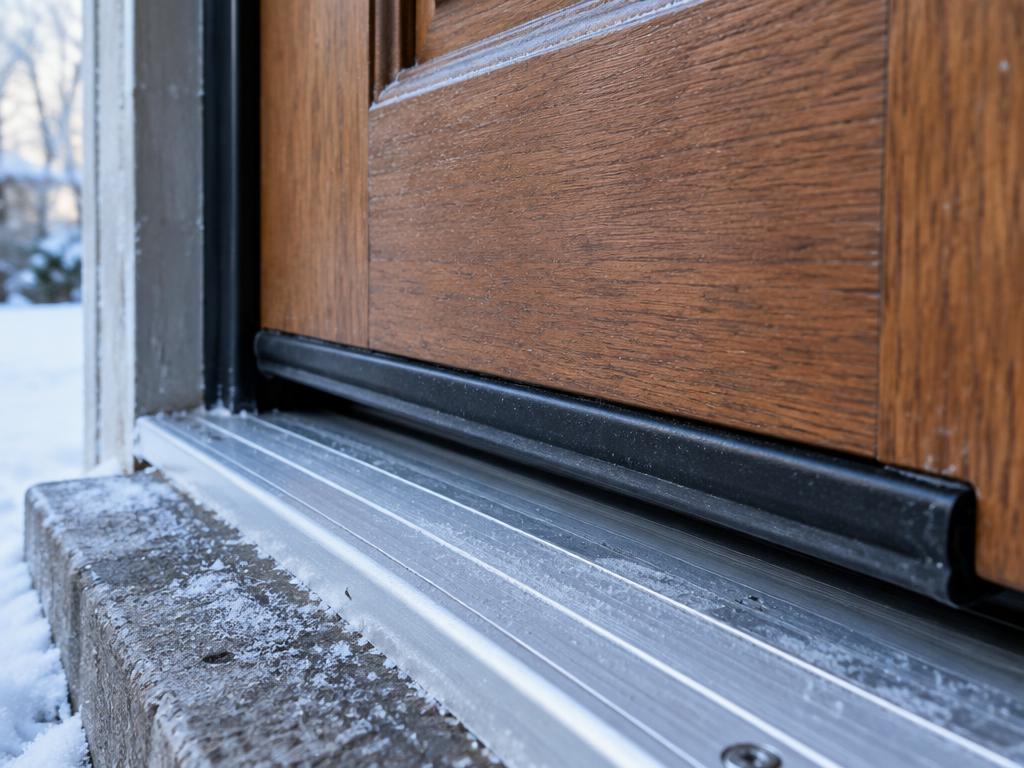
Why does cold air come in around a closed exterior door?
A draft can enter where the door does not make adequate contact with its seals, where the bottom sweep has worn, or where the frame meets the surrounding opening. A door that sits unevenly can leave gaps even if the weatherstripping is new. The useful starting point is to locate the air movement rather than assuming the entire entry needs replacement. Notice whether the draft is at the latch side, hinge side, top or bottom.
Cold glass or metal can also make the area feel uncomfortable without proving there is an air leak at that exact point. Condensation and frost require context: indoor moisture, outdoor conditions and surface temperature can all matter. A guide cannot diagnose the building envelope remotely. Describe what you feel and see, including whether the issue changes with wind. If there is active water entry, deteriorated material or damaged glazing, include that separately in your request.
Weatherstripping, door sweeps and thresholds explained
Weatherstripping generally seals the perimeter between the door and frame. A sweep or bottom seal helps close the space under the slab. The threshold is the sill assembly at the base of the opening and may provide the surface against which a bottom seal works. These parts interact, but they are not interchangeable. Replacing an edge seal does not necessarily address a gap underneath the door.
Different assemblies use different profiles and attachment methods. A flexible bulb, a kerf-mounted strip and an adhesive product may not fit the same door. Some thresholds are adjustable; others are not. Before buying replacement material, identify the door system if possible. A visible label or existing product paperwork is useful. Avoid removing components just to discover what lies underneath, particularly where there is concealed damage or where dismantling could affect the door's ability to close securely.
Signs that the perimeter seal is worn or misplaced
Look for visible tears, displaced sections, flattened areas and gaps where a seal no longer contacts the door. Daylight around an edge can help locate a gap, though not every light pattern proves the same defect. Compare the top and both sides. If one side seals tightly while the opposite side does not, alignment may deserve attention alongside the material itself.
A seal that appears intact can still be unsuitable for the assembly. It might be too thin to make contact or so thick that it prevents the latch from engaging normally. Ask whether the closing resistance began after a replacement. Multiple layers of added foam can hide the original profile and complicate assessment. Do not keep adding material until the door becomes difficult to use. The aim is consistent contact with normal operation, not the strongest possible compression at one point.
A gentle paper check and its limitations
On a stable door, closing a small sheet of paper between an accessible seal and the slab can indicate whether contact varies. Keep fingers away from the closing edge and do not test a door that slams or has damaged hardware. If the paper releases more easily in one position than another, that can provide a useful observation for an assessor.
This is not an air-leakage measurement, a performance certification or proof that a particular seal has failed. Paper thickness, door shape and the type of weatherstripping affect the result. Do not treat it as a reason to start changing hinge or threshold settings. For a more useful description, combine the observation with visible wear and the location of the draft. If a controlled building-energy assessment is needed, that is different from an informal household check and requires the appropriate qualified service.
Cold air under the door: sweep or threshold problem?
A bottom gap may involve a worn sweep, a damaged bottom gasket, threshold position or a door that no longer sits correctly in the opening. Observe whether the gap extends across the whole width or is larger at one side. A torn seal scraping the sill is a different symptom from an intact seal that never touches it. A loose threshold can also need attention beyond replacing rubber.
Do not assume every threshold can simply be raised. Incorrect adjustment can make the door drag or interfere with latching, and some assemblies have product-specific limitations. Water marks, softness in nearby timber or movement under foot may indicate issues that should be assessed before fitting a new surface seal. A draft stopper can provide temporary comfort in some settings, but it is not a repair for damaged components and must never obstruct required safe access or exit.
Why a new seal may not solve a drafty front door
A sagging or distorted door can press firmly against weatherstripping in one place and leave another place open. If the frame or slab is not positioned correctly, new material may reproduce the same uneven contact. A repair plan should consider movement, locking and sealing together. It is possible to eliminate one visible gap while making the door harder to latch.
Air may also enter around the frame rather than between the slab and seal. That is a different junction and may require a different investigation. Do not indiscriminately seal drainage paths or cover hardware with caulk. Manufacturer instructions distinguish weather seals, drainage openings and frame joints for a reason. If you are comparing proposals, ask which leak path is being addressed and how the assembly will be checked afterwards. A useful explanation is more valuable than simply promising a thicker strip.
Choosing weatherstripping for wood, steel and fibreglass doors
The correct profile and fit matter more than a generic claim that one material is best for every Winnipeg entry. Door construction, existing grooves, clearances and exposure influence the choice. Some products fit into a prepared slot; others attach differently. A wood door and a steel or fibreglass entry may use different seal systems even when their openings look similar.
Ask how replacement components match the existing assembly and whether the door can still close normally. Do not assume fibreglass door repair involves replacing a glass panel: the slab material and any glazing are separate features. Adhesive strips should not be chosen solely because they are convenient to install. If a door has specialised fire, smoke or accessibility requirements, ordinary household weatherstripping may be inappropriate. The responsible qualified person should establish what can be altered, rather than relying on this guide as a compliance instruction.
Safe cleaning and seasonal observations before winter
Keep accessible sill surfaces free of loose dirt and debris using care methods suitable for the finish. Look for worn seals before repeatedly forcing the door shut. Record whether the latch engages without an extra push and whether an edge catches on displaced material. Do not use sharp tools to dig around seals, harsh chemicals without product guidance or heat to free frozen components.
After a weather change, notice whether the same draft location persists. Wind direction and indoor conditions can change what you feel, so a single observation may not tell the whole story. If seals repeatedly tear at one point, ask whether the door is rubbing there. Replacing the same strip over and over without correcting the contact problem may not be effective. Preventive observation is useful, but it should not become unsupervised adjustment of an unfamiliar threshold or door assembly.
Repair or replace the seals, threshold or whole door?
Replacing worn, compatible seals can make sense when the door and frame remain sound. Threshold work may be appropriate when the base components are damaged or cannot provide proper contact. Whole-door replacement is a different decision, usually involving the wider condition of the assembly, not merely a draft along one edge. Ask what evidence supports each recommendation.
If there is deteriorated timber, repeated water entry, significant distortion or damaged glazing, those findings may change the options. A new seal will not reverse material decay. Conversely, a sound entry should not automatically be written off because one gasket has worn out. Compare scopes carefully: replacing perimeter strips, renewing the sill and replacing an entire framed entry are not equivalent quotations. Any assessment should explain what remains and which limitations would still exist after the proposed work.
What determines weatherstripping and threshold repair prices?
Cost varies with the seal profile, number of openings, accessibility, threshold condition and whether alignment work is also needed. A straightforward replacement of an available perimeter strip differs from restoring a damaged sill or locating discontinued components. Several doors may use different products. Describe each opening rather than expecting one material choice and one repair scope to cover them all.
The price estimator provides a typical market range in Canadian dollars, not a DoorMend quote. Select weatherstripping or threshold work for preliminary budgeting and explain any related sticking or locking issue in your message. Additional selected services may overlap, so a combined estimate is not a guaranteed total. An eventual assessed quotation should explain parts, labour, exclusions and whether taxes are included. Energy savings also cannot be promised from this guide: actual performance depends on the property and the source of the leakage.
Condo entries, commercial doors and special limitations
A condo owner or tenant may need permission before changing an entry door or its seals. Establish whether the assembly is privately owned or managed as part of the building. Common-area doors may have requirements that differ from an ordinary house entry. Do not remove existing components or install an improvised seal while ownership and alteration rules remain unclear.
Commercial entrances introduce further considerations, including traffic, reliable latching and hardware interaction. A seal that creates excessive closing resistance can affect operation rather than simply reduce a draft. Specialist fire, smoke, powered-door or exit-hardware requirements need suitable qualified assessment. This guide is not a promise of code compliance or confirmation that DoorMend can perform every specialist task. Describe the assembly and the symptoms first so suitability and any referral needs can be established before work is approved.
Air leakage versus water entry around the door
A cold draft and water appearing during rain are not identical symptoms. They may share a location, but the route and remedy can differ. Note whether water is on the surface, entering at a joint or leaving repeated marks nearby. Do not assume a thicker compression seal will resolve a drainage or frame-junction issue. Where material is deteriorated or moisture keeps returning, the source deserves investigation before it is hidden by replacement trim or sealant.
Ask whether the proposed work addresses an identified air gap only or includes another moisture-related concern. This keeps the scope understandable and avoids treating every weather problem as weatherstripping. Do not block designed drainage openings to stop a perceived draft. If another qualified trade or building-envelope assessment is needed, that should be explained rather than presented as an ordinary seal replacement. Describe both symptoms so the initial discussion can distinguish them.
After seal replacement: closing should still feel normal
A newly fitted seal may change contact, but the door should not require repeated slamming or force through the lock to reach its closed position. Ask how the profile was selected and how normal latching was checked. If one edge remains visibly open while another is heavily compressed, alignment may still need attention. Report that observation without cutting the new material or adding another layer yourself.
Compare the result against the agreed work, not an assumed guarantee of heating savings. If a perimeter seal was replaced, an unrelated frame-junction leak may remain outside that scope. If the threshold was serviced, ask what maintenance applies to that model. Keep records of the installed components where available. Clear explanations about the included repair, remaining conditions and product care are more useful than a general statement that the door has been winterised for every possible weather condition.
What to write when asking for help with a drafty door
A detailed message could say: “Cold air comes in under the back door, the sweep has a visible tear, and the door still closes and locks without pushing.” A different message might describe a latch-side gap and a door that needs lifting to close. These observations suggest different assessment paths without claiming to identify the exact fault. Mention any recent seal replacement or water marks.
Use the five-field form for your name, phone number, email address, address and message. Keep access codes and sensitive documents out of the enquiry. Submission is not a booking, and availability and scope need confirmation. Ask whether the assessment will distinguish the seal problem from alignment or frame-junction leakage. For a door that also rubs or refuses to latch, the sticking-door and latch guides provide related symptom descriptions. The goal is a usable, properly assessed entry rather than piling on material until the door no longer closes comfortably.
Door repair price estimator
Pick one or more services — the estimate combines them.
Services needed (select all that apply)
Estimated typical range (CAD)
$150 – $320
Weatherstripping & Thresholds
Typical Canadian market range, compiled from published 2025–2026 price guides. Not a DoorMend quote — your price is confirmed after assessment. This estimator is a rough guide only; combining services may change the final price after assessment.
Frequently asked questions
Can I guarantee lower heating bills after new seals?
No specific savings can be established from a visible gap alone. Household energy use depends on many conditions, and an informal paper check does not quantify air leakage. Seal work should address an identified problem without promising a percentage saving or treating this guide as an energy audit.
Is condensation proof that weatherstripping has failed?
No. Moisture on a cold surface can have several contributing conditions. Describe the location, whether water appears during rain, and whether air movement is also noticeable. Sealing and moisture investigations may overlap, but one visible symptom should not automatically determine the repair.
Do all doors in the house need the same replacement strip?
Not necessarily. Different door systems and clearances can require different profiles. Identify each opening and avoid assuming one bulk product fits every entry. The assessor should explain compatibility and how closing, latching and contact will be checked after replacement.