
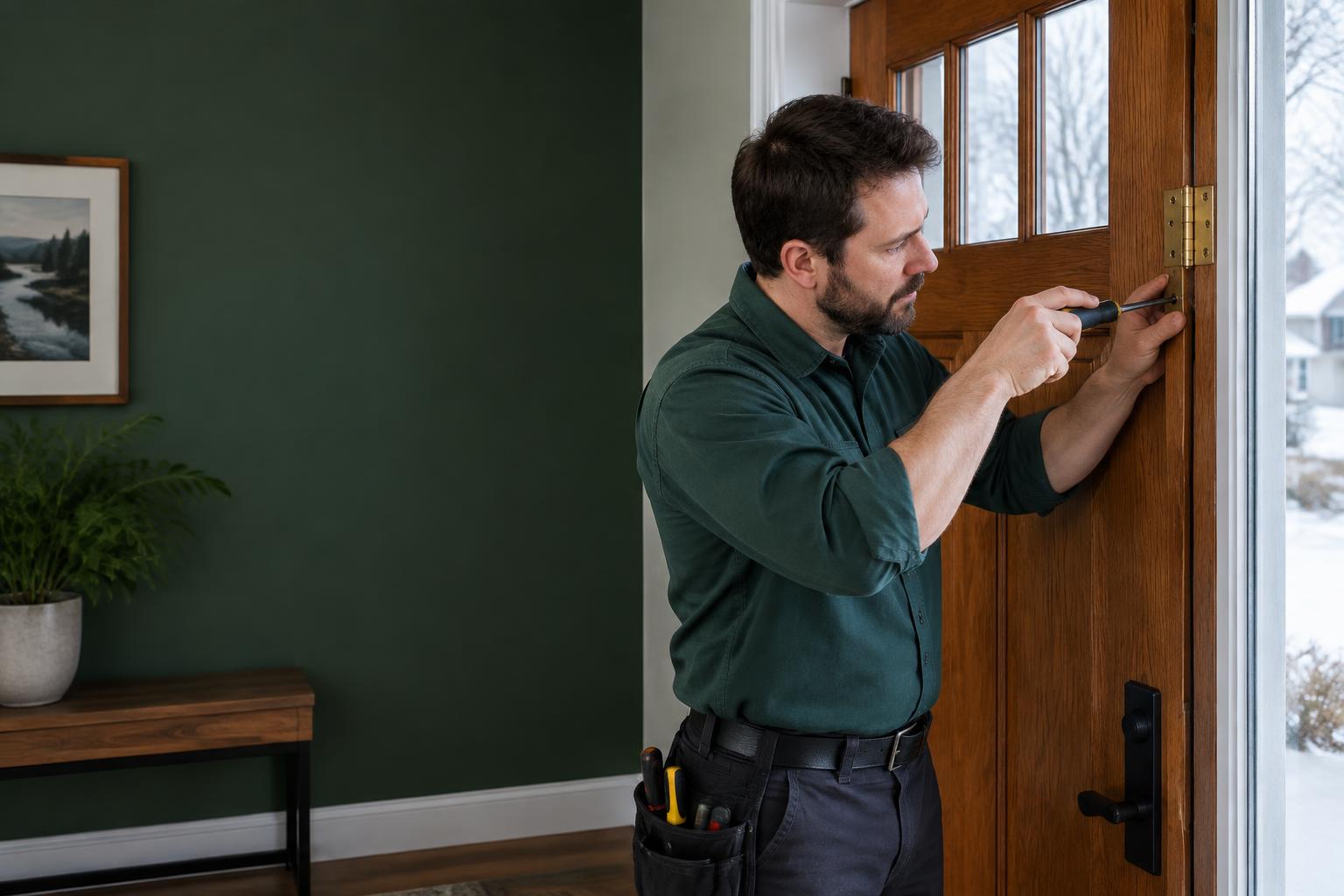
Why does a door that worked before suddenly start sticking?
A sticking door can result from several different changes: loose hinge support, a distorted slab, contact with weatherstripping, an uneven frame or interference from the latch. The season in which you notice the problem is helpful context, but winter does not establish the cause. A door rubbing against the frame in January may have a mechanical issue that developed gradually, rather than a fault caused directly by cold weather.
First decide whether it is safe to keep testing the door. Cracked glass, loose hinges, a split jamb or an exterior door that cannot be secured calls for qualified attention. Do not shoulder the door, slam it repeatedly or pull hard on a handle to overcome resistance. Those actions can damage hardware and obscure the original symptom. Where movement is still safe, observe whether the door rubs near the top, catches at the bottom or closes freely until the latch reaches the frame.
How moisture and temperature can affect a wooden door
Wood can change dimension as its moisture content changes. That makes seasonal movement one possible explanation for a wooden door that rubs differently at different times of year. However, the door's finish, exposure, construction and surrounding frame all matter. A painted timber entry door, an interior hollow-core door and a fibreglass door should not be treated as if they respond identically. Fibreglass is not simply another name for glass or wood.
Look for the pattern rather than assuming the material has swollen. Did the problem follow wet weather, a leak, a change in indoor humidity or building work? Is the paint damaged along an edge? Does the same part rub every season? Visible moisture damage may require investigation of its source as well as the sticking door. A change in fit alone does not prove foundation movement or structural damage, and a door guide cannot diagnose those issues remotely.
Door rubbing at the top corner: hinge sag or another cause?
A door rubbing near its upper latch-side corner may have shifted relative to the frame. Hinge wear, loose fixings or damaged support can be involved. Uneven gaps are useful clues, especially when accompanied by a latch that now lands below its opening. Still, the entire opening should be checked: a frame that is not square or a distorted slab can also change the gaps.
Observe the hinges without lifting or levering the door. Missing screws, visible movement in a hinge leaf or a gap opening at a fixing point are worth noting. Do not substitute longer screws at random, particularly where wiring, masonry, metal frames or rated assemblies may be involved. A professional can determine whether the problem is the fixing, the hinge, the support behind it or the door itself. Repairing sound support is different from tightening a screw into a damaged hole.
Door sticking at the bottom or rubbing on new flooring
If rubbing began after a flooring change, a new rug or threshold work, the interference may be at the floor rather than the frame. Look for the specific point of contact. Remove a loose mat if it is clearly in the way and can be moved safely. Do not assume that the door must be shortened. Permanent changes to door height can affect clearances, sealing and the suitability of certain assemblies.
An exterior door dragging over a threshold may have lost hinge support or encountered a displaced seal. A bedroom door touching a new floor has different considerations. Describe whether the contact happens through the full swing or only close to the frame. If a fire-rated, condo or common-area door is involved, consult the responsible property manager before modifying it. The right repair depends on the purpose of the opening as well as the location of the scrape.
Sticking door or stiff lock: separating two different problems
People often describe a door as stuck when its latch or deadbolt is the part resisting movement. Where safe, notice whether the hardware operates normally with the door open but binds when closed. If it does, alignment or pressure against the frame may be involved. If the key or handle remains stiff while the door is open, the hardware may need separate attention. Neither observation proves that a lock must be replaced.
A deadbolt should not be used to pull a poorly fitting door into place. Having to lift the door or push heavily while locking it is worth mentioning during assessment. Do not file the strike opening or force a key to compensate for movement. An exterior door that cannot lock reliably is a security concern. Arrange suitable qualified help rather than waiting for a seasonal change, and remember that submitting the online form does not provide emergency dispatch.
Weatherstripping that makes an exterior door hard to close
A seal should make useful contact without preventing the door from closing and latching correctly. After new weatherstripping is fitted, increased resistance can indicate an unsuitable profile, excessive compression or an alignment problem. Adding another layer of adhesive foam is not automatically a solution for a draft. Too much material can make the door hard to use while leaving other gaps untouched.
Observe whether the resistance began immediately after a seal change and whether it occurs near a particular edge. Torn, displaced or hardened material may need attention. Avoid cutting away seals indiscriminately: that could leave the entry exposed to air or moisture. A proper assessment considers the slab, frame, threshold and seal as one assembly. If the door closes well but remains drafty, the separate weatherstripping guide explains how to describe that problem without assuming every draft requires a replacement door.
Safe checks before calling about a sticking entry door
For a stable door, visual checks can provide useful information without changing the assembly. Look at the gaps around the closed door, visible rub marks, hinge condition and any loose weatherstripping. Note whether the latch misses its opening and whether the issue affects both opening and closing. Keep fingers clear of moving edges. Do not test a damaged door by repeatedly forcing it past the rubbing point.
Avoid planing, sanding or cutting the slab before the cause is established. Material removed during a temporary change in fit cannot simply be put back when conditions change. Do not use heat guns, open flames or sharp tools to free an iced door. Product-specific care advice matters, especially around glazing and finishes. If there are wider signs such as active water entry, major cracking or unstable framing, seek the relevant qualified assessment rather than treating every symptom as a routine door adjustment.
What an assessment should establish before work starts
A useful inspection aims to identify where movement is restricted and why. It can consider hinge support, door shape, frame alignment, latch contact, threshold clearance and seal compression. The findings should distinguish between the symptom and the contributing cause. Moving a strike plate may change how the latch catches without correcting the sag that created the mismatch.
Ask what work is proposed and which components remain in place. Will the plan restore movement only, or also address locking and sealing? Is there evidence of damaged timber or another issue outside routine door work? If a specialist referral is necessary, that limitation should be clear. For rented properties and condos, establish permission before authorising alterations. An enquiry helps start that conversation; it is not an approved work order, a booking or a guarantee that every type of assembly can be serviced.
Repair versus replacement for a warped or sticking door
Repair may be appropriate when the slab and frame remain sound and the problem involves a repairable hinge, fixing or alignment issue. Replacement becomes a more serious consideration when the slab is substantially distorted, material is deteriorated, glass is damaged or several essential components have failed. Age by itself does not tell you whether a door can be repaired economically.
Compare the limitations of each option. A hinge adjustment will not restore rotten timber, and replacing a slab without checking the surrounding opening may leave another problem unresolved. Ask whether the proposed replacement includes the frame, threshold, hardware and finishing, or only the door panel. Those scopes should not be compared as if they were the same. Choosing repair or replacement should follow the condition of the actual assembly and your needs, not a blanket assumption that any winter sticking requires a new entry.
What affects the cost of fixing a sticking door in Winnipeg?
Cost depends on the cause, door material, support condition, hardware requirements and accessibility of the work. A minor fitting issue, a damaged jamb and a replacement exterior door involve different materials and labour. Several doors showing similar symptoms may still have different causes. Provide information about each opening rather than assuming one diagnosis applies throughout the property.
Use the estimator as a typical Canadian market range, not a DoorMend price promise. Selecting an entry-door service can offer budgeting context, but an assessment is needed to establish the actual scope. Ask whether an eventual quotation includes parts, labour, taxes and any finishing or removal work. Do not assume a general range includes structural investigation, specialist glazing or every replacement component. The estimate is also not a statement about available appointment times. Any work and timing must be confirmed separately.
Preventing repeated rubbing without hiding the cause
Once the cause has been addressed, follow the care instructions for the specific door and hardware. Keep the visible threshold area free of debris and pay attention to changes in closing or locking. A new rub mark or a growing need to lift the handle can be an early reason to ask for another check. Repeated force is not routine maintenance and can create a second problem.
Watch for moisture problems around an entry, especially damaged finishes or recurring water marks. Recording when a door starts rubbing can help distinguish a recurring seasonal pattern from an issue after a particular event. Do not repeatedly move hardware to accommodate a door whose position keeps changing. If the same fault returns, ask whether hinge support, frame condition or another contributing factor needs further investigation. Maintenance should match the assembly; there is no universal adjustment schedule suitable for every residential and commercial door.
Several sticking doors: describe each opening separately
When several doors start rubbing, record which openings are involved and whether their symptoms match. An interior bedroom door touching new flooring and an exterior entry refusing to latch may have unrelated causes. A shared timing pattern is useful information, but it does not establish a single building diagnosis. Avoid applying the same hinge adjustment or trimming approach across the property before each opening is checked.
Mention recent renovation, changes in moisture conditions or visible damage honestly without assuming what caused them. If wider symptoms require a building specialist, the door assessment should acknowledge that limitation. Separate descriptions also make quotations clearer: each repair can be tied to a particular opening and confirmed fault. If you use the estimator for multiple services, remember that a combined market range cannot determine whether the same work is needed at every door.
Checking the outcome after an approved sticking-door repair
A useful handover should explain what changed and demonstrate normal use where it is safe to do so. Ask whether the door can open, close and latch without needing an extra lift or push, and whether the deadbolt meets its opening normally. If perimeter sealing was part of the scope, ask how that contact was checked. A single improvement in movement does not automatically establish that all related concerns were addressed.
Keep any product-specific care advice and the description of the agreed work. If the symptom returns, record where and when rather than changing the settings yourself. That helps distinguish a new issue from a limitation discussed during the repair. Do not assume any particular warranty or follow-up entitlement unless it was actually agreed. The practical goal is clear expectations about the assessed scope and ordinary operation, without promising that seasonal or future maintenance concerns can never occur again.
How to explain the problem and request help
A useful message might say: “My wooden front door rubs at the upper latch corner, the deadbolt only catches when I lift the handle, and this started before the recent cold weather.” Include whether the door is exterior or interior and whether it can still close and lock. Mention a recent seal, floor or hardware change. These observations help identify what should be checked without attempting a diagnosis yourself.
The form asks for your name, phone number, email address, address and message. Do not include access codes, identity documents or payment details. Suitability, availability and the scope of assessment require confirmation. If the door is unsafe or cannot secure the property, seek appropriate qualified assistance rather than relying on an online form for an immediate response. The related entry-door and frame-and-hinge pages describe possible service scopes; this guide helps you recognise symptoms and ask clearer questions before deciding what work to approve.
Door repair price estimator
Pick one or more services — the estimate combines them.
Services needed (select all that apply)
Estimated typical range (CAD)
$150 – $750
Entry & Exterior Door Repair
Typical Canadian market range, compiled from published 2025–2026 price guides. Not a DoorMend quote — your price is confirmed after assessment. This estimator is a rough guide only; combining services may change the final price after assessment.
Frequently asked questions
Should I wait until spring if the front door sticks?
Seasonal changes may alter the fit, but waiting is not appropriate when the door cannot lock, is unstable or has visible damage. Even a recurring seasonal symptom can have a mechanical cause. Describe whether normal closing and security remain possible before deciding how urgently to seek help.
Can a sticking door mean a wider building issue?
Sometimes a door symptom accompanies other conditions, but rubbing alone does not prove a foundation or structural problem. Mention active leaks, significant new cracks or changes at several openings to the appropriate qualified assessor. Door adjustment should not be used to dismiss wider signs without investigation.
Will sanding the rubbing edge always solve it?
No. If hinge support or frame position is responsible, removing material does not restore that support. It can also leave excess clearance later. Establish the cause and the door assembly requirements before considering irreversible changes, especially on exterior, shared-building or specialised doors.