
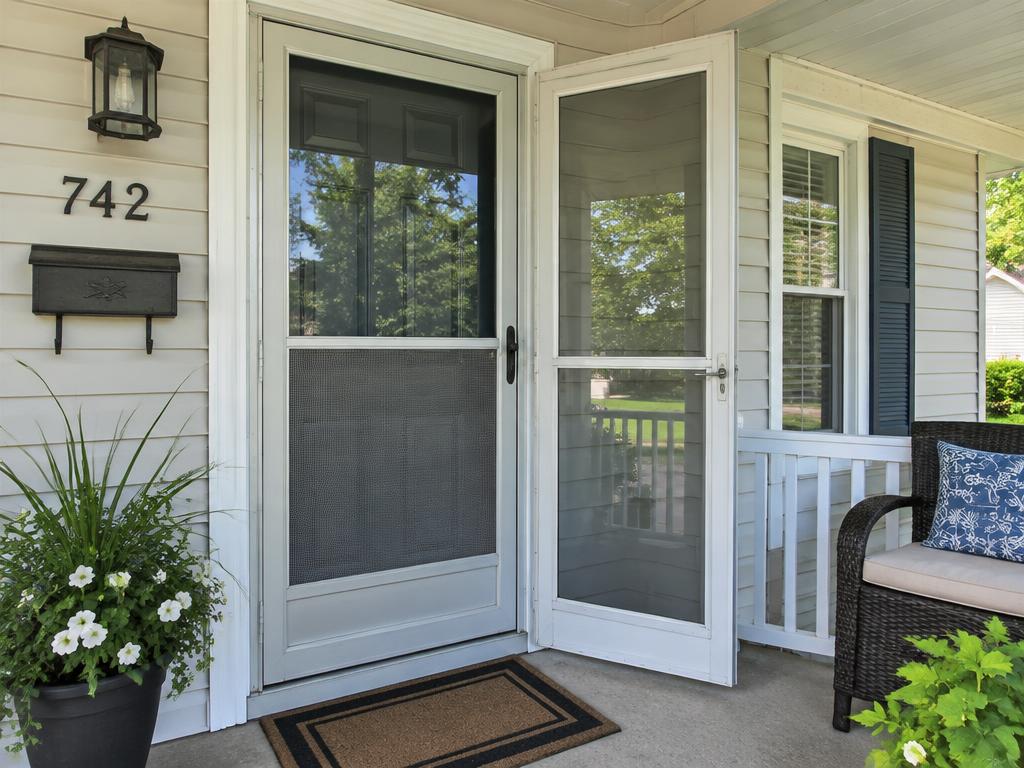
Screen door or storm door: identify the assembly first
A screen door provides an insect barrier while allowing ventilation. A storm door may include glazing, interchangeable panels or an integrated screen and sits outside a primary entry. A sliding patio screen is another arrangement with its own rollers and guides. Identifying the type matters because torn mesh, closing problems and track faults involve different components.
Describe whether the door swings or slides and whether it contains glass. A loose, leaning or damaged glazed panel deserves qualified attention; do not continue using it to see whether it will settle into place. Torn mesh on a sound frame is a different concern from failed support hardware. Start with the condition of the whole assembly before selecting a repair, and keep people clear if movement appears unsafe. This guide helps you recognise symptoms, not dismantle doors or handle glazing.
Torn screen mesh, loose edges and damaged frames
A tear or loose edge can compromise the insect barrier even when the panel still operates. Where the frame remains straight and suitable, replacing the mesh may be worth considering. However, damage to the frame, corners or retaining arrangement can change the options. New mesh will not restore a bent panel that no longer fits its opening.
Observe whether the mesh has a small tear, has pulled away along an edge or is loose across the whole panel. Mention pet damage, impact or a recently replaced screen if relevant. Do not assume every mesh or retaining spline will fit the existing frame. Materials and profiles vary. A qualified assessment can establish whether the frame is reusable and what compatible screen options exist. Avoid sharp temporary patches near frequently handled edges, and do not treat a damaged glazed storm panel as a simple mesh repair.
Screen door will not latch even though it closes
A latch that misses can result from changed alignment, loose support, damaged hardware or an obstruction near the closed position. A flexible frame may also behave differently when pulled or pushed. The useful distinction is whether the hardware operates normally while the door is open and whether the panel sits evenly in its frame.
Do not slam or bend the door to make the latch catch. Improvised strike changes can hide a sagging or damaged support point. Note whether the problem began after wind damage, a closer change or other work around the entry. A light secondary door still requires sound support and compatible hardware. Ask whether the assessment will consider hinges, mounting and latch contact together. Replacing the latch alone will not necessarily restore normal operation if the panel has changed position relative to the opening.
Storm door slams, closes slowly or stays open
Many storm doors use a closer to control their movement. A door that slams or will not reach the latch may involve the closer, mounting connections, hinge condition or contact with seals and the frame. Closing resistance and speed are related observations, but they are not the same problem. Record whether the door moves freely until its final approach or behaves poorly throughout the swing.
Do not detach the closer or adjust it randomly. Product-specific instructions matter, and a damaged mounting point can make a simple adjustment inappropriate. A closer should not be forced to overcome a bent or dragging panel. Keep fingers clear of the closing edge and arrange help if the door moves violently. Ask whether compatible closer parts are available and whether the supporting frame remains suitable. A repair should restore controlled operation rather than make the panel move faster just to overcome another fault.
Wind damage, loose hinges and mounting support
A storm door exposed to wind can suffer damage to its hardware, panel or mounting. Visible looseness at the surrounding trim or hinge fixing deserves attention. A door attached to deteriorated or poorly supported material may sag even if its hinges appear intact. Inspect from a safe distance without pulling on the assembly to test its strength.
Do not add screws or a retaining device at random. The door's mounting arrangement and manufacturer instructions determine what is appropriate. A wind chain or restraint is not a universal fix for every system and cannot restore damaged support. Explain whether the door was caught by a gust and whether it now rubs or sits differently. If glass is cracked or the panel is unstable, stop use and request suitable qualified help. Repairing the supporting surface may be a separate scope from replacing ordinary door hardware.
Sliding patio screen jumps its track or drags
A sliding insect screen usually has its own frame, rollers and guides separate from the glazed patio door. Dirt, damaged guides, worn rollers or a distorted screen frame can interfere with movement. If the glass panel works normally but the screen does not, say so. That distinction prevents confusing lightweight screen work with heavy patio-panel handling.
For a stable screen, accessible debris can be removed using suitable care methods without bending the track or lifting the panel out. Do not force a warped screen past a catch. If it repeatedly leaves its guide, ask why the panel is not remaining properly controlled. Simply returning it to position may not solve the cause. Compatible parts and frame condition should be checked together. Follow the actual product instructions for maintenance rather than applying the lubrication advice for a different sliding-door system.
Storm door rubs after a new seal or threshold change
A displaced or unsuitable seal can create closing resistance, but hinges, mounting and frame condition may also be involved. If the problem started after weatherstripping or threshold work, include that history. A door rubbing near the bottom may need a different assessment from one touching the upper latch-side corner. Observe the location without repeatedly forcing it closed.
Do not cut away material indiscriminately or keep adding adhesive foam to cover another gap. Seals should suit the assembly and allow normal latching. A primary entry door and a secondary storm door have separate roles; weatherstripping one does not necessarily address the other. If both doors are troublesome, describe them separately. An assessment should explain which assembly is being repaired and whether alignment or support issues need attention before new sealing material will work as intended.
Glass panels, interchangeable inserts and integrated screens
Some storm doors contain fixed glass, removable inserts or retractable screens. The care and replacement methods differ by product. Broken glazing, damaged retaining hardware or a screen that jams inside its housing should not be approached as a generic mesh replacement. Locate visible model information or existing paperwork rather than removing components to identify them.
Do not handle cracked glass or lift glazed inserts without suitable guidance and handling arrangements. Integrated screen mechanisms may contain components that should not be dismantled casually. Ask what can be assessed and whether specialised parts or expertise are required. Product availability is not guaranteed merely because a similar-looking door is sold today. If a panel is loose, keep the door unused and the area clear while arranging appropriate help. This guide does not provide glazing procedures or confirm that every storm-door brand can be serviced.
Safe checks before requesting screen or storm door help
On a stable assembly, observe the mesh, visible frame shape, hinge area and latch contact. Note whether the door drags, slams, jumps a guide or refuses to close. Check for obvious debris without placing hands in moving joints or removing hardware. A concise description of where the symptom occurs is useful, especially if another door at the same entry operates normally.
Avoid bending frames, removing closers, lifting glass panels or changing mounting screws to experiment. Follow manufacturer care instructions for cleaning and any permitted maintenance. If a component feels hot from sun exposure, do not handle it until conditions are safe. For rented properties or shared buildings, establish permission before arranging alterations. The objective is to gather observations without creating another fault. Unsafe movement, damaged glazing and loose support should be addressed by suitable qualified assistance rather than continued household testing.
Repair or replace a screen or storm door?
Repair may be practical when the frame and mounting remain suitable and compatible mesh or hardware can restore the required function. Replacement deserves consideration where the panel is badly distorted, support is deteriorated, glazing is damaged or several necessary components cannot be sourced. Age alone is not enough to determine whether the assembly should be discarded.
Ask what would remain after the proposed repair and whether any limitation would affect movement or latching. Re-screening a damaged frame, replacing a closer on a dragging panel and changing a latch on a sagging door may not address the underlying cause. Compare a targeted repair and a complete replacement against the same scope, including mounting, finishing and disposal if relevant. Any product choice should suit the opening and intended use rather than rely on a universal claim that one material or door style is best for every property.
What affects screen and storm door repair prices?
Cost varies with the assembly, damage, parts, panel condition and the work needed around the mounting. Mesh replacement, roller work, closer replacement, glazing and complete-door installation are distinct scopes. Proprietary retractable mechanisms and discontinued hardware can change availability. Describe the door and its actual symptom rather than assuming that every screen or storm repair falls within the same simple task.
The estimator provides typical market ranges in Canadian dollars, not DoorMend quotations. Selecting multiple services can help organise possible work, but their combined range is not a diagnosis or guaranteed invoice and may include overlap. An assessed quotation should clarify parts, labour, taxes, finishing, removal and any exclusions. It should also identify specialist work where necessary. The range does not establish appointment timing, parts stock or all-brand support. Suitability and the approved scope must be confirmed for the actual request.
Retractable screen will not return to its housing
An integrated or retractable screen may jam because of its mesh, guides, housing or internal mechanism. That is not automatically the same repair as renewing mesh in an ordinary fixed frame. Identify the model if visible and describe whether the screen stops at one point, pulls unevenly or appears damaged. Do not pull harder or open the housing to discover hidden parts.
Ask whether compatible components and suitable expertise are available for that particular system. Product-specific instructions should guide any permitted cleaning, and a replacement mechanism should not be selected by appearance alone. If the storm door also has a closing or latching problem, describe that separately. It may be possible for the screen and swinging assembly to have different faults. A clear quotation should identify which function is being addressed and whether the remaining door components require other work.
Comparing a mesh repair with a complete storm-door replacement
A screen replacement normally addresses the mesh and its retaining arrangement on a suitable frame. A complete storm-door installation involves a wider assembly and mounting requirements. Those proposals should not be compared solely by the price headline. Ask whether each option addresses the damaged frame, closer, latch and support, or only the insect barrier.
If the existing assembly is sound, a targeted repair may avoid unnecessary replacement. If mounting or panel damage remains, new mesh may leave important limitations unresolved. Explain the intended use and the actual symptoms so the assessor can discuss appropriate options. Confirm what finishing, removal and parts are included and what needs separate authorisation. No particular warranty, brand coverage or turnaround should be assumed. The right comparison is between defined scopes that meet your needs, not between unrelated tasks sharing the words screen or storm door.
Describe the primary door separately
If both the storm door and the main entry need attention, identify which one rubs, which one latches poorly and where any draft is felt. Their hardware and sealing arrangements differ. Separate symptom descriptions help the assessor define the work and prevent a repair to the outer door from being mistaken for a solution to a different fault in the main entry.
Maintenance observations and requesting a useful assessment
After approved repairs, use the care instructions for the specific assembly. Keep accessible guide and threshold areas free of debris and report new rubbing or uncontrolled movement. Do not use repeated force as routine maintenance. If a screen tears repeatedly at the same edge, ask whether the frame or retaining arrangement is contributing. If a storm door begins sagging again, the mounting support may need investigation rather than another latch adjustment.
A useful message might say: “the hinged storm door slams and its upper mounting looks loose,” or “the patio screen drags, but the glass door moves normally.” Include recent impacts or work around the entry. The form asks for name, phone number, email address, address and message; exclude codes and private documents. An enquiry is not a booking or emergency response. Use the related screen and storm service page for possible scopes, and the patio-door guide when the heavy glazed sliding panel is the part that needs attention.
Door repair price estimator
Pick one or more services — the estimate combines them.
Services needed (select all that apply)
Estimated typical range (CAD)
$100 – $400
Screen & Storm Door Repair
Typical Canadian market range, compiled from published 2025–2026 price guides. Not a DoorMend quote — your price is confirmed after assessment. This estimator is a rough guide only; combining services may change the final price after assessment.
Frequently asked questions
Can pet-resistant mesh repair a damaged frame?
A different mesh can change the screen material but will not straighten a distorted frame or restore broken supports. Assess the reusable frame and compatible retaining arrangement first. Material options should be discussed alongside the condition of the assembly rather than as a universal remedy.
Should I add a wind chain to any storm door?
Not without confirming that the product and mounting are appropriate for that system. A restraint cannot restore deteriorated support or damaged hinges. Follow manufacturer guidance and ask how existing wind damage will be addressed before adding another component.
Does a storm door replace the primary entry seal?
The secondary door and primary entry are separate assemblies. Problems with the main door perimeter may remain even if the storm door is repaired. Describe both openings when drafts or closing difficulties affect them, so a quotation identifies which components and symptoms are included.