
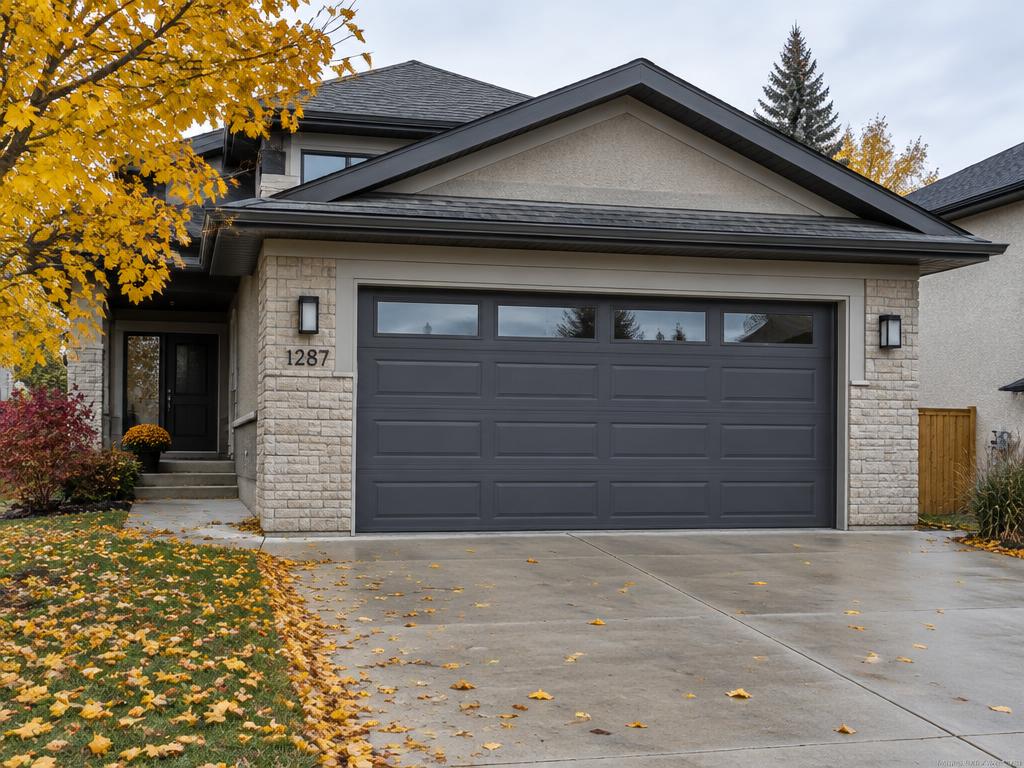
A noisy or crooked garage door is a symptom, not a diagnosis
A garage door that grinds, jerks or closes unevenly can have problems involving its rollers, tracks, hinges, supporting hardware, counterbalance system or opener. The sound alone does not establish which component has failed. A new noise deserves attention, but it is especially important to distinguish ordinary observation from unsafe testing. Garage doors are heavy and some components remain under high tension.
If the door is crooked, hanging unevenly, visibly off track or associated with a suspected broken spring or damaged cable, stop using it. Keep people and vehicles clear and seek qualified garage-door assistance. Do not force it closed, pull an emergency release on an unstable door or attempt a balance test. If it is already closed, leave it unused. If it is open or partly open, do not stand beneath it or try to move it yourself. This guide does not provide repair instructions for high-tension components.
Squeaking, grinding, scraping and a sudden loud bang
Different sounds can suggest where an investigation should start, but they are not definitive diagnoses. A squeak may involve moving joints or rollers. A scrape may come from contact with the track, another component or an obstruction. A grind may involve worn hardware or the opener. A loud bang can have several causes and warrants caution, especially if movement or position changed afterwards.
Do not operate the door repeatedly to reproduce a concerning sound. Record what you already observed: whether it happened on opening or closing, whether the panel moved unevenly and whether a visible part is damaged. Describe a sudden change separately from a noise that developed gradually. If the door is no longer stable or you suspect a spring or cable problem, arrange suitable qualified assessment. An online quote request is not emergency dispatch and should not be relied on for an immediate safety response.
Why one side of a garage door drops before the other
Uneven movement can involve the counterbalance system, cables, tracks or other support hardware. A crooked panel does not provide enough information to identify the exact fault, but it does indicate that continuing normal use may be unsafe. Do not attempt to straighten the door with the opener or with manual force.
Keep clear of the panel and its supporting components. Do not loosen brackets, alter cable tension or try to put a roller back into a track. Some attachment points are connected to tensioned parts even when the door appears stationary. A qualified technician should determine the cause and establish safe handling before work. When seeking help, say whether the door is closed, open or partly open without moving it to check. Its current position is important information for arranging the appropriate response.
Broken springs and damaged cables: leave the system alone
Garage-door springs provide counterbalance, and cables may be part of the system that transmits or supports that action. These are not ordinary household adjustment points. A visible spring gap, frayed cable, hanging cable or sudden change in panel position is a reason to stop use and obtain qualified assistance. Do not approach closely or handle components to confirm your suspicion.
Never adjust or remove springs, cables or their associated brackets yourself. Do not use the opener as a substitute for a functioning counterbalance system. Do not assume that a closed door means all components are free of tension. If the assembly looks unsafe, avoid emergency-release or manual lifting experiments. A professional needs to assess the system and take appropriate precautions. This article intentionally avoids tension settings, spring measurements for DIY replacement and any procedure for dismantling these parts.
Rollers and tracks: why derailment needs qualified attention
Rollers and tracks guide the door through its movement. Visible damage or displacement can affect how the assembly travels, and other faults can also cause it to leave its normal path. A roller out of position is not necessarily the only failed component. Returning it without establishing the cause may leave the door unstable.
Do not bend tracks, remove rollers or loosen mounting points to create clearance. A garage door needs suitable support and geometry throughout its travel. Note visible damage from a safe distance and mention any recent impact, such as contact from a vehicle. An assessor should determine whether the track, panels, rollers and supporting construction remain suitable. A replacement part cannot automatically remedy damage elsewhere. Specialist handling may be necessary before an inspection or repair can proceed, depending on the door's position and condition.
Opener problems versus mechanical door problems
An opener that hums, stops or reverses can have its own fault, but it may also be responding to a problem with the door or its safety system. The motor is not designed to overcome every mechanical obstruction. Repeatedly pressing the control can worsen a fault rather than identify it. Describe whether the panel moved normally before the opener behaviour changed.
Do not increase force settings to overcome binding, bypass safety sensors or alter electrical connections. If the assembly appears mechanically unsafe, do not disconnect it for a manual test. For a stable system with an ordinary control issue, consult the exact opener manual for permitted user checks. Powered garage openers are different from automatic pedestrian-door operators, and the relevant service and expertise differ. Ask which part of the system can be assessed before assuming that a general door enquiry includes all electrical or opener work.
Garage door reverses or refuses to close fully
A door that reverses can be responding to an obstruction, a sensor issue, an operating limit or a mechanical fault. A partially closed door is not enough evidence to select a replacement part. Keep the opening clear and do not defeat the protective system to make the door continue. Describe whether there is an error indication that is already visible, without moving the panel repeatedly.
A loose object in the opening may be removed only when it can be reached safely without entering the path of an unstable door. Follow the specific manufacturer instructions for permitted sensor checks on a stable assembly. Do not change force or travel settings as a shortcut around a closing problem. If the door is uneven, damaged or associated with a suspected spring or cable failure, stop use and request qualified help rather than pursuing routine opener troubleshooting.
Winter ice, bottom seals and debris at the opening
Cold-weather problems can involve ice or material at the sill, bottom seals and changes in the wider assembly. A door that appears frozen to the ground should not be forced upward with the opener. That can strain the system and damage the seal or other components. A seasonal pattern is useful context, but winter alone does not identify the failed part.
Do not use open flames, sharp tools or boiling water around the door to free it. Observe safely and explain whether the bottom seal is visibly damaged or material is obstructing the opening. Avoid blocking drainage or changing the sill without assessment. A garage-door bottom seal differs from the sweep on a pedestrian entry door, and replacing one may require different handling. Any safe maintenance or cleaning should follow the actual product guidance rather than an improvised method intended for another door type.
What can a homeowner safely observe before asking for help?
Without operating a suspicious door, note its current position, visible damage and the history of the problem. Is it crooked? Did a loud noise precede the fault? Was there a recent impact? Are there visible error lights on the opener? Existing model information or maintenance paperwork may help identify the system without approaching tensioned components.
Keep people clear and do not reach between panels, into tracks or near cables. Do not pull the release or attempt a balance test when the system is unsafe. Photographs during a later agreed assessment process should never require standing underneath an unstable door. The objective is to communicate what is already apparent, not to diagnose the fault by hazardous experimentation. If the situation presents an immediate risk, use the appropriate qualified urgent assistance rather than assuming that the website enquiry form will produce an immediate response.
What a qualified garage-door assessment should establish
The inspection should identify the fault and determine whether the assembly can be handled safely before repairs proceed. Door panels, tracks, rollers, hinges, counterbalance components and opener interaction may be relevant. The scope should distinguish mechanical garage-door work from electrical or specialist opener requirements. Ask what can be assessed and whether another qualified provider is needed.
A proposed quotation should identify the components and labour involved and explain limitations in the remaining assembly. Do not assume that a new opener corrects a damaged door, or that replacement rollers restore a failed counterbalance system. For rentals or shared properties, establish authorisation before approving alterations. The enquiry is not a booking or a promise that DoorMend has every specialist capability. Suitable expertise, parts, scheduling and the actual approved scope need confirmation for the specific system.
Repair or replace a noisy or damaged garage door?
Targeted repair may be appropriate when the surrounding assembly is sound and the failed components can be safely replaced with compatible parts. Wider replacement may deserve consideration where panels, tracks or multiple essential systems have substantial damage. Cosmetic age is not the same as mechanical condition, and a noise alone does not justify replacing the complete door.
Ask which components remain and whether their condition affects the proposed result. A panel replacement, mechanical repair and complete system replacement have different scopes. If insulation, appearance or other goals are also part of the decision, keep them separate from the immediate safety fault. Compare quotations against the same included work, permissions and handling requirements. This guide cannot determine whether a particular door is repairable or certify that it is safe; those conclusions require an appropriate qualified assessment of the actual assembly.
A vehicle impact can affect more than the visible panel
After an impact, visible dents may not be the only concern. Tracks, mounting, hinges and the wider support system may need qualified assessment. Do not operate the opener to test whether the damaged panel will still travel. Movement can change how the fault presents and may create additional risk. Record the event and the door's current position from a safe location.
A quotation should distinguish cosmetic panel work from the mechanical conditions that need attention. Ask which components were inspected and whether any further findings could change the scope. Do not assume a new panel restores the whole system if the surrounding support remains damaged. If insurance or property management is involved, keep approval and documentation requirements separate from the immediate need to keep people clear. This guide cannot certify a door as safe following an impact or approve continued operation.
Routine garage maintenance is different from fault diagnosis
Manufacturer manuals may describe permitted maintenance and safety checks for a sound assembly. Those instructions are not permission to test a door that is crooked, damaged or associated with a suspected spring or cable failure. Stop use in those circumstances and arrange appropriate qualified help. A routine schedule does not remove the risks created by an active fault.
After approved work, ask for the care guidance that applies to the actual door and opener. Different parts can have different requirements, and a general spray treatment is not a substitute for a functioning mechanical system. Record new noises or changes early without repeatedly cycling the door to diagnose them. Keep controls secure against unintended use and children clear of the moving assembly. The important distinction is between safe, product-guided care of a sound door and experiments on an assembly whose stability has not been established.
Keep a clear record of the approved garage repair
Retain the description of the agreed work and any product care instructions provided. If a different noise or movement concern develops afterwards, explain what changed without testing an unsafe assembly. Clear records help distinguish the completed scope from a new issue or a remaining limitation, while avoiding assumptions about warranty terms, response times or the condition of components that were not replaced.
Price ranges and preparing a garage-door enquiry
Cost depends on the fault, door type, component availability, handling requirements and whether specialist work is involved. The estimator supplies typical Canadian market ranges, not DoorMend prices or a diagnosis. If the cause is unknown, do not select several high-tension repairs as though all have been confirmed. Describe the symptoms and use the estimate only as preliminary budgeting context. Combined selected services may overlap, and taxes, exclusions and removal should be clarified in an eventual assessed quotation.
A useful message says what happened and where the door now rests: “there was a loud bang, the panel is uneven and partly open, and we stopped using it.” The form requires name, phone number, email address, address and message; leave out codes and private documents. Do not move the door to gather more information. Timing and suitability require confirmation, and the form is not emergency dispatch. The related garage service page explains possible scopes; this guide's priority is recognising when to stop use and seek qualified help.
Door repair price estimator
Pick one or more services — the estimate combines them.
Services needed (select all that apply)
Estimated typical range (CAD)
$150 – $600
Garage & Overhead Door Repair
Typical Canadian market range, compiled from published 2025–2026 price guides. Not a DoorMend quote — your price is confirmed after assessment. This estimator is a rough guide only; combining services may change the final price after assessment.
Frequently asked questions
Can I pull the emergency release when the door is crooked?
Do not attempt that on an unstable assembly or one with suspected spring or cable damage. Disconnection can change how the panel is supported. Keep clear and seek qualified assistance. An emergency release is not a safe diagnostic shortcut for a damaged or unbalanced door.
Can more opener force overcome a stiff garage door?
Do not increase force settings to push through binding or defeat protective operation. The mechanical fault or obstruction needs assessment. An opener adjustment does not repair damaged tracks, failed support or counterbalance components, and continued cycling can worsen the problem.
Is a closed door safe for spring or cable work?
Being closed does not mean tensioned components are safe to handle. Do not loosen springs, cables, brackets or associated fixings. Leave the system unused and arrange suitable qualified service. This guide does not provide disassembly steps because the apparent resting position does not remove those hazards.